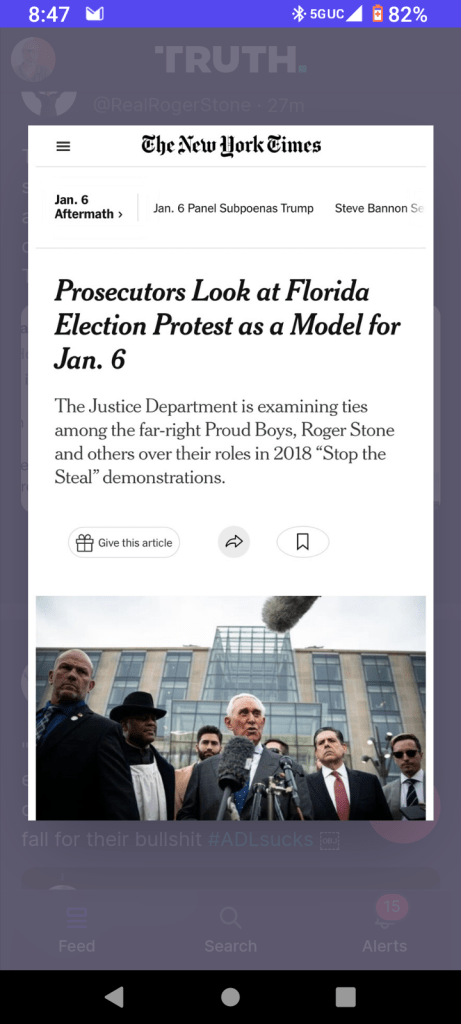
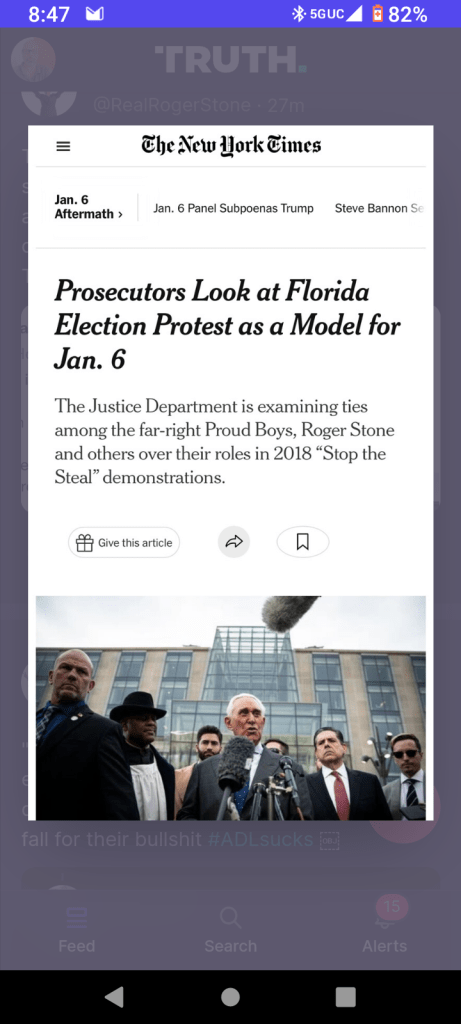
I feel that I am uniquely qualified to make the case that LBJ had John F. Kennedy killed so that he could become president. I have been involved in every presidential election since 1968 with the exception of 1992, when I sat out Republican efforts and George H. W. Bush—who, as a Reaganite myself, I never had much regard for anyway—went down to ignominious defeat. I first met the then former Vice President Richard Nixon in 1967. In 1968, I was appointed chairman of Youth for Nixon in Connecticut by Governor John Davis Lodge. I later attended George Washington University in Washington, DC by night and worked in the Nixon White House press operation by day. In 1972, I was the youngest member of the senior staff of the Committee to Re-elect the President (CREEP).
Ambassador John Davis Lodge was the brother of JFK’s ambassador to Vietnam, Henry Cabot Lodge. John Davis Lodge was a congressman and a member of the House Foreign Affairs Committee. He was also governor of Connecticut, Eisenhower’s ambas sador to Spain, Nixon’s ambassador to Argentina, President Ronald Reagan’s ambassador to Switzerland, and my mentor. It was John Lodge who introduced me to former Vice President Richard Nixon when I was sixteen years old in 1968.
Lodge was an old school Brahmin who nonetheless spoke Spanish, Italian, French, and German. He enjoyed a brief career as a B-movie actor in Europe, appearing onscreen with Marlene Dietrich and Shirley Temple. When Lodge was in his eighties, he served vigorously as the chairman of Ronald Reagan’s campaign for President in Connecticut, a post I had recruited him for as the Northeast regional director.
In 1979, we sat in his Westport, Connecticut, home enjoying a cocktail. I knew that JFK had planned to fire ambassador Henry Cabot Lodge upon his return from Dallas on November 24, 1963. I also know that Lodge knew why he had been summoned to see the President. Lodge had done Kennedy’s dirty work coordinating a campaign with the CIA to assassinate Catholic Vietnamese President Diem.
I couldn’t resist asking John Lodge about his brother. “Did you ever ask your brother who really killed Kennedy?” I said. His lips spread in a tight grin. “Cabot said it was the Agency boys, some Mafiosi.” He looked me in the eye. “And Lyndon.” “Did your brother know in advance?” I asked.
Lodge took a sip of his Manhattan. “He knew Kennedy wouldn’t be around to fire him. LBJ kept him at his post so he could serve his country.”
Seven weeks before the JFK assassination, Richard Starnes for the Washington Daily News wrote an article titled “’Spooks’ Make Life Miserable for Ambassador Lodge” and subtitled “‘Arrogant’ CIA Disobeys Orders in Viet Nam.”
The article slammed the CIA’s role in Vietnam as “a dismal chronicle of bureaucratic arrogance, obstinate disregard of orders, and unrestrained thirst for power.” The article went on to chronicle the turf war between US Ambassador Henry Cabot Lodge and the CIA. “Twice the CIA flatly refused to carry out instructions from Ambassador Henry Cabot Lodge, according to a high United States source here.”
The article continued: “’If the United States ever experiences a ‘Seven Days in May’ it will come from the CIA, and not from the Pentagon,’ one U.S. official commented caustically.” Seven Days in May was a prescient book, read and endorsed by JFK, that gave a fictional chronicle of an attempted military coup in America.
Seven Days in May is a 1964 American political thriller film about a military-political cabal‘s planned takeover of the United States government in reaction to the president’s negotiation of a disarmament treaty with the Soviet Union. The film, starring Burt Lancaster, Kirk Douglas, Fredric March, and Ava Gardner, was directed by John Frankenheimer from a screenplay written by Rod Serling and based on the novel of the same name by Fletcher Knebel and Charles W. Bailey II, published in September 1962.[2]
The book was written in late 1961 and into early 1962 during the first year of the Kennedy administration, reflecting some of the events of that era. In November 1961, President John F. Kennedy accepted the resignation of vociferously anti-communist general Edwin Walker, who had been indoctrinating the troops under his command with radical right-wing ideas and personal political opinions, including describing Harry S. Truman, Dean Acheson, Eleanor Roosevelt and other active public figures as communist sympathizers.[3] Although no longer in uniform, Walker continued to make headlines as he ran for governor of Texas and made speeches promoting strongly right-wing views. In the film version of Seven Days in May, Fredric March, portraying the narrative’s fictional president Jordan Lyman, mentions General Walker as one of the “false prophets” who were offering themselves to the public as leaders.
Edwin Walker assert LHO tried to assasinate him, and if that true or untrue the mere assertion does add to the Legend (or public belief) that LHO was a wild card live wire assasin out to kill, thus LHO killing JFK would not be out of character for LHO if all the stories of LHO were true.
On August 4, 1959, Walker submitted his resignation to the U.S. Army on grounds of an alleged international conspiracy.[citation needed] President Eisenhower denied Walker’s request, however, and instead offered him command of the more than 10,000 troops in Augsburg, Germany, in the 24th Infantry Division, which Walker accepted. He began promoting his “Pro-Blue” indoctrination program for troops, which included a reading list of materials by Hargis and the John Birch Society.
John Kennedy was so impressed by that book and its message that he even let them film the movie adaption at the White House while he was away one weekend. The Starnes’ source ominously referencing Seven Days in May was probably from someone in the military, and not Lodge, but it is nonetheless significant.
Another source told Starnes “They [CIA] represent a tremendous power and total unaccountability to anyone.” Starnes continued: “Coupled with the ubiquitous secret police of Ngo Dinh Nhu, a surfeit of spooks has given Saigon an oppressive police state atmosphere.” The Starnes article was a caustic and detailed denunciation of the CIA’s authoritarian behavior in Vietnam and its uncontrollability by the Kennedy Administration. “One very high American official here,” the article continued, “a man who has spent much of his life in the service of democracy, likened the CIA’s growth to a malignancy, and added he was not sure even the White House could control it even longer.” That last quote probably came out of the mouth of Ambassador Henry Cabot Lodge. The next day on October 3, 1963, Arthur Krock, a columnist for the New York Times and a close friend of the Kennedys’, wrote a column “The Intra-Administration War in Vietnam” that was based on the Starnes article. The Krock column featured those incendiary quotes that Richard Starnes had collected about the CIA from their opponents in the State Department and the Pentagon. The CIA wanted to keep the Diem-Ngu regime, and the bitter enemy of both the CIA and Diem was Vietnam Ambassador Henry Cabot Lodge who was the point man in the Kennedy Administration for getting rid of Diem and Ngu. On November 1, 1963, the Diem-Nhu regime was removed in an American-backed coup. Kennedy had been on the fence regarding their removal and he was shocked when Diem and Nhu were both assassinated and not allowed exile. Just as many in the CIA bitterly opposed Kennedy over Cuba policy, there is no doubt that the removal of Diem was a bitter nut to swallow for many in the agency. Three weeks later there was Dallas. It was then that I decided to write this book. Nixon introduced me to his former campaign aide, John P. Sears, who would hire me for the staff of Ronald Reagan’s presidential campaigns in 1976 and 1980. President Reagan then asked me to coordinate his re-election campaign in the northeastern states in 1984, a slightly broader reprise of my role in his 1980 election. In my capacity as Reagan’s regional political director for the northeast, I helped coordinate thirteen presidential trips, giving me a unique perspective on how the Secret Service interacts with presidential aides during a presidential visit. This perspective, I believe, has given me keen insight into the many anomalies in the way the Secret Service and Vice President Johnson’s aides acted in the run-up to President Kennedy’s visit to Dallas.
HOOVER
Before Kennedy was appointed, the Justice Department, in the words of department attorney Bob Blakey, was “a Republican law factory with a staid hierarchy.”4 Kennedy opened the doors of the stuffy department, working personally and personably with his team-oriented staff of young lawyers looking to make a difference. “He’s given it the sense of the public man,” said former Deputy Attorney General Byron White. Bobby’s crusade, brought over from the McClellan Committee, would not sit well with the director. Despite President Kennedy’s insistence to Bobby that “you have got to get along with that old man,“5 the obstinate younger brother would not comply. Hoover was more of an impediment to the new Justice Department than a help.
J. Edgar Hoover would have been of great use to Bobby in the fight against organized crime, as well as helpful in the creation of a nationwide dragnet, which would utilize shared bureau information from across the country to cooperatively attack the mob. Unfortunately, despite extensive evidence to the contrary, the denial of a nationwide syndicate or of organized crime in general was one of the many inconsistencies in the director of the FBI’s career. In November 1957, close to one hundred Mafia members from throughout the country met in Apalachin, New York, at the estate of Joseph “Joe the Barber” Barbara. The meeting was busted up by local police, and fifty of those gathered were arrested. The excuses from the hoods detailing their reasons for attendance were comical. “Mr. Barbara was sick, and we all came to see him,” reasoned one of the apprehended. “We just happened to drop in at the same time.”6
“I had a problem with one of my windshield wipers, and I decided to get off the highway and drive the sixty-five miles here (Apalachin) to get it fixed,” offered up another.
Among the notable underworld figures in attendance were Santo Trafficante from Tampa, Joseph Civello from Dallas, and Carlo Gambino from New York. The Apalachin meeting provided reasonable evidence for the existence and scope of a nationwide connected syndicate.
“Never before had there been such a concentration of jailbirds, murderers free on technicalities, and big wheels in gambling and dope rackets,”8 remarked a prosecutor who investigated the case. “The FBI didn’t know anything, really, about these people who were the major gangsters in the United States,”
Bobby would lament. It was more probable that the FBI didn’t want to know. For Hoover to acknowledge the existence of the Mafia would undermine the credibility of his institution and would help someone like Bobby, who challenged the director at every step.
To top men in the Mafia, Hoover was a godsend: The top lawman in the country worried more about small-time crooks pilfering pennies from small-town banks than a tightly knit system of criminals working on the big heist.
“Under FBI Director J. Edgar Hoover’s watch, the criminal organizations that would become known as La Cosa Nostra, the Mafia, and the Outfit were allowed to operate unimpeded for decades,” Sam Giancana, nephew of the famed Chicago mob boss, wrote.
“Bureau resources focused instead on high-profile cases like the Lindbergh kidnapping and the apprehension of notorious bank robber John Dillinger—cases that were intended to elevate Hoover’s stature, undeservedly, to that of America’s quintessential crime buster.”
The laws Bobby tried to implement from his first days in the department focused on stymieing the interstate activities of organized crime. As early as May 17, 1961, when Bobby testified before the House of Representatives Judiciary Committee, Subcommittee No. 5, the young attorney general
[RFK was] attempting to halt “the huge profits in the traffic in liquor, narcotics, prostitution, as well as the use of these funds for corrupting local officials and for their use in racketeering in labor and management.”
Bobby “got five anticrime bills moved through the Judiciary Committee so quickly that nobody had the chance to read them,”12 said Justice official William Goeghehan.
Where Hoover’s FBI had focused on small independent gangs or crooks, Kennedy’s Justice Department was focused on the interconnectivity of criminal activity. “Interstate” was the key word for the new Justice Department, which had previously impeded law enforcement on a local level and now worked also to tackle problems on a national level, laws such as those forbidding the transportation of gambling equipment across state lines or using highways or telephones for the means of racketeering.
[telephony connects long distance partners in interstate commerce including illegal interstate commmerce. A local trash collector service or pasta shop and the local police precinct and a few other parties can be in or fighting a racket and ne’er a telephone ever used and all on one block or brough.]
“I’d like to be remembered as the guy who broke the Mafia,”14 said Kennedy. While Bobby pushed his organized crime agenda, Hoover dragged his feet. Prior to Kennedy’s tenure as at
“He was concerned that his men would be corrupted,” reasoned Howard Diller, a Bureau of Narcotics agent. “This was a nasty business. They could go after communists and kidnappers, but this caused aggravation, and he didn’t want any aggravation.”16 Truth be told, as a gambler, Hoover was friendly with many of organized crime’s biggest players. Joe “Joe Bananas” Bonanno, Carlos Marcello, his partner Dub McClanahan, and Johnny Rosselli, when he was more than just a crate hauler for Joe Sr., were more than acquaintances to Hoover.17 “I knew Hoover,” Rosselli said. “I’d buy him drinks, and we’d talk.
It would be fun to be with the director of the FBI like that.”18 Hoover was also close with mobster Frank Costello. William Hundley, one of Bobby’s top aides, met Costello through his friend, Washington, DC trial lawyer Edward Bennett Williams, who represented the New York mob boss. Hundley heard a string of stories from Costello about his relationship with Hoover, relaying their mutual affection for the horse track and their frequent trips there together. “The horse races!” Costello exclaimed. “You’ll never know how many races I had to fix for those lousy ten-dollar bets of Hoover’s!
In a conversation caught by FBI electronic surveillance between the “mob’s Accountant” Meyer Lanksy, agent Alvin Malnik, and Jesse Weiss, a Miami Beach restaurateur and friend of J. Edgar Hoover, the fears of the Mafia concerning new aims of the bureau were aired:
Chapter 16 Ruby
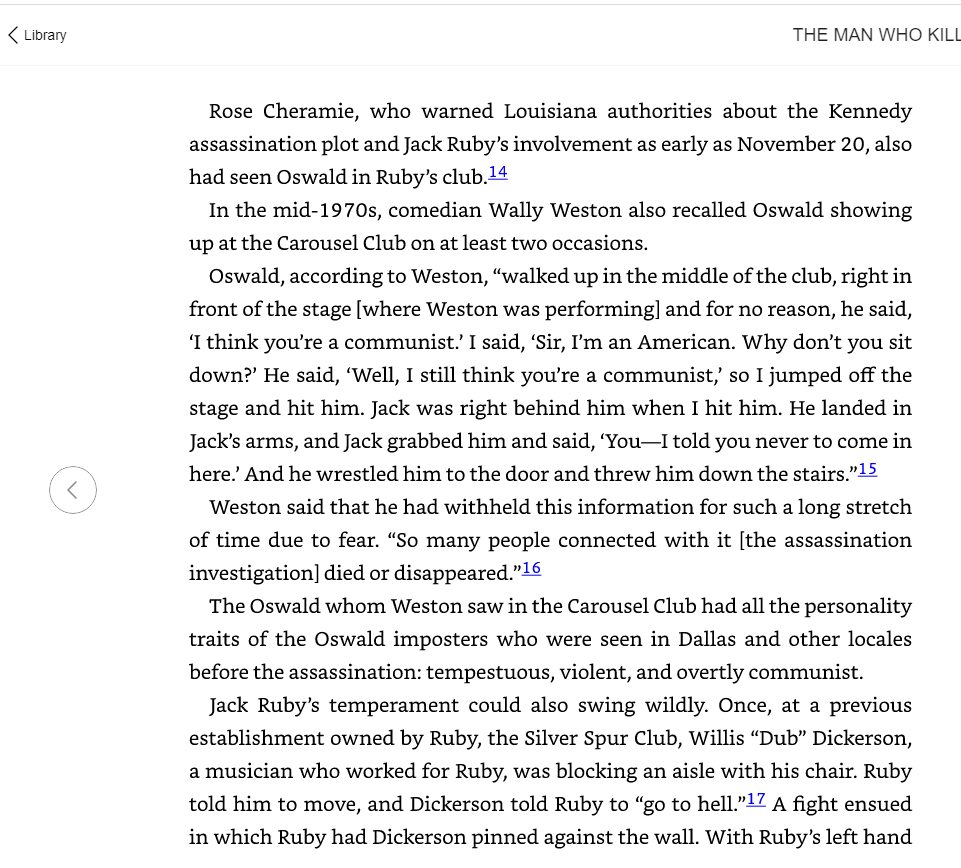
Rose Cheramie, who warned Louisiana authorities about the Kennedy assassination plot and Jack Ruby’s involvement as early as November 20, also had seen Oswald in Ruby’s club.14 In the mid-1970s, comedian Wally Weston also recalled Oswald showing up at the Carousel Club on at least two occasions. Oswald, according to Weston, “walked up in the middle of the club, right in front of the stage [where
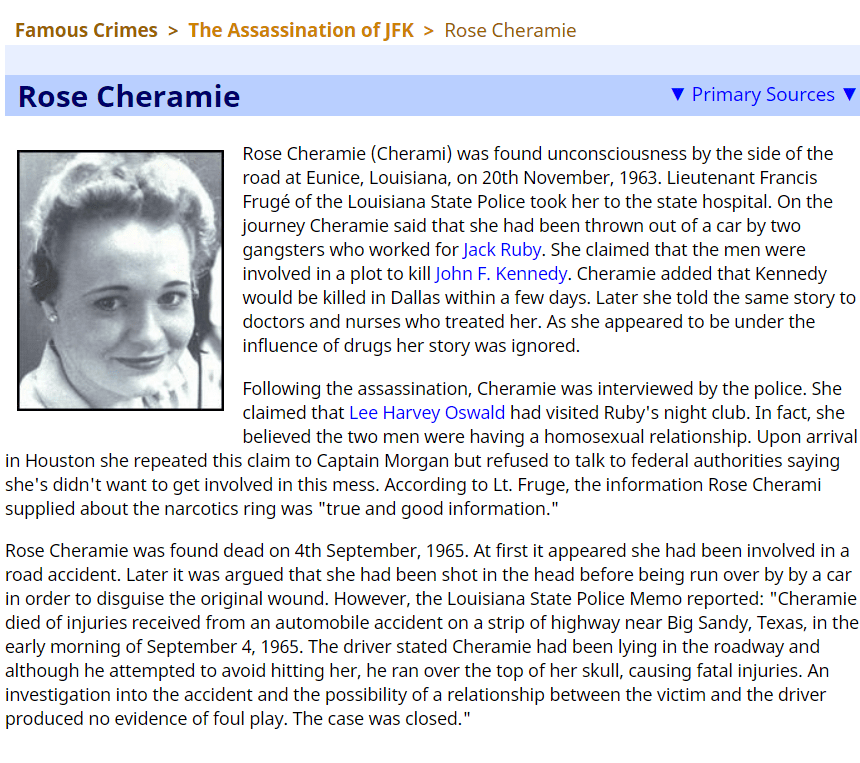
One of the most well-known stories of foreknowledge in the Kennedy assassination is that of Rose Cherami (often spelled “Cheramie”), whose real name was Melba Christine Marcades.
On November 20, 1963, Cherami was struck by a car on Highway 190 near Eunice, Lousiana. She told police Lt. Francis Fruge she had been traveling with two men from Florida to Dallas, as part of a drug run, but had been thrown out of the Silver Slipper Lounge after an argument, after which she had been run over. After exhibiting drug withdrawal symptoms, Fruge took her to Jackson East Louisiana State Hospital.
On the journey there, Fruge later told the HSCA, Rose Cherami told the story of her companions and the argument, and then when asked about her business in Dallas, she said she intended to “number one, pick up some money, pick up her baby, and kill Kennedy.” She reportedly subsequently told hospital nurses, moments before JFK was killed, that the murder was about to happen. A few days later, she told Fruge that Oswald was a friend of Jack Ruby, for whom she said she worked as a stripper and dope runner.
Dr. Victor Weiss, who treated Cherami, told Jim Garrison’s investigators in 1967 that he had heard Rose’s predictions about the Kennedy assassination. In his testimony to the HSCA Dr. Weiss was clear that he had heard this before Kennedy’s assassination, though the initial 1967 contact report notes that “Dr. Weiss states that he doesn’t recall whether this was told to him before or after the assassination.”
While working for the Garrison investigation, Lt. Francis Fruge tracked down the owner of the Silver Slipper Lounge, Mac Manual. Manual remembered the incident clearly, and picked out as Rose’s companions mug shots of Cuban exile Sergio Arcacha Smith and a man Fruge remembered as “Osanta” (Emilio Santanta?).
On September 4, 1965, Rose Cherami was again a victim of a car accident. This time her skull was crushed and she was killed, near Big Sandy, Texas.
Chapter 9 the road to Watergate
CHAPTER NINE THE ROAD TO WATERGATE Nixon’s deep involvement in Operation 40 made him fully aware of a CIA assassination team that included E. Howard Hunt, Frank Sturgis, and David Morales. Nixon’s attorney general John Mitchell told me that he learned in 1971 that Nixon, as vice president, had approved the CIA outreach to organized crime in their plan to kill Castro. The CIA authorized ex-FBI agent Maheu to contact the mob through Johnny Rosselli shortly before Nixon’s surprise defeat in November of 1960. The approach by Maheu happened on Nixon’s watch and at a time when most believed that Nixon would be the next president. Nixon had his own long-term relationship with Maheu, who had funneled money to his campaign from Hughes. As the point man for the CIA-led operation, it is unlikely
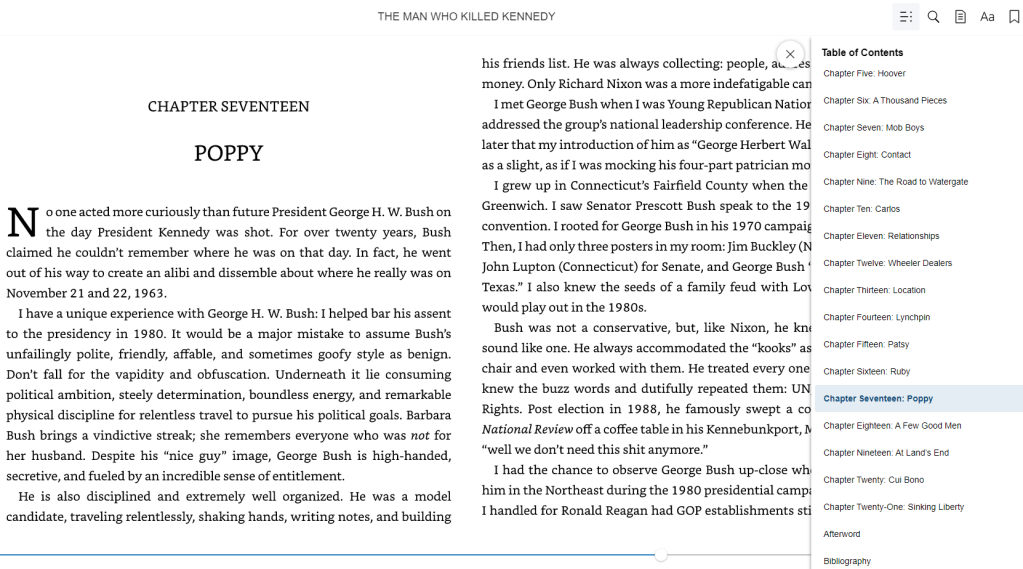
special election to fill the seat of Senator Brien McMahon, who died unexpectedly. He was friendly with John Foster and Allen Dulles, Wall Street lawyers who represented Brown Brothers. In 1952, George Bush served as Co-Chair of Citizens for Eisenhower–Nixon in Midland County, Texas, where he had relocated to work for Dresser Industries and later founded the Zapata Petroleum Company and Zapata Offshore. In his masterful book, Family of Secrets, author and reporter Russ Baker established that both Dresser and Zapata had been used as covers for CIA business. According to a CIA internal memo dated November 29, 1975, Zapata Petroleum began in 1953 through Bush’s joint efforts with Thomas J. Devine, a CIA staffer who had resigned his agency position that same year to go into private business, but who continued to work for the CIA under commercial cover.2
George Bush, known to his Ivy League friends as “Poppy,” may have been associated with the CIA as early as 1953. Fabian Escalante, the chief of a Cuban counterintelligence unit during the late 1950s and early 1960s, describes a plan called “Operation 40” that was put into effect by the National Security Council and presided over by Vice President Richard Nixon. Escalante said that Nixon, as operation director or “case officer,” had assembled an important group of businessmen headed by George Bush and Jack Crichton, both Texas oilmen, to gather the necessary funds for the operation. Operation 40, a group of CIA assassins, was subsequently brought into the Bay of Pigs invasion. Interestingly, CIA official Fletcher Prouty delivered three Navy ships to agents in Guatemala to be used in the invasion. Prouty claims that he delivered the ships to a CIA agent named George Bush. Agent Bush named the ships Barbara J, Houston, and Zapata.3
In the time leading up to killing Oswald, Ruby owed the government in excess of $39,000 on income and excise taxes. On November 19—three days before the murder of JFK—Ruby appeared at the office of his tax attorney Graham Koch and told him of a contact who would furnish Ruby the money to settle his debt. He then signed a power-of-attorney, giving the lawyer control over Ruby’s monetary issues with the government.36 It was the CIA who developed Oswald as a patsy, and the mob who used Ruby to eliminate him.
“So the Dallas PD came in, and at that point, they were a bunch of rednecks and didn’t know what they were doing,” Bill O’Reilly said recently while promoting his book Killing Kennedy. “Obviously, they let Oswald get killed.” In truth, it was not the incompetence but the corruption of the Dallas police force that led to Oswald’s slaying.

