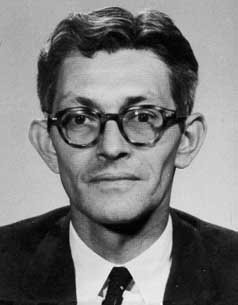
William Francis Burns (June 23, 1932 – June 5, 2021) was an American Army major general who later served as the Director of the Arms Control and Disarmament Agency from 1988 to 1989 under President Ronald Reagan.[2][3]
He graduated from La Salle University in 1954 and joined the Army from ROTC in that same year.[4] Reaching the rank of major general, Burns’ commands included Deputy Assistant Secretary of State for Arms Control, Bureau of Politico-Military Affairs, Joint Chiefs of Staff Representative to the Intermediate-range Nuclear Forces negotiations from 1981 to 1984 and 1985 to 1986 as well as deputy commandant of the United States Army War College.[5][6] He retired in 1988,[7] and died on June 5, 2021 in Carlisle, Pennsylvania.[8]
[Apparently per their own parlance and the cooccurrence dates of their passing they (Masonic families] are present in some way (prayer, video conference, religious services?) at the time they pass into “interdimensional portals” and the June 5 2021 death of WFB and the Fort Bragg born April 4, 1956 fit the a few days off (and sometimes misspellings of names with letters that can be confused) as a sort of dog whistle or internal tradition among themselves.
Fort Bragg was where the Defense Intelligence Agency ran the military side of overthrows out of, at least one location, and it was CIA’s Angleton working with Free Masonry groups in the military (they were on bases increasingly in the 1950s) that the Burns and J. Edgar Hoover and other families (George H.W. Bush and the Walker family of that group of overlords in the sky above earth) operated from.
I assert May Poppins tells the tale metaphorical of the Walker family, British banking, and Mary of Tek though filmed in the 1960s it is set in 1910 the the dialogue, songs, etc., support the storyline that fits Bush Walker and Mary of Tek.
Donovan had begun experiencing symptoms of dementia while in Thailand, and he was hospitalized in 1957. While in the hospital, he “imagined he saw the Red Army coming over the 59th Street bridge, into Manhattan, and in one memorable last mission, fled the hospital, wandering down the street in his pajamas.” Shortly before his death, he was visited by Eisenhower, who later told a friend that Donovan was “the last hero”.[21]
In 2011, it was suggested that a new federal courthouse in Buffalo be named after Donovan, but instead, it was named after Robert H. Jackson, his rival prosecutor at Nuremberg. In 2014, U.S. Senator Charles Schumer asked the U.S. Department of Veterans Affairs to name an upstate New York cemetery after Donovan. In 2016, however, the VA decided against using Donovan’s name. “It is outrageous that nothing has been done to honor Gen. Donovan, one of America’s greatest patriots, in Buffalo or western New York,” declared Charles Pinck, president of the OSS Society, who had thought the naming of the cemetery after Donovan was “a done deal”.[91]
Donovan is a member of the Military Intelligence Hall of Fame.[89] He is also known as the “Father of American Intelligence” and the “Father of Central Intelligence”.[88][92] “The Central Intelligence Agency regards Donovan as its founding father,” according to journalist Evan Thomas in a 2011 Vanity Fair profile. The George Bush Center for Intelligence, the CIA headquarters building in Langley, Virginia, has a statue of Donovan in the lobby. Thomas observed that Donovan’s “exploits are utterly improbable but by now well documented in declassified wartime records that portray a brave, noble, headlong, gleeful, sometimes outrageous pursuit of action and skulduggery.”[21][93]
The William J. Donovan Award was created by the OSS Society, which was founded by Donovan in 1947. The award is presented by the OSS Society to “someone who has exemplified the distinguishing features that characterized General Donovan’s lifetime of public service to the United of States of America as a citizen and a soldier”. Notable recipients include Allen W. Dulles, President Dwight D. Eisenhower, Margaret Thatcher, President George H. W. Bush, and former Director of the Central Intelligence AgencyGina Haspel.[94]
Looking back at Donovan in London and Dulles under Donovan
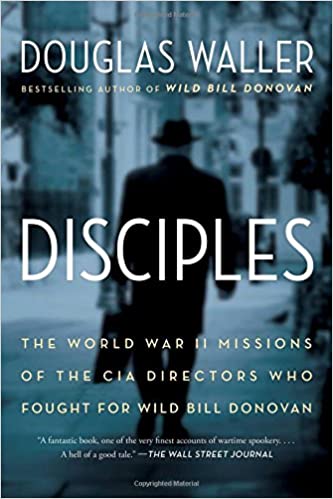
Disciples: The World War II Missions of the CIA Directors Who Fought for Wild Bill Donovan Paperback – October 25, 2016
A fantastic book, one of the very finest accounts of wartime spookery” (The Wall Street Journal)—a spellbinding adventure story of four secret OSS agents who would all later lead the CIA and their daring espionage and sabotage in wartime Europe from the author of the bestselling Wild Bill Donavan.
They are the most famous and controversial directors the CIA has ever had—Allen Dulles, Richard Helms, William Colby, and William Casey. Before each of these four men became their country’s top spymaster, they fought in World War II as secret warriors for Wild Bill Donovan’s Office of Strategic Services.
Allen Dulles ran the OSS’s most successful spy operation against the Axis. Bill Casey organized dangerous missions to penetrate Nazi Germany. Bill Colby led OSS commando raids behind the lines in occupied France and Norway. Richard Helms mounted risky intelligence programs against the Russians in the ruins of Berlin. Later, they were the most controversial directors the CIA has ever had. Dulles launched the calamitous operation at Cuba’s Bay of Pigs. Helms was convicted of lying to Congress over the CIA’s role in the ousting of President Salvador Allende in Chile. Colby would become a pariah for releasing a report on CIA misdeeds during the 1950s, sixties and early seventies. Casey would nearly bring down the CIA—and Ronald Reagan’s presidency—from a scheme that secretly supplied Nicaragua’s contras with money raked off from the sale of arms to Iran for American hostages in Beirut.
Mining thousands of once-secret World War II documents and interviewing scores, Waller has written a worthy successor to Wild Bill Donovan. “Entertaining and richly detailed” (The Washington Post), Disciples is the story of these four dynamic agents and their daring espionage and sabotage in wartime Europe.
When John F. Kennedy decided to go with Lyndon B. Johnson as Vice President he brought in the Senator LBJ, Senator Rayburn, and other D.C. long term National Security Legisilating set of industrialist politicians coming in as protegess of the Rothschilds and Rockefellers politically and as the Wild Bill Donovan Protoges operationally.
JFK lopped off a few heads and scattered those few into the wind (Richard Bissle Jr. Alan Dullues ((Secreatary of State under Nixon John Foster Dulles had already died and would have changed out during the swearing in of JFK cabinet) but Dean Rusk in State Department was LBJs Rockefeller representative.
It was this already established infrastructure LBJ built in the senate WITH RICHARD NIXON of Donovan’s post war plans – espionage fighting smarter not harder – through the State Dept and US Military around the world in London friendly colonialism.
Gondor
“See! The beacons of Gondor are alight, calling for aid. War is kindled. See, there is the fire on Amon Dîn, and flame on Eilenach; and there they go speeding west: Nardol, Erelas, Min-Rimmon, Calenhad, and the Halifirien on the borders of Rohan.“—Gandalf, in The Return of the King
In the late Second Age and early Third Age, they mainly served to warn southern Gondor of a danger to the northern province of Calenardhon, or vice versa, but after the Steward of GondorCirion granted Calenardhon to the Éothéod, they were used mainly to warn the people in Anórien of danger. Calls for aid between Gondor and Rohan were exchanged by a messenger carrying the Red Arrow instead.
“There are no fires! Our horse-messngers call to war is false!’
So it was though in Éothéod after no fire was lit but they did not know Orks had siezed one of the great fireplaces and refused to light the hilltop fire upon seing the other fires.
So OSS CIA Leverage works. Taking out an emergency transmitter will delay a miltary resonse, confuse the enemy army, and leave it unprepared.
Pope CIA The Pius
The 1963 papal conclave was convoked following the death of Pope John XXIII on 3 June 1963 in the Apostolic Palace. After the cardinal electors assembled in Rome, the conclave to elect John’s successor began on 19 June and ended two days later, on 21 June, after six ballots. The cardinals elected Cardinal Giovanni Battista Montini, Archbishop of Milan. He accepted the election and took the name Paul VI.
942—Pius XII creates the Vatican Bank; Lucky Luciano is recruited by ONIApril 1943—Operation HuskyFeb. 1945—Fort Hunt Conference (formation of Gladio)April 1945—Angleton and Borghese establish Italian stay-behind unitsOct. 1946—Luciano hosts Havana conferenceSept. 1947—CIA is establishedNov. 1947—Heroin comes to Harlem; PCI makes monumental election gainsJan. 1948—Vatican receives $65 million in “black funds”Jan. 1951—CIA develops drug trade with KMTFall 1953—Operation MockingbirdJan. 1955—Establishment of Catholic GladioFall 1956—Gelli serves as CIA’s liaison to Italian military intelligenceOct. 1957—Hotel des Palmes gathering; Sindona becomes mob financier; Apalachin ConferenceNov. 1957—Creation of Fasco AG with CIA fundsSept. 1958—Vito Genovese goes to jailJan. 1959—P2 lodges pop up on NATO basesFeb. 1960—Gladio mounts first coup in TurkeyJan. 1962—Helliwell forms Castle Bank and TrustOct. 1962—“Strategy of tension” gets underway with the murder of Enrico MatteiMay 1963—Vatican is buggedJune 1963—Gelli knighted by Paul VIFall 1963—Piano SoloJan. 1964—Sindona joins P2April 1968—Medellin Conference; Msgr. Paul Marcinkus becomes IOR secretarySpring 1968—Shackley meets Trafficante in SaigonJan. 1969—“Years of lead” beginMay 1969—Sindona anointed “pope’s banker”Fall 1969—Operation CondorDec. 1969—Piazza Fontana bombingJan. 1970—CIA establishes MIT in TurkeyDec. 1970—Golpe BorgheseJan. 1971—CIA funds Opus Dei; Vatican establishes first shell companyMay 1971—Peteano attackFall 1972—BCCI set up in Karachi; Nixon approves Sicilian coupJuly 1973—David Rockefeller forms Trilateral CommissionJune 1974—Brescia bombingAug. 1974—Attack on the Italicus; collapse of Franklin National BankSept. 1974—Collapse of BPFApril 1975—Fall of Saigon
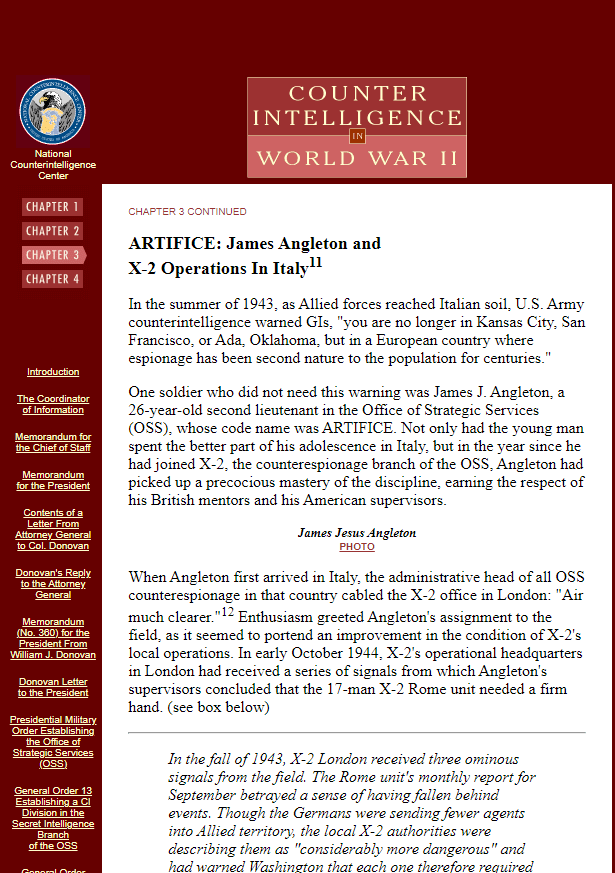
CHAPTER 3 CONTINUEDARTIFICE: James Angleton and X-2 Operations In Italy11 In the summer of 1943, as Allied forces reached Italian soil, U.S. Army counterintelligence warned GIs, “you are no longer in Kansas City, San Francisco, or Ada, Oklahoma, but in a European country where espionage has been second nature to the population for centuries.” One soldier who did not need this warning was James J. Angleton, a 26-year-old second lieutenant in the Office of Strategic Services (OSS), whose code name was ARTIFICE. Not only had the young man spent the better part of his adolescence in Italy, but in the year since he had joined X-2, the counterespionage branch of the OSS, Angleton had picked up a precocious mastery of the discipline, earning the respect of his British mentors and his American supervisors.James Jesus Angleton PHOTOWhen Angleton first arrived in Italy, the administrative head of all OSS counterespionage in that country cabled the X-2 office in London: “Air much clearer.”12 Enthusiasm greeted Angleton’s assignment to the field, as it seemed to portend an improvement in the condition of X-2’s local operations. In early October 1944, X-2’s operational headquarters in London had received a series of signals from which Angleton’s supervisors concluded that the 17-man X-2 Rome unit needed a firm hand. (see box below)
Unlike the military, which would not reach its next target city, Bologna, for another 5 months, Allied counterespionage was not in a holding pattern in Italy in the fall of 1944, and X-2’s responsibilities were expanding.13 The area under Allied occupation had still to be rid of German informants left behind by the Sicherheitsdienst and the Militarisches Amt when they fled North.14 In the addition, the counterespionage services bore the burden of identifying, catching, and interrogating the linecrossers that the German military was pushing across no man’s land to collect order of battle information.15 Amid the pressure for more and better information about German spies, the OSS’s Italian counterespionage detachment had suffered a crisis of confidence and was losing the respect of other counterespionage services.16 London wanted Angleton to turn the Rome unit around in 6 weeks so that X-2 could handle the enemy intelligence agents out of the Po Valley and then be able to do its part when it came time to liberate northern Italy.17
Nearly half a century later it may seem difficult to understand why the now legendary James Angleton inspired not only the trust of men many years his senior but was viewed as a source of wisdom by those around him. With a very few notable exceptions, the current image of James Angleton is that of a rigid, overrated, ideological menace. (The thesis of Tom Mangold’s book, Cold Warrior, James Angleton: The CIA’s Master Spy Hunter, is that Angleton was an ideological cold warrior whose ability to differentiate between possible threats and probable threats deteriorated after he learned that his British colleague H.A.R. “Kim” Philby was a Soviet penetration agent.)18 Yet the operational files from his Italian posting, which are now in the National Archives, reveal a different man and leave little doubt as to why he was called to the field in 1944.
Angleton provided an adept field operative. The mission that was only to take 6 weeks lasted 3 years. In the last year of the war, Angleton rose from chief of the X-2 unit in Rome to chief of all OSS counterespionage in Italy. By the age of 28, as bureaucratic initials and superiors were changing in Washington, he became chief of all secret activity, intelligence and counterintelligence, in Italy for the Strategic Services Unit (SSU), the successor of the OSS.19 Although field promotions are not always dependable indicators of operational success, Angleton’s rise to the top of all American secret activity in Italy paralleled a remarkable expansion of U.S. counterespionage capabilities in that strategically important country. By the end of 1946, Angleton, or those directly responsible to him, had amassed over 50 informants and had penetrated 7 foreign intelligence services, including Tito’s Otsek Zascita Naroda (OZNA), the French Service de Documentation Exterieure et de Contreespionage (SDECE), and the Italian Naval Intelligence Service, the Servizio Informazione Segreta (SIS).20 Concur-rently, through liaison channels, Angleton was receiving regular reports from various Italian intelligence services that included intercepts of foreign agent radio traffic and information about Soviet and Yugoslav intelligence ciphers.21
In this paper, we will review four representative operations to illustrate and evaluate Angleton’s activities in Italy. As will be demonstrated, a general study of these operations delimits the contours of a consistent approach to counterespionage. Also discernible in these operations is Angleton’s understanding of the role of counterespionage in defending U.S. interests. A study of his Italian career therefore serves not only as a primer on what the OSS and the SSU achieved in counterespionage in Italy but also as an introduction to the world view, and professional skills of the man who would come to dominate American counterespionage for a generation.
Angleton’s approach can be best understood as the implementation of what might be called “Total Counterespionage.” The young Angleton was a political Realist.22 He assumed that all governments have secrets that other governments want. The nature of a particular government influenced its capacity though not its desire to spy. When Angleton asked why a country spied, he did so not in search of moral justification but because countries often betray intentions in what they spy for.23 The agnosticism of his view of the threat supported a broad view of the means necessary to protect U.S. interests. He believed that a counterespionage service had to have an insatiable appetite for information about foreign activities so as to be in a position to restrict, eliminate, or control the ways by which other states collected their intelligence.
The operations chosen represent the principal sources of counterespionage, as a form of information and as a type of activity, available to Angleton in the years 1944-46. The first involves Angleton’s exploitation of ULTRA-class intelligence. In other word’s how he made best use of the fact that he could read many of the radio messages of his adversaries in the German Intelligence Services. The second is the SALTY case. SALTY, aka Capitano di Fregata Carlo Resio, was the pivot of Angleton’s broad-based liaison with the Italian Naval Intelligence Service. The SALTY case illustrates how Angleton used cooperation with other services to expand his knowledge of foreign intelligence activities. The third is an example of a successful penetration operation that involved another Italian naval officer, whom we shall call SAILOR. And, finally, a second look will be taken at the notorious Vatican case, VESSEL or DUSTY, which was also a penetration operation but one that failed.
Before turning to these operations, it is useful to note that the end of the Second World War divided Angleton’s career in Italy in two. Until August 1945, most of Angleton’s operations were the extension of a program of military security.24 As experts in the personnel and methods of the enemy, X-2 officers assisted the more numerous and large units of the U.S. Army’s Counterintelligence Corps in locating and neutralizing German and Italian Fascist agents. X-2 officers were in a position to direct aspects of the Army’s security program because of their access to a more extensive archive of counterespionage information. In addition, X-2 case officers had received instruction in the arts of doubling and controlling enemy agents, skills that Army counterintelligence officers did not have. When the army picked up an agent, an X-2 officer was called in to assess the agent’s potential as a double agent. If the results of the review were affirmative, the X-2 branch assumed responsibility for the agent. Yet even in these double agent cases, security considerations predominated, and X-2 officers operated with the elimination of the foreign service as their goal.25
After the war, Angleton’s concern became almost entirely “long-range counterespionage,” in effect the surveillance of all foreign intelligence operations in Italy. The rationale for broad coverage was that the cessation of hostilities had brought the replacement of armies by intelligence services as the means by which countries challenged each other. This change in the international system blurred the traditional lines between positive intelligence and counterintelligence. With threats ill-defined, X-2’s penetrations assumed added significance as sources of clues as to the intentions of other states.26 Angleton noted the case with which the intelligence services of the continental powers adjusted to peacetime. In September 1945 he wrote, “(a)s military commitments are gradually discharged, there is a sharp increase in the number of long-term espionage suspects which is accompanying the transitional phase to normalcy.27 Angleton found that in the wake of the collapse of Italian power, the unsettled nature of Mediterranean politics invited intervention by secret services. In his reports to Washington, Angleton underlined that the governments of France, Italy, and Yugoslavia were deploying their secret services to maximum their territorial and political advantages before the stabilization of borders and regimes.28
Besides providing insight into the way in which states defined their interests, Angleton’s adoption of broad counterespionage coverage in peacetime facilitated controls over the movements of likely foreign long-term agents.29 On the strictly security side, Angleton’s principal concern was that members of those long-range networks not be permitted to obtain American secrets either through penetration of an American facility in Italy or through the emigration of part of the network to the United States.
Linking these two periods of Angleton’s field career was his talent for exploiting liaison and penetration for counterespionage purposes. Neither activity produced information in hermetically sealed compartments. The sources of counterespionage information available to Angleton interacted constantly to produce a better picture of the adversary. Some hitherto obscure reference in an intercepted message might begin to make some sense, for instance, when compared to an interrogation reported gained from an Allied service. One always hoped for a snowball effect; a deciphered message might lead to penetration operations that brought the release of even more data.30
Angleton’s most important course of counterespionage was the product of both liaison and penetration. Code-named ISOS or PAIR, this was a steady stream of deciphered German intelligence messages, mostly but not exclusively sent by members of the Abwehr, the German military intelligence service.31 ISOS or PAIR belonged to the now famous ULTRA family of signals intelligence. These decrypts were a British triumph and came to Americans only as a consequence of the un-precedented Anglo-American collaboration that underwrote the Allied conduct of the Second World War.32 When the advent of joint military operations in 1942 transformed the security of American field operations into a British concern, the British made the decision to share their best intelligence with Washington.33 In exchange for this material, the British required that the OSS imitate their own foreign counterespionage organization. In practice this meant establishing X-2, a self-contained unit with separate communications channels, whose management at all levels, from staff to line officer, was indoctrinated into ULTRA.34 Recalling ULTRA four decades later, Angleton described it as “the superior source” that undergirded all counterespionage operations.35
Angleton’s own London apprenticeship had exposed him to the conventional wisdom among Allied counterespionage chiefs that, at least in this war, signals intelligence was the basis of all serious counterespionage.36 From late 1941, readable German intelligence messages were coming to the offices of British counterespionage in bales. By May 1944 the British were circulating 282 of these decrypted messages a day.37 These decrypts created a sense of confidence among counterespionage officers who, perhaps for the first time in military history, believed that a complete understanding of the enemy’s intelligence resources was within their grasp. Although sometimes incompletely deciphered and when fully deciphered often filled with code names instead of real names, these messages provided a bird’s-eye view of the number of agents the enemy sent into the field and the information that his networks were providing him.38
In Italy, Angleton made a distinctive contribution to the problem of managing this sensitive information. Like many Allied counterespionage officers, he understood that the British sister services employed ULTRA information. Operationally, this meant striking a balance between the protection of this superior source with the requirement of exploiting it to catch spies. As chief of X-2 Rome, Angleton conceived and produced a series of special manuals for use by Army counterintelligence investigators that went a long way toward solving this problem. Between January and April 1945, Angleton developed the concept of the “Key,” an easy-to-revise compendium of information about the various German and Fascist Italian intelligence services that could be shown to officers not indoctrinated into ULTRA.39 The trick was to comb POW interrogations for corroboration of facts first learned from ULTRA. Once a detail had been found in a less sensitive place_a SECRET interrogation report instead of a TOP SECRET ULTRA decrypt—it could be disseminated more widely.40
The fact that ULTRA materials were the most important products of liaison in the war against Fascist agents did not negate the value of the other cooperative relationships formed by Angleton in the field. For intelligence as well as operational reasons, the counterespionage officer had an incentive to develop liaison channels.
Angleton recognized that the requirement of specific information about the real names, aliases, addresses, missions, modes of payment, and weaknesses of foreign agents placed demands that even the miraculous deciphered messages could not meet. Germany signals, of course, revealed only some of what had to be known about espionage activity Mussolini’s rump government. But even where it was a matter of detecting a German-trained and German-supplied agent, the intricate details required to track the agent down were less commonly the product of signals intelligence than the interrogations of capture intelligence officers, agents, and subagents. As X-2 was only one cog in the Allied counterintelligence machine, Angleton had to rely on liaison channels for most of these interrogations. The ratio of his small number of interrogators to the number of suspects being processed at any given moment meant that only the most important cases became the direct responsibility of X-2. Accordingly, X-2 had to make its influence felt indirectly, through interrogation aids such as the “Keys,” which guided Army interrogators, or through joint operations with other counterespionage services with the effect of maximizing the number of interrogation reports available to X-2.
Angleton’s experience in Italy affirmed the principle that liaison is the most efficient way to expand the sources of a counterespionage service. Intelligence cooperation has the potential of opening archives to a service that it could not have created on its own without a massive investment of labor and capital, if at all. Liaison among counterespionage services has the added inducement that it is the only way for a foreign service to have systematic access to the myriad of banalities routinely collected by domestic institutions that often prove essential in determining the bona fides of a source. Hotel registration lists, airplane manifests, passports and visa information can all be used to detect suspicious activities by individuals or to test the biographical information of suspect agents with whom you have come into contact. The epitome of such liaison is the police file, which, when corrected for the political or cultural biases of the originating institution, can be the most important source of biographical, or “personality,” information.41
Having learned the value of liaison as a desk officer in London, Angleton wasted no opportunity once in the field to broaden X-2 contacts with Allied and friendly services. Of particular importance to him were the under-developed links to the Italian services. Under certain circumstances a foreign service will decide to put its operational resources at a counterespionage officer’s disposal. Until 1946 this was mandated for the Italian police and all Italian military intelligence services.42 The challenge for X-2 was to provide the basis for a continuation of such collaboration past the life of the mandate.
Angleton’s efforts at deepening liaison with the Italians built upon the accomplishments of others, especially those of his own father, Lt. Col. James Hugh Angleton. From late 1943 through half of 1944, the senior Angleton served as X-2’s representative in discussions with Marshal Pietro Badoglio and leaders of the Italian military, including the army’s intelligence service, the SIM.43 Over the course of his brief career in X-2 (he had left Italy by the time his son landed in Caserta), Lt. Colonel Angleton drew upon the excellent contacts he had developed in the 1930’s as the owner of National Cash Register’s Italian subsidiary and as president of the American Chamber of Commerce for Italy.44 Following the elder Angleton’s lead, son Jim’s predecessors as unit chief in Rome, Andrew Berding and Robinson O. Bellin, established a measure of collaboration with all five principal Italian intelligence services: the three Italian military services, the police of the Ministry of the Interior (the Pubblica Sicurezza) and the Royal Counterespionage Service, or the Carabinieri.45
Young Angleton considered his immediate predecessor, Bellin, overcautious in dealings with the Italians. Angleton’s first important policy decision after arriving in late October 1944 was to overturn Bellin’s recommendation that the Marine Unit, a maritime paramilitary arm of the OSS, suspend its operations in Italy. The source of the problem was that the unit had earlier recruited a number of Italian naval saboteurs. When one of these recruits was discovered to be a Germany agent, X-2 and the OSS Security Office in Caserta concluded that the OSS Marine Unit was insecure. So daunting was the task of checking the bona fides of the rest of the Italian group, because ULTRA apparently provided very little on the Italian services, it was thought best to close down the entire OSS marine detachment.46
Angleton understood these concerns but was willing to take a leap of faith in order to deepen X-2’s relationship with the SIS. It was a calculated risk. The war had turned against the Germans, and only the most hardened Fascists would resist the call for assistance from the rejuvenated Italian military. Betrayals were still possible, but their cost had to be weighed against the potential rewards of liaison. The Italian Royal Navy had the key to dismantling the German intelligence and sabotage network north of Florence. ULTRA information showed that the Germans were planning to leave Italians behind in strategic centers with missions to report on Allied military movements to headquarters in northern Italy and Austria.47 Other information pointed to Prince Valoerio Borghese, a former Italian naval officer, as possibly being responsible for setting up part of this organization.48 Borghese, the chief of the naval sabotage unit, the Decima Flotilla MAS, had not surrendered with the rest of the Italian Royal Navy in September 1943. He and most of his men, who were famous for their underwater assaults against British shipping, had stayed in the north to serve Mussolini’s Salo Republic. The SIS knew the biographies of Borghese’s group and could predict which men might be vulnerable to an approach by an Allied field agent.49
Angleton’s reversal of policy, implying U.S. confidence in the Italian Royal Navy, opened the door to wide-ranging joint operations with the SIS under Capitano di Vascello Agostino Calosi.50 Italian Naval Intelligence was eager to work with the OSS as Angleton was with them. In November 1944, Calosi’s chief of intelligence, Capitano di Fregata Carlo Resio, approached Angleton with two offers of assistance.51 First, he said he could provide four trained radio operators for future penetration operations in the north. Second, he urged that the OSS Marine Unit take over the Italian “GAMMA” frogman school at Taranto, which would soon be closed down. Resio suggested that with the equipment and the training staff from Taranto, the OSS could prepare its own naval sabotage group for operations in the Pacific.
By early January 1945, this liaison was producing counterespionage information in addition to operational opportunities. As he began providing reports based on SIS files, Resio earned the sobriquet SALTY.52 The first batch of SALTY reports dealt primarily with two theme: one was the threat of communist insurgency and Soviets support for same; the other, the existence of a Fascist residue that had to be wiped off the Italian slate.53
The SALTY reports brought criticism upon Angleton’s head for having exceeded his brief. The references to Soviet activity embarrassed Washington, which, in February 1945, cleaved to a policy of not collecting counterintelligence on allies.54 In its first assessment of Resio’s information, X-2 headquarters lectured young Angleton on the possibility that this information was politically inspired. The SIS, they cautioned, had long been considered royalist and anti-Soviet: “(t)herefore, it seems possible that this information may well be in the nature of a propaganda plant.55 Moreover, at a time when Washington was eager for information to confirm the governing assumption that the Germans planned to continue a twilight struggle from the mountains of Austria, Resio’s information seemed at best premature. Washington was testy:
We would rather like to know from you whether you feel that all of this information actually ties in with German activities, either in the present or along the lines of future operations. Without an explanatory tie-in and evaluation, much of this information seems to be rather meaningless.56
Angleton reacted to the upbraiding by never again forwarding to Washington any political intelligence received from SALTY.57
Plan IVY, which was the culmination of the wartime collaboration developed between X-2 and SIS by Angleton and Carlos Resio, did meet Washington’s criteria. The plan involved the use of Italian naval resources to penetrate Borghese’s XMAS network in the north. Resio introduced Angleton to IVY, a source in Florence who had worked in Borghese’s XMAS.58 IVY provided six radio sets.59 For the period after the liberation of the north, he offered XMAS scouts who were to dress as U.S. enlisted men and be assigned to target teams being assembled for Genoa, La Spezia, Trieste, and Venice. These scouts were to assist X-2 in tracking down Borghese’s stay-behind network.60
Plan IVY also involved Pubblica Sicurezza and partisan contacts. The object of using them together with Resio’s assets was to extend X-2’s coverage in the north. Angleton’s plan was to work with the SIS, the Pubblica Sicurezza in Rome, and those branches of the OSS that had been active informants among the partisans with a view to reestablishing contact with as many friendly assets in Fascist territory as possible. Once the liberation had begun, X-2 intended to send its few officers to the north to meet up with these contacts, who were expected to be able to facilitate the “raccolta”(collection) of enemy agents and archives.61
Despite the assistance of the Italian SIS, Plan IVY did not live up to its promise. The credit instead went to the British and Italian military intelligence for capturing the heart of Borghese’s organization.62 Plan IVY also incurred unexpected costs that would only have been warranted had there been more operational successes. Because IVY’s network had not sufficiently coordinated its activity with the partisans in the north, some of its members were arrested and executed despite their work for the Allies.63 One positive byproduct of IVY for X-2, however, was that Prince Borghese turned himself over to the OSS.64 Until the Italian government forced his return for prosecution in the fall of 1945, he served as an X-2 source on the backgrounds of various members of the Italian military and diplomatic elite.65
After the war, Angleton intensified his cultivation of the Italian Royal Navy. This took many forms. He offered the use of X-2 as a postal service to Agostino Calosi, whose brother had been taken to the United States to advise the U.S. Navy on building torpedoes.66 When someone in the Italian SIS requested a copy of the American trade journal that happened to have an article on welding ships, Angleton cabled Washington to have it dug out of the Library of Congress.67 Another way of currying favor was to sponsor a hard-earned vacation for a friendly naval contact. In the summer of 1945, X-2 sent the head of B Section, the cryptographic service of the Italian Royal Navy, and his wife to the south of Italy.68
This minor investment seems to have paid off. By 1946 Angleton could report that as part of an exclusive arrangement with Section B, he had received a partial reconstruction of a Yugoslav cipher table and was likely to see solutions to messages sent by the Soviets to their field agents.69
By 1946 Angleton had developed at least 10, and possibly as many as 14, informants in the SIS.70 This network was inexpensive as it was productive. Angleton reported in the fall of 1945 that he did not pay for anything that he received from the Italian Intelligence Service. Simply by turning over some cigarettes or operational goods, he could gratify his opposite numbers without humiliating them. Angleton wrote in one of his general reports:
A few such items represent the equivalent of month’s pay to an Italian Intelligence officer. In practice, $500 worth of operational supplies has the operational value of $50,000 worth of Lire or more. This method of payment is generally in use by other intelligence services.71
Angleton’s superiors echoed his pride in the liaison system of X-2 Italy. When taking stock of all liaison relationships in 1946, the leadership of X-2 deemed Angleton’s liaison with the Italian intelligence community, including the SIS, the “most spectacularly productive” of any maintained by the organization.72
The SALTY case represented how liaison could be used to fill in gaps in ULTRA information. Another way was by means of penetration. Reading the enemy’s mail, as typified by signals intelligence like ULTRA, was only one of the forms of penetration available to Angleton. In the handbook of an X-2 officer there were another four ways to penetrate a foreign service; first, by placing an agent within the foreign service; second, by exploiting captured agents; third, by capturing foreign intelligence documents; and finally, by capitalizing on security lapses by enemy representatives in neutral (third) countries.73
Angleton’s most productive penetration aside from ULTRA in the years 1944-46 involved an agent in place. As Angleton knew, the “agent in place,” or mole, has distinct advantages as a means of penetration. This kind of operation can potentially combine the virtues of access to high-level information and operational flexibility. Signals intelligence has the former, but it is also a static penetration. The agent in place, on the contrary, can direct his activities in conformity with the shifting priorities of the counterespionage service. Like signals intelligence, the last three kinds of penetration — captured documents, interned enemy personnel, the fortuitous security breach — lack the dynamism of the agent in place. While excellent sources, they can provide only snapshots of the foreign service. The double agent is the only form of penetration that can compete with the flexibility of the agent in place. But since, by definition, he or she is not an officer of the foreign service and operates only in the field, there is little chance of parlaying the agent’s new loyalties into a high-level penetration.
Angleton expected that, like the other forms of penetration, the penetration agent could serve an important epistemological function. In practice, the responsibility of the X-2 officer to protect the integrity of the U.S. intelligence community meant checking the channels of information to headquarters to weed out deception or just bad intelligence. Angleton’s term for this was “controlling information.”74 OSS field stations were beset with streams of information, of varying accuracy, from agents of uncertain credibility. Without a system of knowledge, a field officer found himself blindly picking and choosing among these details. There could be little certainty at the best of times for the analyst of current events, but for Angleton there was a way to reduce the possibility of error. If one could control another agent in the same office, or at least one likely to receive similar information, then the veracity of the first source’s reports could be tested. The game of multiple penetration required patience and meticulousness—traits associated with Angleton’s later hobbies of orchid-breeding and fly-fishing.
Angleton’s prize agent in place realized the epistemological potential of his type. An SIS officer, he provided a check on the products of the important liaison with Italian naval intelligence. Angleton code-named him JK1/8, but for simplicity’s sake, we shall refer to him as SAILOR.75
The passionate debate over the future of the monarchy in Italy, which followed the defeat of Nazi Germany and the Fascist puppet state in northern Italy, undermined the unity of the Italian Royal Navy. Many in the navy, which Angleton himself described as “the stronghold of Monarchism,” opposed an Italian republic.76 Angered by the militant monarchism of his superiors, a young republican in Carlo Resio’s intelligence section took matters into his own hands and offered a confidential liaison to Angleton. From the summer of 1945, this officer supplied X-2 with information that cut across the grain of what was received from official Italian Royal Navy sources.
SAILOR represented the ideological agent. Apparently, he was not paid for is information.77 Nor is there evidence that SAILOR intended this connection with Angleton to advance his own career in intelligence. On the contrary, 8 months into his work as a penetration agent, SAILOR mused about resigning from the navy to join his brother in South Africa.78 SAILOR’s reports betray an antimonarchist bias, reflecting a deep suspicion of his colleagues and concern for the future of the Italian republic.79
In the year for which there is evidence of his work for X-2, SAILOR strengthened Angleton’s ability to monitor Italian efforts to rebuild an intelligence capability.80 Notably, on three occasions, he revealed secret Italian intelligence activities and then maneuvered himself into a position from which he could act as X-2’s eyes and ears.
As his first operational contribution, SAILOR disclosed contacts between the Italian and the Soviet intelligence services after the Italian Armistice. At the start of his work for Angleton, SAILOR had offered to turn over the files on his meetings with his Soviet counterpart in Istanbul, Akim Nihailov.81 A few months later, this offer matured into a prospective penetration of the Soviet services. The Soviets attempted to reestablish contact with SAILOR in Rome in the fall of 1945. SAILOR informed X-2, which then monitored the relationship.82
The second major disclosure attributable to this penetration came when SAILOR warned the Americans that anti-Communist Albanians had approach the Italian Royal Navy for money and weapons to attempt the overthrow of Enver Hoxha’s regime. Angleton’s official contacts also reported this approach. Thus Angleton found himself being asked by both SAILOR and the Italian partners for guidance as to what the Italian response should be. In order to control this relationship between the SIS and the Albanian dissidents, Angleton risked disclosure of his own penetration by boldly recommending that SAILOR be the liaison between the two groups. SAILOR’s superiors agreed, and for nearly a year, X-2 was able to monitor these discussions through SAILOR.83
Finally, SAILOR revealed an old secret to Angleton that he had learned while serving in the codes and ciphers section of Italian naval intelligence. He told the story of DURBAN, a mysterious source who had supplied British and French codes to the Italian in 1939 and 1940 through a cut out, or intermediary, known as Max Pradier. SAILOR recalled this case because in 1945 Max Pradier attempted to reestablish contact wit the Italians, and SAILOR thought the United States might wish to participate.84 When the Italians later decided to reactivate Pradier, SAILOR was well-positioned to report on the kinds of ciphers that Rome was requesting.85
These operational gifts aside, SAILOR’s principal value lay in enabling James Angleton to master the important liaison with Resio (SALTY) and the rest of the SIS. SAILOR was in a position to reveal weaknesses in the service for Angleton to exploit.
In January 1946, SAILOR told Angleton that the Italian Minister of the Navy had announced in a meeting with his chiefs of staff that the United States was “the only friend of CB-Land (Italy).”86 As it was U.S. policy on the terms of a peace treaty with Italy that had occasioned this comment, Angleton reacted to this intelligence by requesting from Washington all speeches by U.S. Secretary of State James F. Byrnes and other significant U.S. foreign policymakers that highlighted the American predisposition to a soft peace. Intending to mount a serious campaign, Angleton asked to be forewarned by cable of any government speech seemingly favorable to Italy that he could use to convince the Italian intelligence services that “their loyal collaboration with our service works to better their dubious position at the peace table.”87 Thinking past the peace treaty, Angleton felt that this close liaison could be preserved if the Italians believed that the United States had done everything possible to limit reparations to be paid by Rome and to rescue the eastern province of Venezia Guilia, even if neither demand was met in the treaty.88
Additionally, SAILOR improved the value of the X-2/SIS liaison by providing a filter through which Angleton could assess the quality of the information he was receiving from the Italian Royal Navy. Intelligence from SAILOR confirmed that the elite of the SIS was actively supporting the Italian monarchy.89 This put Angleton on his guard in dealings with his naval informants. While many factors may have contributed to this caution, SAILOR’s reports no doubt influenced Angleton’s growing suspicion of the quality of political intelligence from the Italian Royal Navy. By the fall of 1945, Angleton’s reports to headquarters began to reflect the reserve that Washington had earlier shown, without much cause, toward SALTY. Lumping the SIS with all other Italian intelligence services in a criticism of the political biases of the Italian intelligence community, Angleton cautioned his desk chief in Washington:
The services have used every event, incident to the Italian Revolution, as propaganda material to indicate Russia’s subversive intentions of preventing the reestablishment of “law”, “order”, and democracy in Italy. At no time have the various items of intelligence (when submitted to the test) been proven to be other than consciously composed for the purposes of provocation.90
SAILOR was a successful operation. But not all of Angleton’s attempts at penetration produced positive results. Whereas SAILOR could be considered a complete penetration by Angleton, the notorious VESSEL case illustrated the problems associated with an incomplete penetration. This case pushed Angleton to the limits of his ability to meet his own high standards of counterespionage, with severe consequences for U.S. intelligence.
The rough outlines of the VESSEL case are well known to students of the OSS.91 In the fall of 1944, Col. Vincent Scamporino, the head of the Secret Intelligence Branch (SI) of the OSS in the Mediterranean, began to receive reports from a man who purported to be in touch with an information service in the Vatican. The reports drew the interest of policymakers in Washington, among whom was President Franklin d. Roosevelt, who took the reports to be reproductions of actual Vatican documents. When the documents turned out to be fabrications, the OSS suffered some humiliation.
What is less well known is that this humiliation might have been avoided had bureaucratic politics not prevented James Angleton from assuming control of this operation from the start. Shortly after Scamporino had brought his first Vatican reports, James Angleton began to receive nearly identical reports from his own cut-out, or intermediary, Fillippo Setaccioli, alias DUSTY.
The source of all this Vatican information, both that received by Angleton through Setaccioli and what Scamporino was sending to Washington as VESSEL information, was a former journalist named Virgilio Scattolini, who directed the Social Center of Catholic Action in the Vatican.92 Scattolini had sold bogus Vatican information to various newspaper wire services before the war and with the liberation of Rome sought to reestablish this lucrative trade.93
Shortly after his introduction to Setaccioli, Angleton learned that DUSTY was not Scattolini’s sole middleman. When Angleton shared the first reports from Setaccioli with SI Italy, Scamporino revealed that his service had been receiving almost identical information from two other sources, one of which SI had code-named VESSEL.94
Two considerations rendered the Scattolini case a matter of the highest importance to Angleton. First, if, as then appeared likely, the Vatican material was genuine, it represented a leakage of secrets about U.S. activities in the Vatican.95 Scattolini had boasted to Setaccioli of being able to report on Myron Taylor, the U.S. representative to the Holy See. Second, the fact that Scattolini was not the only middleman complicated any attempt to control Scattolini and U.S. secrets.
Angleton believed that his case required at least limiting Scattolini’s Vatican operation to one middleman, DUSTY, whom he believed he should control. Angleton had three good counterespionage reasons to want to restrict the information to one channel. The OSS could thus screen all of Scattolini’s outgoing reports for information detrimental to Allied interests. With this channel under its control, X-2 would acquire the capability to uncover all of Scattolini’s clients, most of whom were foreign intelligence officers in Rome. At some later date, X-2 could employ this channel to plant information on selected foreign intelligence services.96
Scamporino rejected Angleton’s plan.97 The risk inherent in shifting from the middleman VESSEL to Angleton’s middleman, Scattolini, made the plan seem inadvisable. The pressure on Scamporino not to fail was great. VESSEL’s information gave the OSS the ear of President Roosevelt, who from January 1945 received reports that were entirely the raw intelligence “take” from this source in the Vatican.98 The traditional rivalry with X-2_based on SI’s ignorance of ULTRA and subsequent mistrust of X-2’s aloofness__encouraged the conclusion, moreover, that Angleton’s approach to handling the Vatican information was a veiled attempt to monopolize Scattolini.
As a consequence of Scamporino’s decision to defer to DUSTY, from January 1945 until August 1945 the OSS paid two middlemen for the same information.99 Had a doubling of OSS expenses on Vatican information been its only cost, this interbranch rivalry might have been excusable. The actual damage was much greater because the squabbling between the SI and X-2 prevented the OSS from controlling Scattolini directly. The preclusion of an inside check on the quality of the VESSEL material rendered even more difficult the already challenging task of evaluating information from the Vatican. Since the departure of the German intelligence bureaucracy from Rome and the internment of Germany’s diplomatic corps in the Italian capital, ULTRA could provide very little to Scattolini’s information. From the ease with which Scattolini’s lies were accepted, one can conclude that the American intelligence community had few other sources on Vatican affairs.100
Angleton tried unsuccessfully to “control” the Vatican information. At the time that he had suggested putting all of the Vatican middlemen out of business save one, Angleton had also advocated direct contact with Scattolini.101 Given Scattolini’s Fascist past, Angleton was confident that the fabricator could be compelled to work for the U.S. government. Angleton never had the chance to test this proposition, however, because of SI’s opposition to anything that might threaten the VESSEL operation. In the hope of overturning SI’s veto, Angleton spent a good deal of time in February, March, and April 1945 fruitlessly arguing the case for turning Scattolini into a double agent. Finally, even fate conspired against Angleton. When it appeared that Gen. William J. Donovan, the Director of OSS, might agree at least to let X-2 place an American penetration officer in the Vatican to watch over Scattolini, President Roosevelt’s unexpected death caused Donovan to cancel his trip to Rome, and the whole plan fell flat.102
Fortunately for the U.S. government, Scattolini ultimately made a mistake that took the luster off his material. In mid-February, Scattolini, who apparently did not know the identities of all of his consumers, passed a report through VESSEL on a meeting between Myron Taylor and the Japanese representative at the Vatican, Harada Ken.103 The State Department was astonished when it received this VESSEL report because Taylor had not reported this particular contact. When Taylor denied ever having met the Japanese representative, the VESSEL material finally fell under suspicion, and the OSS decided to curtail its distribution severely.104 President Roosevelt, however, continued to receive VESSEL reports on the Far East, as did the other Washington consumers of this material.105 For no apparent reason, it was thought that, though unreliable about European matters, VESSEL could be trusted when it came to Japan.
Neither Angleton nor X-2 bore direct responsibility for the fact that the President of the United States received a weekly diet of fabricated reports up to the closing down of SI’s VESSEL operation in the summer of 1945. A counterintelligence service is ill-equipped to judge the merits of political intelligence. In short, X-2 could better evaluate the messenger than the message. Primarily at fault were analysts in the OSS Research and Analysis Branch in Washington, whose access to more political information put them in the best position to discredit this material.
While the course of the VESSEL case validated his operational approach, Angleton should not retrospectively escape personal responsibility in the Scattolini case. Despite his admonitions to Scamporino, he shares SI’s trust in the basic veracity of what Scattolini was selling. Only he can be blamed for the decision to continue disseminating Scattolini’s material after VESSEL, the OSS middleman, was fired in the summer of 1945.
Thereafter Setaccioli was the sole source of these so-called “Vatican cables to Angleton.106 Instead of simply using them to detect foreign intelligence officers in Rome, Angleton held at the view that Scattolini’s material was a valuable source of political intelligence. He gave the Vatican reports a high evaluation, shared them with the U.S. Embassy in Rome, and decided to leave Scattolini alone.107 Why Angleton passed up his long-awaited chance to employ Scattolini as an U.S. agent, at least to bolster his confidence in the man’s access to information, is unclear. As a result, a final reckoning for the Vatican material was delayed at least until 1946. Ultimately, a CIA postmortem on the case concluded that Scattolini’s reports had contributed to “informing, misinforming and thoroughly confusing those individuals responsible for analyzing Vatican foreign policy during the period involved.”108
The counterespionage officer who emerged from the four preceding X-2 operations is at odds with the fabled James Jesus Angleton of the Mole-Hunt of the 1960s.109 As evidenced by his treatment of information gained through liaison with salty and other Italians, Angleton did not view World War II has a hiatus in the struggle against international communism.110 In fact, at no time was the young second lieutenant transfixed by a single enemy, Communist or Fascist.111 His instinctual reaction to DUSTY, it will be recalled, had been to control him in order to monitor all foreign intelligence activities in Italy.
Further evidence of Angleton’s pragmatism was the healthy skepticism with which he treated his sources. Aware of the political context in which he was working, Angleton was sensitive to the twin needs of collecting from sources of all political persuasions and correcting for their political biases. In October 1945, with the benefit of information from SAILOR, he regretfully remarked that the doctrine of military necessity had led to an almost exclusive set of intelligence-producing liaison relationships with the Italian military services, which represented the monarchist right wing of the Italian political spectrum.112 Since it was likely that Italy would become a republic with the center-left inheriting power, Angleton articulated his worry that X-2 faced being shut out of important Italian information.113
The success or failure of a counterespionage unit is not a simple determination. One ought to resist the tendency to award laurels to Angleton and X-2, for example, simply because the OSS and the rest of the U.S government escaped serious Fascist penetration.114 After all, the avoidance of penetration may be more the reflection of the weakness of the opponent’s intelligence service, or more appropriately in wartime, it may likely be the consequence of one side’s military prowess. Nevertheless, standards of competence can be set. If they are exceeded, then the service or the individual counterespionage officer can be said to have been truly exceptional.
In his use of ULTRA material and other products of liaison and penetration operations, Angleton demonstrated a firm grasp of the principles of effective counterespionage. He knew both how to make use of the intelligence that he had and how to develop new sources. Throughout, his objective was to extend his coverage of foreign activities likely to affect U.S. interests. This implied an exacting definition of counterespionage, which obliged the field officer to monitor all foreign intelligence-gathering in strategic areas and to control every possible channel through which an adversary might acquire American secrets.
This sureness of touch also had its negative side. It nourished a self-confidence that occasionally led Angleton astray. The VESSEL debacle showed that Angleton could relax his principles if he became personally involved in a case. Once Scamporino and the rest of SI had lost their claim to the Vatican material, Angleton backed away from his previous bureaucratic position of stringent checks on Scattolini and ran the operation through the man whom he believed, Setaccioli (DUSTY). Perhaps, too, some arrogance contributed to his decision not to secure the coordination of the IVY plan with the Parisians in the spring of 1945.
Angleton’s mistakes in Italy, however, did not diminish his role as exemplar in the development of counterespionage as an American profession. As demonstrated through his operations with X-2 in Italy, Angleton’s concept of total counterespionage discouraged the myopia that can lead intelligence services astray. His approach to counterespionage neither necessitated a principal enemy nor was biased politically to expect a great threat from any particular country. Grounded in empirical evidence and historical memory, the world according to Angleton was flexible, open-ended. Though not looking for threats, Angleton as a young man was in a position to perceive them whenever and wherever they arose.
June 1942—Pius XII creates the Vatican Bank; Lucky Luciano is recruited by ONIApril 1943—Operation HuskyFeb. 1945—Fort Hunt Conference (formation of Gladio)April 1945—Angleton and Borghese establish Italian stay-behind unitsOct. 1946—Luciano hosts Havana conferenceSept. 1947—CIA is establishedNov. 1947—Heroin comes to Harlem; PCI makes monumental election gainsJan. 1948—Vatican receives $65 million in “black funds”Jan. 1951—CIA develops drug trade with KMTFall 1953—Operation MockingbirdJan. 1955—Establishment of Catholic GladioFall 1956—Gelli serves as CIA’s liaison to Italian military intelligenceOct. 1957—Hotel des Palmes gathering; Sindona becomes mob financier; Apalachin ConferenceNov. 1957—Creation of Fasco AG with CIA fundsSept. 1958—Vito Genovese goes to jailJan. 1959—P2 lodges pop up on NATO basesFeb. 1960—Gladio mounts first coup in Turkey
Jan. 1962—Helliwell forms Castle Bank and TrustOct. 1962—“Strategy of tension” gets underway with the murder of Enrico MatteiMay 1963—Vatican is bugged by the Central Intelligence Agency (and a strange death) June 1963—Gelli knighted by Paul VIFall 1963—Piano SoloJan. 1964—Sindona joins P2
This was an enormouse world wide infrastructure that did not want to budge in the Cold War.
JFK was up against a lot even his own Roman Catholic Pope.
WETDIVISION was willing to work with criminals to achieve “leverage” victories.
Irregular Warfare was something JFK signed into legislation as the SEALS act in 1961 or so.
Dismantalling that was very dangerous and from an exotic perspective.
Most after WWII were thrilled with London.
But the Kennedy’s and the Donegans were from Boston. Rose Fitzpatrick and James Paul Donegan’s mother and father.
“Gentleme-e-en..”
(~Charles’ signature address to the other officers present before he leaves a room, though he addresses enlisted men by their ranks)
“Charles, you’re pompous, arrogant, conceited, and a total bore… But you’re all right.”
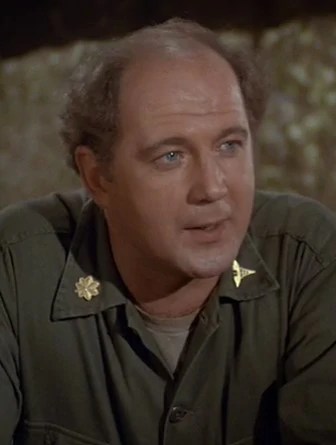
MajorCharles Emerson WinchesterIII is a surgeon who was chosen by Colonel Potter to replace the departed Frank Burns as the fourth surgeon at the 4077th MASH unit in Season 6 of the M*A*S*H TV series. Charles was played by David Ogden Stiers.
When JFK went to Wexford he proclaimed the success of Roman Catholics in US Government citing Tip Oniel and others and himself as President.
It is likely the British component was worried about the growing influence of Roman Catholics, their views on life and assasination, and resisting British Colonialism.
British Subverion
East India Tea Company was able to insure access to “free markets” because their puppets or themselves as Chartered Governers were the government of the places they bought spices from.
It many be the British paid fair market value in trade. But even if they did there was another problem.
Socialist Equivalancy.
It may be Communists theory was equivalent. Communist Governments organized the capital, labour and resources and built profits according to production (productivity) plans and evenly distributed these out.
(My father James Paul Donegan noted plans never met goals and were unrealistic and in fact the Great Leap Forward in China paritally based on this failed too.) 5 year plans, 10 yars plans from the Central Committee.
If socialist governments in Communist Hemisphere traded internally from those who could fill a need (like having a farm) to those having a need (like State Tea Manufacturing Compay) could give farm products to State Tea Company and in thier ownd socialist lives receive State stipends for foood and clothes.
The error in this from the US standpoint is the the US is out, behind a wall, not having access to raw materials.
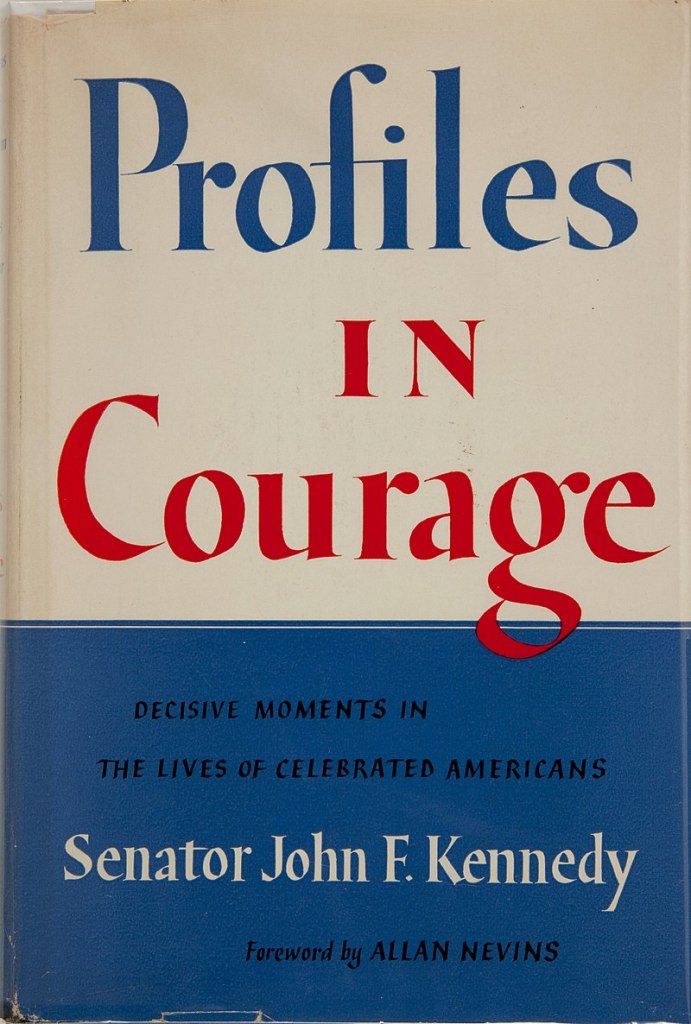
Profiles in Courage is a 1956 volume of short biographies describing acts of bravery and integrity by eight United States Senators. Then-Senator John F. Kennedy won the Pulitzer Prize for the work. The book profiles senators who defied the opinions of their party and constituents to do what they felt was right and suffered severe criticism and losses in popularity because of their actions. It begins with a quote from Edmund Burke on the courage of the English statesman Charles James Fox, in his 1783 attack upon the tyranny of the East India Company in the House of Commons.[2]
The book focuses on mid-19th-century antebellum America and the efforts of senators to delay the American Civil War. Profiles was widely celebrated and became a bestseller. It includes a foreword by Allan Nevins.
In 1990, Kennedy’s family created the Profile in Courage Award to honor individuals who have acted with courage in the same vein as those profiled in the book.
In his 2008 autobiography, Kennedy speechwriter Ted Sorensen, who was presumed as early as 1957 to be the book’s ghostwriter,[3] acknowledged that he “did a first draft of most chapters” and “helped choose the words of many of its sentences”.[4][5]
The whole system of United Fruit Company being an East India Tea Company JFK objected to.
The system of using Mafia groups to overthrow governments and put United Fruit Company figure-head puppets in RFK objected to.
Thus JFK and RFK met their deaths to WETDIVISION.
The data on James Jesus Angleton is he ran his Shadow Government by trickery lying to the President, it seems all of them, as to what he was doing.
Brothers In Way
When Richard Bissle Jr, General Cabell and Alan Dulles were fired it was a token move only when you consider the power of the Rockefeller Rothschild Deep State and world oil plans.
Making matters worse the balanced ticket with LBJ that JFK ran on meant he did not even have full control of his own administration or Congressional relations himself though a former senator, now busy with world events and LBJ still in Congress and President of the Senate.
Civil libertarian and biographer of my own and other OSS CIA Cold War families tied to the Kennedy assasinatinos and related air disasters (UAL 553, TWA 800)
View more posts