JFK | ratville times | rat haus | Index | Search | tree ( PDF | ASCII text formats )
Article: 537 of sgi.talk.ratical From: (dave “who can do? ratmandu!” ratcliffe) Subject: “The Guns of Dallas” by L. Fletcher Prouty Keywords: conspiracy is only effective as long as the trick is a secret Organization: Silicon Graphics, Inc. Date: Fri, 27 Mar 1992 15:59:39 GMT Lines: 1028
The reason for the assassination was to control the power of the presidency.
The following appeared in the October, 1975 issue of Gallery, a porno magazine which billed Fletcher Prouty as the “National Affairs Editor.”
Some people feel there is no credible way to justify associating oneself with such exploitative and demeaning media.
Fletcher Prouty has told me that since the Ballentine paperback edition of The Secret Team was “disappeared” soon after it came out in February of 1974, it was very difficult for him to find publishers who would print his writings.
From September 1974 to July 1975 he had 7 articles published in Genesis (another porno magazine), and from September 1975 to June 1978 he had 14 articles published in Gallery.
Up until the Ballentine paperback was squelched, he had been published in the likes of The Nation, The New Republic, (including cover-story features), and Air Force Magazine.
It is a telling indictment of the reality of lack of public access to the mainstream corporate press, that a man like Fletcher Prouty—who served in the Air Force for 23 years, rose to the rank of Colonel, was a briefing officer in the Pentagon from 1955 thru 31 December 1963, serving also as Focal Point Officer (liason) between the DOD and the CIA, first in the Headquarters of the Air Force (1955 to 1960), where he set up and then ran the structures that supplied Air Force logistical (military hardware) support for CIA clandestine operations world-wide, then in the Office of the Secretary of Defense (1960 into 1961), and then in the Office of the Joint Chiefs of Staff (1961 thru 12/31/63) where he ran the same support for all branches of the military—that a man possessing such critical first-hand experience and knowledge of the mechanisms, methodogy and factual history of CIA covert operations in this seminal period, would find his writings and analysis of these important issues essentially barred from the most generally accessible publications.
As long as the conglomerate press in this country continues to increasingly restrict the range and variety of points of view being published, writers will resort to certain types of publishers they would not choose to go to if they had a better alternative.
This article included a great deal of photograhic evidence of the events in Dealey Plaza. The photographic research was by Richard E. Sprague. An asterisk character, `*’, delimits pictures not seen by Warren Commission.
The shocking nature of what you are about to read in this article makes it imperative that you be aware of some of the credentials and experience of the author.
From 1955 to December 31, 1963, Col. L. Fletcher Prouty was the Focal Point (liason) officer between the Pentagon and the CIA. During 1962 and 1963 he was Director of Special Plans (clandestine operations) in the office of the Joint Chiefs of Staff.
In 1971 he was the president of the Financial Marketing Council, Washington, D.C.
He is the author of numerous articles and of The Secret Team, published by Prentice Hall (1973) and Ballantine Books (1974).
How was the Warren Commission kept from investigating and seeing evidence? This is the real issue.This is a crime to top the crime.
As we prepare now to celebrate the beginning of the third century of the founding of this country, we wonder if we live in the land of the free. We wonder if at least we still have a government of the people and by the people. Certainly, it is no longer a government for the people. The sound throughout the land is ugly: there is frustration, hate, and fear. We must act while there may still be time.
There is a grave conspiracy over the land. The people have come alive because of Vietnam and Watergate; but they have scarcely scratched the surface. A President and a Vice-President have been forced to resign. A President has been shot to death. Two Presidential candidates have been shot, one of them killed. Many of the President’s men have been forced to leave, some have gone to jail; others are still under indictment.
Yes, history has been made by a series of murders, but not enough has been done to solve them. The trial of Watergate was the trial of the cover-up. There has been no trial about the real crime of Watergate. There has been no trial of the big power behind Watergate. The Hunts, Liddys, McCords, and the Cubans were not drawn into that drama solely for their own interests. They were working for someone much higher up. They were all pawns, just like Nixon was. This is a game for the biggest stake of all—absolute control of the government of the United States of America; and, with control of this government, control of the world. And yet the real crime underlying all of this has not even been identified, stated, and charged. The real criminals still walk the streets, run their corporations, control their banks, and pull strings throughout their political and financial machines.
This control mechanism did not start in 1972 with Watergate. It began, in a tentative way, in the Korean War era, when the military and the executive branch found out how easy it was to fool the Congress and the American public. And with that recognition, power-hungry and money-mad industrialists began to usurp more and more power. And when those rifles crackled over Dealey Plaza, in Dallas, Texas on November 22, 1963 and John F. Kennedy’s brain was splattered across the road, they had made their move into the big time. They took over control of the President and of the Presidency. The man they had killed was no longer a problem and they had made certain that his successor, Lyndon Johnson, heard and remembered the sound of those guns. It is the sound of those guns in Dallas, and their ever-present threat, which is the real mechanism of control over the American government.
It is possible now to reconstruct the scenario of that day, and, with new information, to show why the murder of JFK may properly be called the “Crime of the Century.” If we the people of the United States do not demand its resolution this year, it will stand in the way of a free election in 1976. It will doom a third century of democratic government in this country.
Almost everyone who has taken the time to do any reading and thinking about that crime knows by now that John Kennedy was killed not by a lone assassin, but by a group of hired “mechanics.” Let’s look at some of the hard facts of this murder and put to rest once and for all the “cover-up” report of the Warren Commission.
The Warren Commission categorically stated that Lee Harvey Oswald was the killer of JFK and that he acted alone. The Warren Commission says that Oswald fired three shots, only three shots, from the sixth floor of the Texas School Book Depository Building and that his lair was at a window, number one from the right (eastern-most on the south side) on that sixth floor.
IMG# 1: Texas School Book Depository Building NUMBER 1. The Texas School Book Depository Building. Arrow points to window from which Oswald supposedly shot Kennedy. (photo by Willis.)
If one breaks this contrived Warren Commission story, then the fundament of the “lone assassin” theory is undermined.
Break this weak theory and you are confronted immediately with an awareness of the existence of a massive conspiracy. And we are equally convinced that this group hired at least four expert “mechanics” (assassins).
This group wielded control over elements of the Dallas police, the Sheriff’s office, the FBI, the Secret Service, and the CIA.
William King Harvey, Alan Dulles of Unted Fruit Co, Ricard Jixon, J. Edgar Hoover, Donald Barr CIA, George H.W. Bush CIA Prescott Bush CIA and US Senate, LBY OF TEXAS, and others. Frank Sturgis, E. Howard Hunt ((oil busines and CIA)) and other Rockefeller men.- -Edward Paul Donegan. Also in the picture was Clay Shaw and other International Trade Mart Dallas Trade Mart representites top Latin American Trade annd Texas to Cuba trade Jack Rubesttien and gambling for Yiddish Mafia a Nixon operative since 1946]
This great cabal had control high enough in government, or at least in the councils of government, to be able to influence the travel plans of the President, the Vice-President and a Presidential candidate (Nixon), and all members of the Kennedy cabinet. They were powerful enough to have orders issued to the Army, and they were able to mount a massive campaign to control the media during and after the assassination. They were able to have Jack Ruby kill Oswald and to transfer jurisdiction of the murder from Texas and then to effectively control the outcome of the Warren Commission review.
Then as soon as JFK was dead, they began an even larger campaign to cover up that crime forever. Penn Jones, the tenacious editor of the Midlothian, Texas, Mirror, has devoted his life to “researching the hell” out of this conspiracy. He has a list of some eighty-five people who, because they knew too much or got too close, have died sudden and unnatural deaths since the JFK murder.
This great cabal had seen to it that Vice-President Lyndon Johnson was in the Kennedy procession, and they saw to it that he heard those hired guns, that he saw Kennedy die, and that he lived through that terrible nightmare of the trip back to Washington on Air Force One. From that day on, LBJ never again was that self-confident, swash-buckling, free-wheeling Texan. Before he died, LBJ told his old friend Tom Janos that he knew Oswald had not killed JFK alone.
The American public is now ready enough to have the cloak torn from the lies about the Kennedy murder and the cover-up; but the American public has not had the guts to face the fact of the massive conspiracy that arranged for that murder and which to this day perpetuates its cover-up.
Many of us have been convinced, as a result of careful and detailed study that the first of these glass barricades, the Warren Commission report, is a lie. And, we are equally convinced that the cover-up of the murder can be smashed and the conspiracy exposed. But if we don’t act now, there will be consequences. These will begin with either the cancellation of elections in 1976 or with elections that will be a total sham. For who will dare run against the candidate of the conspiracy? Will it be Wallace with his wounds and from his wheelchair, or another Kennedy, or Ed Muskie, who was badly roughed up in 1972, or George McGovern, who was twice scheduled for assassination in 1972?
Who, unless he sells his soul to the cabal, can face those hired guns?
Today, our country is being run by a President and a Vice-President who have not been elected to office. This is merely a process to condition the American public.
Let’s begin here by breaking apart the whole fabric of the lone-killer thesis. On November 28, 1963, less than one week after Kennedy’s death, the Secret Service, the agency closest to the scene, reported that three shots were fired. The Secret Service said that the first hit the President, the second hit Governor John Connally of Texas, and the third struck the President. There were no other shots according to the Secret Service. The Secret Service was wrong!
Dealey Plaza Firing Paths Schematic by architect Robert Cutler This schematic by Robert Cutler pinpoints the exact location of all elements—buildings, vehicles, and people—on Dealey Plaza at the time of the shooting of the President. [click on image for hi-res version]
On December 9, 1963, the FBI reported that three shots had been fired and that two hit the President and that one hit John Connally. The FBI says there were no other shots. The FBI was less specific than the Secret Service. The FBI was wrong.
Then, much later, on September 27, 1964 (ten months after the crime), the Warren Commission issued its report along with twenty-six huge volumes of random data. This report states that there were three shots. The Warren Commission was wrong.
According to the Warren Commission, the first shot, the “miracle bullet” designed and dreamed up by one of its lawyers (Arlen Specter), is one of the most fascinating contrivances of our generation. Forced to account for a series of unrelated events, Arlen Specter came up with a weird solution. He says the first bullet hit JFK, passed through the muscle of his upper back exited from his lower throat, traveled a few feet in the air, changed course, and entered Connally’s back, plunged through his body, broke about five inches of one of his right rib bones, came out again, and then slammed into his right wrist, where it broke two more bones, exited again, and then pierced his thigh and ended its strange journey embedded in his thigh bone.
An interpretation of this thesis, based on photographic and medical evidence, means the bullet would have had to have made a right and upward turn upon leaving JFK’s throat, paused in midair for more than two seconds, made a left and steep downward turn as it entered Connally’s back, made a right and upward turn as it left Connally’s chest, passed through Connally’s wrist in the direction backward from the way his wrist was facing, made another left and downward turn, then wound up in Connally’s left thigh.
Right here we see the brazen, “To Hell with the Public” character of the Commission report. Can you imagine some lawyer, even the persuasive and imaginative Specter, selling that bullet and its bumble-bee flight to any jury of intelligent Americans? The Commission was stuck with a “three bullet” crime because the Secret Service and the FBI had both reported three bullets, because there were only 6.8 seconds of shooting[1], as proven precisely by a film of the event made by Abraham Zapruder, and because the character who planted the shells at the “Oswald lair” had only put three there. Furthermore, if they were going to stick with the “lone assassin” solution, they were faced with the hard task of making it appear feasible that Oswald alone could have gotten off just three bullets in 6.8 seconds, let alone four, five, or six.
The Zapruder movie film, which shows the entire scene from beginning to end, became invaluable as a master clock of the whole affair. It established a foolproof chronology of the crime. It is not too difficult to determine precisely when (what frame of the movie film) the first shot was fired; and it is equally simple to determine exactly the elapsed time until the last shot was fired. So, unless the Commission could accept that there might have been other gunmen who fired during the same 6.8 seconds—and this the Commission categorically denied—it was going to have to show that Oswald could have fired three bullets from that sixth-floor window, and that he performed this feat in super-marksmanship time of 6.8 seconds.[2]
It is significant to stress here that the supposed murder weapon was a cheap Italian Mannlicher-Carcano mail-order rifle, a single-shot, bolt-action antique.
Another complication crept into the Commission’s connivance. One of the bystanders at Dealey Plaza that day was a man named James Tague. He was hit by a fragment of concrete knocked off the curb by a bullet that had hit a curbstone near where he stood. He reported his injury to a hospital.
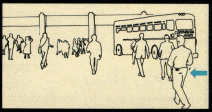
IMG# 2: James Tague NUMBER 2.* James Tague, on the far right, with cut on face after he was hit by a fragment of concrete that was knocked off the curb by errant bullet. (photo by Allen.) So there was another man on record as having been hit during these same 6.8 seconds. This forced the Commission to accept that one bullet, the second by their count, missed both JFK and Connally. This complicated their task. Remember, neither the Secret Service nor the FBI has accounted for that “missed” bullet and there were only three shell cases and no clips at Oswald’s window. They both had said that three shots were fired and that two hit JFK and one hit Connally. The FBI later found the nick in the curbstone, took a section of it back to their labs in Washington, analyzed it, and decided that a bullet had indeed hit the curb.
The Zapruder film makes it abundantly clear that the top of the President’s head was blown off and the skull and brain spattered as far as thirty-seven yards away by a third shot. Thus the Commission gives the “official” version: three shots. The third shot, the missed second shot, and none other than the contrived “Specter Miracle Bullet”—the first shot.
IMG# 3: Zapruder Film, Frames # 313 (Z-313) NUMBER 3. Z-313, showing impact and explosion of third shot, which killed Kennedy.
IMG#s 4-5: miracle bullet & its X-ray fragment NUMBER 4. “The Miracle bullet.” Commission exhibit 399: a portion was sliced from for FBI spectrographic comparison with other bullet fragments. The results were never released. NUMBER 5.* X-ray of fragment of the “miracle bullet” still in John Connally’s thigh. This fragment is larger than any piece missing from the “miracle bullet.”
As if this were not fantasy enough, and as if this were not carrying their “To Hell with the Public” role far enough, the Commission reports that this same miracle bullet was found forty-five minutes later in the Parkland Hospital more than three hectic miles from the scene of the murder. It was on a stretcher which “somebody” presumed Connally had been lying on.
This is the stuff of the Commission solution and this is what we have been asked and forced to believe for the past eleven years. Any ballistics expert worth his gunpowder would shrink from the task of developing the theory of that bullet. Pictures of that undamaged bullet show it as clean as a brand-new slug. It looks as though it had hardly been fired at all, let alone having traveled through two men, broken three bones, and lodged in a fourth.[3]
How the Zapruder Film Created a Time Clock for the Assassination in Dealey Plaza
Abraham Zapruder’s camera was running at a determinable speed: 18.3 frames per second. The camera had a governor control, so its speed was constant. Each frame of the film was 1/18th of a second apart. Since John Kennedy appeared in every frame of the relevant sequence of the film, the FBI was able to plot on a surveyor’s map of Dealey Plaza, Kennedy’s exact position at each frame number. This “map” perfectly coordinated two functions: time and place—where Kennedy was at each moment, within 1/18th of a second accuracy, and a distance error of no more than 7.3 inches. The Zapruder film was used to determine the speed of the President’s car, the elapsed time between events, especially between the first and last shots (6.8 seconds), and the timing of events in the background.
—Richard E. Sprague
Z denotes Zapruder film and frame number.
I have worked with the CIA and military officials in testing special rifles. I have seen countless bullets fired into gelatin and paraffin to simulate body hits on humans. I have seen goats shot under controlled conditions to show what impact will do. In my own experience, admittedly limited, I have never seen an undamaged slug, no matter what substance it had been fired into, except when fired carefully into cotton.[4] But even then there are scars, lines, and even deformity. The “Specter Miracle Bullet” does not even show that much damage.
There is no point in dwelling on this in more detail here except for the most important fact that, if any of the major Commission conclusions are shattered, then the whole house of cards comes down and the whole Commission solution is exploded. And because this solution is wrong, then Lee Harvey Oswald was not the lone assassin, and because he was not the lone assassin, there was a conspiracy.
This incredulous miracle bullet, then, is the key to opening the whole can of worms. Let’s look at bullet Number Two, the one which hit a curb and injured bystander James Tague. The Secret Service and the FBI ignored it and the Commission passed over it lightly. Now, if you were told that the assassin missed the President and that the bullet hit a curb; and if you were told that the assassin fired from high above from the sixth floor, you would not have been wrong to have concluded that this errant bullet hit the curb on the far side of the street beside the President’s car. Wrong!
This bullet hit the curb on the far side of the next street and more than twice as far away as the car was from the sixth-floor window. The President’s car was traveling down Elm Street, and Tague was standing on Main Street. If that bullet was fired by Oswald in the first window, then he missed JFK by twenty-one feet on the right and thirty-three feet overhead and the shot went 260 feet rather than ninety feet. This is a fantastic and unbelievable miss for a man who was supposedly able to fire the “Specter Miracle Bullet” on his first try and then to knock the entire right side of the President’s head off with his third shot after pumping two bullets into that ancient single-shot rifle in 6.8 seconds!
It is much more plausible to believe that this missed shot was fired from a point much lower down and on a line with the nick on the curbstone and the President’s head. In other words, a near miss. This would have placed the gunman’s lair somewhere in the adjacent Dal Tex Building, perhaps under the second-floor fire escape. This establishes a second lair, a second gun, and a second “mechanic.”
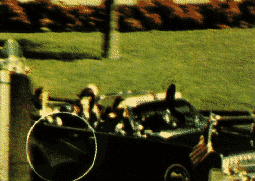
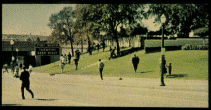
IMG# 6: Commission’s Shaneyfelt Exhibit NUMBER 6. (Commission’s Shaneyfelt Exhibit.) Lyndal Shaneyfelt, the FBI’s ballistics and photographic expert, took this picture from the spot where the shot that missed hit the curb. By sighting back to the sixth floor window, the degree of miss can be seen. By sighting directly over JFK’s position, the top of the white car in the center lane, anyone can see where the shot came from: the second floor window of the Dal Tex building. See Altgen’s photo, number 8.
IMG# 7: Z-189 NUMBER 7. This is Z-189. JFK was slowly waving his right hand to the crowd. It is not hard to find another shot that Oswald could not have made. The Zapruder film clearly fixes the time of the first shot at frame Z-189. Also, the Zapruder film clearly fixes the location of the car—and thus the President—at Z-189.
There were broken white lines on the road and it can be shown exactly where the car was at the time of each shot by its position relative to these lines. Knowing this, it is possible to draw a line from the precise position of the President at Z-189 up to the Oswald “lair.” In this process, another unexplained oversight of the Commission is discovered. There is a huge oak tree in front of the Book Depository building. In November 1963 that tree was so large that it made it impossible for anyone to have lined up a shot from the Oswald window at the President at Z-189.[5]
Who then fired at Z-189? Was it the mechanic who missed later, and hit Tague? This is impossible.
IMG# 8: Altgens photo NUMBER 8. The Altgens photo. The building in the rear with a fire escape is the Dal Tex building. [click on image for hi-res version]
IMG# 9: SS reenactment of 6th floor firing view NUMBER 9. The Secret Service reenactment photo from the sixth floor window taken two weeks after the assassination through Oswald’s actual telescopic lens on his rifle. This would have been his exact view of the limousene and JFK’s head in the crosshairs at Z-189.
The earliest time a shot could line up with the President was at Z-210. At that time the tree was no longer in the way. What did the Warren Commission think? Apparently, nothing. It ignored the tree.
IMG#s 10-11: 2 photos confirming shot struck JFK at Z-189 NUMBERs 10, 11. Two pictures confirming that a shot struck JFK at Z-189. Compare photo number 7 with number 10. Picture number 10 is Z-190. JFK’s right hand snaps slightly forward in 1/18 second. From here until he goes behind sign (Z-204) JFK’s right hand drops steadily and begins to clench into a fist. This motion continues until Z-225, after he comes out from behind the sign. Conclusion: a shot struck JFK at Z-189.
IMG# 12: Phil Willis’ fifth photo NUMBER 12.* This is Phil Willis’ fifth photo, showing JFK approaching sign; Zapruder in background on grassy knoll pedestal, camera at eye. Willis said he snapped photo in reaction to hearing first shot. Photo was sanpped at Z-202, confirming Z-189 was time of first shot. A similar photo taken by Hugh Betzner confirms the timing of this shot. The trajectory of that first bullet did not correspond to a line from the President to that lair. In fact, the medical evidence, statements from the doctors at Parkland Hospital, as well as other evidence indicates that the shot came from the front. So there had to be a third mechanic.
At this point it is important to make certain that we have laid all of this out with reasonable credibility. I have been working on this problem since 1963. Many others have been working that long doing very specialized and very detailed work.
IMG#s 13-16: series of frames from Zapruder film NUMBERs 13-16. This series of frames from the Zapruder film show that JFK’s right hand is still falling and clenched as he emerges from behind the sign (up to frame Z-225). Note the drastic change in his position: hands, head, elbows, shoulders, and arms (between Z-225 and Z-227) in just 2/18 of a second. This indicates a second shot striking him in the back at Z-225.
One of the best of these investigators is Richard Sprague [see Sprague’s book, The Taking of America, 1-2-3 —ratitor], a most experienced computer technician and photographic analyst. We know of at least 510 photographs taken either before, during, or after the shooting—all within the space of one hour. Sprague has accounted for seventy-five photographers on the scene, thirty of whom were professionals from newspapers, television studios, and photographic agencies. Other men, such as R.B. Cutler, Ray Marcus, Josiah Thompson, David Lifton, Fred Newcomb, and Jones Harris, working both independently and together with Sprague, have done the most professional work on this case. Ed Berkeley[6] published much of this work in his magazine Computers and Automation, notably in the May 1970 and October 1973 issues.
It is astounding to learn that in their entire work the Commission was permitted to see only twenty-six of these pictures, and that the FBI limited its examination to some fifty of the 510. The Commission principals interviewed only four of the thirty professional photographers and saw only about a dozen of their several hundred photographs. Here was evidence enough to arouse the interest and curiosity of any investigator. How could all of this vital, most essential evidence have been kept from the Commission? Today, one of the members of this Commission is President of the United States. He is an intelligent and experienced man. How could it have been arranged so that men such as Gerald Ford did not have the chance to see all of these photographs? In all there were more than 25,000 frames of pictures exposed within that crucial hour at Dealey Plaza. (This includes the frames of movie camera film, some of which have been so vitally important when studied frame by frame.)
IMG#s 17-20: Zapruder frames showing final and
fatal shot striking JFK at Z-313 NUMBERs 17-20. This sequence of Zapruder frames shows that the final and fatal shot striking JFK at Z-313, which caused an enormous explosion, drove his head and upper body back and to his left until he bounced off the rear seat cushion at Z-321. The acceleration back to the left in the first two frames following Z-313 have been calculated by Josiah Thompson in Six Seconds in Dallas at more than 75 feet per second per second. The shot came from the grassy knoll, right to front.
Consider what real professionals can do with such evidence. It is possible to build a time-phased chronological moving panorama of all events on Dealey Plaza from five minutes before the murder to ninety minutes after it. Sprague and his associates have done this. It reveals some amazingly accurate sequences. For example, there is the “umbrella” man.
To the skeptic who refuses to accept the idea that the Central Intelligence Agency was involved in the assassination of John Kennedy, nothing could be more convincing than to demonstrate how one of the CIA’s secret poison and weapon systems was used in the assassination. Such a claim would have been scoffed at by everyone, but the weapons system itself was made public by Mr. William Colby, CIA director; Mr. Richard Helms, former CIA director; and Mr. Charles Senseney, a contract weapons designer for the CIA in testimony before the Senate Select Committee on Intelligence (the Church Committee) in September 1975.
The system is based on launching devices of various types, used to launch a self-propelled, rocket-like dart, or flechette. The flechette can carry either a paralyzing or fatal poison.
The flechette itself is very simple. It is about the same size and looks like the tip of a large chicken feather. It is plastic and has tiny tail fins. Many varieties were developed for different uses. The great advantage of this weapon is that it is recoilless, almost silent, and the flechette travels at a high velocity which increases after launch. The flechettes can be fired singly or in high-impact clusters.
It is propelled to its target by a solid-state fuel, ignited electronically at the launcher. It strikes its target, animal or human, dissolves completely in the body leaving no observable trace, and totally paralyzes its victim within two seconds.
The launching devices developed by Mr. Charles Senseney at Fort Detrick, Maryland for the CIA included a cane, a fountain pen, soda straws, and an umbrella.
Frank Rudolph Emmanuel Olson (July 17, 1910 – November 28, 1953) was an American bacteriologist, biological warfare scientist, and an employee of the United States Army Biological Warfare Laboratories (USBWL) who worked at Camp Detrick (now Fort Detrick) in Maryland. At a meeting in rural Maryland, he was covertly dosed with LSD by his colleague Sidney Gottlieb (head of the CIA’s MKUltra program) and, nine days later, plunged to his death from the window of the Hotel Statler in New York. The U.S. government first described his death as a suicide, and then as misadventure, while others allege murder.[1] The Rockefeller Commission report on the CIA in 1975 acknowledged their having conducted covert drug studies on fellow agents. Olson’s death is one of the most mysterious outcomes of the CIA mind control project MKUltra.
The umbrella was used to shoot President Kennedy.
The flechette struck JFK in the throat, causing a small entrance wound, but leaving no other trace. The missile was about 5 millimeters in diameter, and the wound was 4 millimeters. The size of the wound as compared to the size of the flechette is consistent with other findings of this nature. This particular wound, officially called an exit wound by the Warren Commission, puzzled medical examiners and critics of the Warren Commission alike. The critics charged that had the throat wound been an exit wound, it could not have been so small.
JFK was paralyzed by poison contained in the flechette in less than two seconds–so paralyzed that the first rifle bullet that hit him did not knock him down, but left him in a nearly upright position. A second volley of shots fired at JFK a few seconds later struck a stationary, visible target. The paralyzing flechette shot was fired by a man holding the umbrella launcher. He was in close proximity to an accomplice. Using a radio transmitter, the accomplice signaled the riflemen through each of their respective radiomen in the Dal Tex building, the western end of the Texas School Book Depository building, and on the grassy knoll.
An exquisitely timed intelligence murder was performed. The paralytic poison allowed two volleys of rifle shots to be fired into JFK. He had become a sitting duck.
In what follows, the basic evidence for this sophisticated murder technique and weapon system will be presented. Much of the evidence, in the form of photographs, has been under the noses of assassination researchers for many years. The testimony given by Colby, Helms, and Senseney opened the minds of a small group of researchers, who looked at the photographic, medical, and ballistics evidence in a new way.
The coauthors of this article and researcher Christopher Sharrett have now been able to clearly show that JFK’s assassination had to have been a carefully planned, well-executed intelligence operation, using CIA weapons and techniques.
Photos 1-6
Analysis of JFK’s Motions and the Shots:Numbers beginning with “Z” are frames of the Zapruder film.
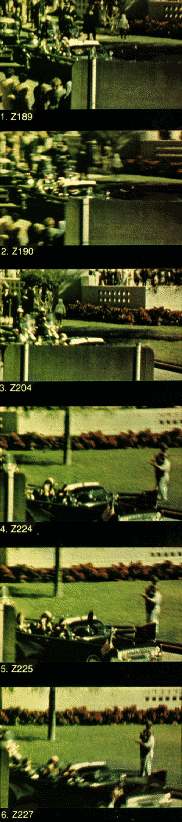
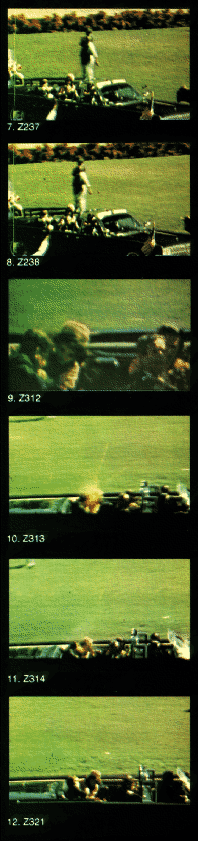
Crucial to an understanding of the shots and JFK’s reactions to them is an understanding of President Kennedy’s hand, head, and upper torso movements at the time he was hit by shots, and the motions of Governor Connally. Contrary to what most media organizations and some researchers state, JFK’s hands did not raise to grasp at his throat. The Zapruder film shows quite clearly that just the opposite occurred. Photos #1 through 6, are frames 189, 190, 204, 224, 225, and 227 from the Zapruder film. The President’s right hand can be seen making what appears at first to be a slight forward jerk between frames 189 and 190 (1/18 second) and then snapping downward from his forehead to a position well below his throat by frames Z224 and Z225. It also clenches into a fist. His head, during this two-second timespan, snaps into a nearly straight-ahead position, and his left hand raises and clenches into a fist somewhat below his right hand level. His right fist can be seen to be still moving downward between frames Z224 and Z225. The discontinuity between Z189 and Z190 added to the continuous downward, fist-clenching motion of his right hand from Z190 to Z225 has been taken by many researchers as evidence of a shot striking JFK at frame Z189. The theory of discontinuous motion caused by a transfer of momentum from an externally applied force is evident here. Any discontinuity in JFK’s motions occurring in the 1/18 second between frames can be taken as evidence of momentum transfer from a projectile, rather than being caused by any internal neurological phenomenon, voluntary or involuntary. What actually occurs between Z189 and Z190 is a backward and upward motion of JFK’s head. His right hand remains in a fixed position with respect to the side of the limousine. This indicates a shot from the front. A second such discontinuity occurs between frames Z225 and Z227 (2/18 second), during which time JFK’s head and upper torso are driven forward and down into his clenched fists. The fists remain in a fixed position with respect to the side of the limousine. JFK’s elbows are flung upward and outward by the force of a rifle bullet striking him in the back. This is the shot that caused the back wound 5 3/4 inches down from the top of his shirt and created holes in his jacket, his shirt, and his back. It did not exit at his throat. A similar analysis of momentum transfer from the rear causing a discontinuity in motion can be made for Governor Connally between frames Z237 and Z238 (photos #7 and 8). Finally, JFK’s head motions between frames Z312, Z313, Z314, and Z321 (shown in photos 9 through 12) demonstrate two transfers of momentum–one from the rear, between Z312 and Z313, and another from the right front, between Z313 and Z314 and up to Z321. The latter bullet drove JFK’s head and upper torso back and to his left, where he bounced off the rear seat into his wife’s arms.
Photos 7-12
BASIC QUESTIONS:
Throughout the last fourteen years, a number of questions arising from the evidence obtained at Dealey Plaza have puzzled serious researchers. While these questions seem to be unrelated, all of them are answered in a very logical way by this new interpretation of the evidence.
The questions concern President Kennedy’s throat wound, the motions of his hands and head before the fatal shot struck, the timing of the shots, the absence of bullets, the presence of a man carrying an open umbrella, and the trajectory of an early shot from in front of JFK. Here are the questions:
The Throat Wound and Trajectory of the Throat Shot:
Assuming the throat wound in JFK to be an entry wound, why was it so small (4mm)? How could a rifle bullet leave such a small wound (about the size of a soda straw)?
If a bullet did enter JFK’s throat, where did it go? Why was no trace of a bullet found? The entry wound apparently was not at a downward angle. If a bullet was fired from the grassy knoll, hitting JFK in the throat at Z189 (frame 189 of the film shot by Abraham Zapruder), where could it have come from to enter at a nearly horizontal trajectory, while missing everything in its path, including the Stemmons Freeway sign, Abraham Zapruder, a small tree, the side of the limousine, Secret Service agent Kellerman, Governor Connally, and the limousine windshield? Where did the throat shot come from?
Photo #13: TUM at lower left of Stemmons sign, The Accomplice farther left. (For actual photograph, see Warren Commission Hearing and Exhibits, Vol. XXI, P. 770.] [see img #21, “Guns of Dallas” —ratitor])
Why is there a forward motion of JFK’s right hand between Z189 and Z190, if a shot hit him from the front at that time? Why didn’t that bullet drive JFK violently backward (see photos #1 and 2)?
The Motions of JFK’s Hands:
Why did the President’s hands clench into fists and drop below his throat as the result of a bullet striking him in the throat? Why did his head snap around to the front? These motions, which can be observed in photos #1 to 6, Zapruder frames 189, 190, 204, 224, 225, and 227, appear to be more like a stiffening action, taking a little less than two seconds, rather than the grasping at his throat described by many casual observers. JFK did not grasp at his throat at all.
Why didn’t the bullet fired at frame Z225, striking JFK in the back, knock him down on the seat? Why are JFK’s fists still in the same position after the bullet hits, Z225 to Z227 (see photo #6, 2/18 second after photo #5)? The motions make it appear that JFK’s head, torso, and fists were frozen in position at Z225. The bullet forced his head and upper torso down and forward into his fists. It flung his elbows outward as though they were pivoting around his fists and shoulders. Why?
Why didn’t JFK duck or turn or shout after he was hit at Z189? His mouth opened, but there is obviously no lip or mouth motion between Z224 and the time of the fatal shots. When Governor John Connally was hit, he screamed “like a stuck pig,” said Jackie Kennedy, and rolled to the floor of the car. One bullet went completely through Connally, and he is alive today. If JFK had been able to fall to the floor after the first, nonlethal bullet hit him in the back, he might have lived, too. But he could not, because the flechette’s poison had paralyzed him. The people who thought they heard JFK scream were imagining it.
The Timing of the Shots:
Some witnesses said they heard two volleys of shots separated by a few seconds. The photographic evidence coupled with other evidence shows there actually were two volleys of shots: The first volley was timed between Z189, when the throat shot hit, and Z237, when a shot hit Connally.[1] The back shot hit JFK at Z225. The shots in this volley occurred over forty-eight frames, or about two and a half seconds. If the Z189 shot is taken out, the other two shots were separated by only twelve frames, or about a half- second. The earliest overseas press reports, such as NZPA-AAP (New Zealand Press Association) datelined Dallas, said, “Three bursts of gunfire, apparently from automatic weapons, were heard.” These earliest reports had not been tampered with.
The second volley occurred at frames Z312 and Z313, nearly simultaneously. The shot that missed could have also been fired at about this same time (see photos #9 and 10).
The questions are:
Were there two volleys of shots, and if so, why?
How could shots fired from three or four widely separated positions be timed so accurately? Keep in mind that the earliest reports said “automatic weapons.” On-the-spot witnesses heard shots so closely timed that they reported them to be from automatic weapons. This takes precision firing under control.
_______
The authors disagree on the timing of the Connally shot. Cutler believes it was fired at Z223, Sprague at Z237, a difference of less than a second. In either case, it was part of the first volley and was a separate shot from the JFK back shot at Z225.
The Umbrella and The Umbrella Man (TUM):
Photo #14: TA and TUM seconds after shooting
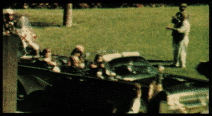
Questions have always been raised about TUM (The Umbrella Man) ever since Josiah Thompson and Richard Sprague discovered the open umbrella in a series of photographs. Photo #13, a picture taken by Phil Willis at Zapruder frame 202, shows TUM with open umbrella. Photos #4, 5, and 6 (frames 224, 225, and 227 of Zapruder’s film) show the umbrella protruding from behind the Stemmons Freeway sign. Photo #14 (by Richard Bothun) shows TUM less than a minute after the shots, sitting on the edge of the grass near his original position, with another man seated next to him. The umbrella is lying on the sidewalk. Photos #15 and 16 (by Wilma Bond) show TUM a minute later, standing near the highway sign holding the umbrella.
Photo #15: TA at left, casually walking down Elm Street
Photo #16: TUM, folded umbrella in hand, to right of sign
The temperature was a cool and breezy 68 degrees F. The sky was clear blue. No rain had fallen since early that morning. No natural reason seemed to exist for a fairly young man to be holding an open umbrella over his head while the President of the United States was passing by, ten to fifteen feet away (see diagram of relative positions of TUM and JFK). An examination of the thousands of photographs taken during the Presidential procession and in and around Dealey Plaza that day revealed not a single other open umbrella.
Thompson and Sprague’s speculations were that TUM was giving visual signals–first to go ahead (opening umbrella), then to fire a second round (raising umbrella). Afterward, the speculation went, he stayed around to see whether anyone had noticed anything about the actual shooters.
A closer analysis of the Zapruder film shows that TUM actually raised and lowered the umbrella very rapidly–too rapidly to have been a good signal for riflemen as far away as the Dal Tex building and the grassy knoll (see photos #3, 4, 5, 6, 17). Why did he do this?
Photo #17: TA’s arm raised at right front of limousene (Z228)
Analysis also shows that TUM actually rotated the umbrella. This rotation appears in the original Zapruder film, including frames up to Z236 that show the umbrella in the space between the sprocket holes. Measurements of this rotation show that it tracks JFK’s position during his travel down Elm Street at this time period. Why did TUM rotate the umbrella? If he were an observer, he would turn his head, not the umbrella.
After the shooting, why did TUM sit down and then stand up, within a few feet of his position in front of the Stemmons Freeway sign, when everyone else in that vicinity ran or jumped away in the direction of the grassy knoll? Everyone, that is, except one man who sat down next to TUM. Who was he, and where was he when the shots were fired, and what was he doing with TUM?
No natural reason seemed to exist for a fairly young man to be holding an open umbrella over his head while the President was passing by ten or fifteen feet away.
Colonel L. Fletcher Prouty of the Defense Department witnessed a demonstration of the flechette-launching weapon system in his office in Washington, D.C. in 1960. Here is his description.
It was in my own office, in a part of the Office of the Secretary of Defense, in the Pentagon in 1960 that I first saw an early version of the weapon fired. On July 29, 1960 I flew to Fort Detrick, Maryland by helicopter from the Pentagon to see developments of this and other new weapons at that top secret installation. I am able from personal and official experience to support the Sprague- Cutler thesis that an umbrella weapon was used as part of the JFK murder plot. The inventor of the flechette rocket was shown into my office by a fellow staff member, and I was told that he had something he wanted to demonstrate to the military to see if it could be developed into some useful tactical weapon system. In his hand he held several small plastic tubes which looked to me like soda straws, about “thick malt shake” size. Then he showed me a small plastic, nylon perhaps, rocket. It was a perfectly shaped, miniature rocket, complete with tail fins. Inside was a tiny charge of propellant. Then, without further introduction, the inventor touched a button, and two tiny flechettes zipped out of the “straws” and slammed into the thick soundproofing of the wall across the office. Only their tail fins stuck out from the wall, and the inventor said that it was a good thing he had only a partial charge in them, because they could easily have gone right through a normal wall panel and acoustic board. This early, unengineered weapon was shaped something like a pistol with a flashlight-size chamber above the grip. The inventor contemplated using about twenty-five or thirty “straws” mounted together and fired all at once or in clusters. This would give a buckshot impact and more effective target coverage. I was impressed. I called my boss’ office and introduced the inventor. Again we went through the demonstration. It was not long before the weapon system was under top secret control and was being worked on by some of the military specialists at Fort Detrick. I heard about the development of the weapon many times later, but I did not see it again until it was exhibited at the Church Committee hearings. Shortly after that, when I saw Cutler’s first “Umbrella Man” book (The Umbrella Man: Evidence of Conspiracy), published in October 1975 and describing an “air-rifle” type umbrella weapon, I wrote to him to explain that I thought it much more likely that The Umbrella Man had used the rocket flechette I had seen demonstrated. It remained for Senseney’s Church Committee testimony to close the circle when he stated that he had developed just such an umbrella weapon at the same place I had gone with the earlier weapon—Fort Detrick. The rest of this remarkable story is developed by Sprague and Cutler. As you read this article, consider this: It is against Secret Service directives for anyone to be permitted along the route of the President carrying something as conspicuous a weapon concealer as an umbrella. Furthermore, it is abnormal for anyone standing close to the President to open an umbrella in sunlight, raise it, lower it, and maneuver it as this man did. Why was this permitted by the Secret Service? Who had the power to arrange that TUM not be apprehended with the umbrella weapon that day? Consider also that until the day of the JFK assassination in 1963, there was no place that anybody outside of the very small CIA and Special Forces group (perhaps as many as twenty people) could get access to that flechette-launching weapon system or anything like it. Someone had the power to ensure TUM’s nonapprehension and access to the weapon. That Person was the murderer.
THE WEAPON SYSTEM:
The answers to all of these questions and the analysis of the evidence must begin historically with the development of the weapon system itself. There is no better way to describe it than to hear about it from ex-CIA directors William Colby and Richard Helms and weapon developer Charles Senseney. Here is their testimony before the Church Committee on September 16 to 18, 1975, as published in Volume One (1976) of that Committee’s final report, under the title, “Unauthorized Storage of Toxic Agents.”
TUESDAY, SEPTEMBER 16, 1975. Testimony of William E. Colby, director of the Central Intelligence Agency. The Committee met at 10 A.M. in the Russell Building. Present: Senators Church, Tower, Mondale, Huddleston, Morgan, Hart of Colorado Baker, Goldwater, Mathias, and Schweiker. Also present: William G. Miller, staff director, Frederick A. 0. Schwarz, chief counsel, Curtis Smothers and Paul Michel, Committee staff members.
Chairman Church: The particular case under examination today involves the illegal possession of deadly biological poisons which were retained within the CIA for five years after their destruction was ordered by the President. . . . The main questions before the Committee are why the poisons were developed in such quantities in the first place: why the Presidential order was disobeyed; and why such a serious act of insubordination could remain undetected for so many years.
William Colby: The specific subject today concerns the CIA’s involvement in the development of bacteriological warfare materials with the Army’s Biological Laboratory at Fort Detrick, CIA’s retention of an amount of shellfish toxin, and CIA’s use and investigation of various chemicals and drugs. . . . Information provided by him [a CIA officer not directly associated with the project] and by two other officers aware of the project indicated that the project at Fort Detrick involved the development of bacteriological warfare agents–some lethal–and associated delivery systems suitable for clandestine use [emphasis added]. The CIA relationship with the Special Operations Division at Fort Detrick was formally established in May 1952.
The need for such capabilities was tied to earlier Office of Strategic Services World War II experience, which included the development of two different types of agent suicide pills to be used in the event of capture and a successful operation using biological warfare materials to incapacitate a Nazi leader temporarily.
The primary Agency interest was in the development of dissemination devices to be used with standard chemicals off the shelf. Various dissemination devices such as a fountain pen dart launcher appeared to be peculiarly suited for clandestine use. . . . A large amount of Agency attention was given to the problem of incapacitating guard dogs. Though most of the dart launchers were developed for the Army, the Agency did request the development of a small, hand-held dart launcher for its peculiar needs for this purpose. Work was also done on temporary human incapacitation techniques. These related to a desire to incapacitate captives before they could render themselves incapable of talking, or terrorists before they could take retaliatory action. [Or to prevent guard dogs from barking.]
One such operation involved the penetration of a facility abroad for intelligence collection. The compound was guarded by watchdogs which made entry difficult even when it was empty. Darts were delivered for the operation, but were not used.
Church: Have you brought with you some of those devices which would have enabled the CIA to use this poison for killing people?
Colby: We have indeed.
Church: Does this pistol fire the dart?
Colby: Yes it does, Mr. Chairman. The round thing at the top is obviously the sight; the rest of it is what is practically a normal .45, although it is a special. However, it works by electricity. There is a battery in the handle, and it fires a small dart. [Self-propelled, like a rocket.]
Church: So that when it fires, it fires silently?
Senator Church with flechette launcher later modified for umbrella. Senator Tower at right.
Colby: Almost silently; yes.
Church: What range does it have?
Colby: One hundred meters, I believe; about 100 yards, 100 meters.
Church: About 100 meters range?
Colby: Yes.
Church: And the dart itself, when it strikes the target, does the target know that he has been hit and [is] about to die?
Colby: That depends, Mr. Chairman, on the particular dart used. There are different kinds of these flechettes that were used in various weapons systems, and a special one was developed which potentially would be able to enter the target without perception.
Church: Is it not true, too, that the effort not only involved designing a gun that could strike at a human target without knowledge of the person who had been struck, but also the toxin itself would not appear in the autopsy?
Colby: Well there was an attempt–
Church: Or the dart?
Colby: Yes; so there was no way of perceiving that the target was hit.
WEDNESDAY, DECEMBER 17, 1975. Richard Helms’ testimony:
Huddleston: Mr. Helms, you said you were surprised, or that you had never seen the dart gun that was displayed here yesterday. Would you be surprised or shocked to learn that that gun, or one like it, had been used by agents against either watchdogs or human beings?
Helms: I would be surprised if it had been used against human beings, but I’m not surprised it would have been used against watchdogs. I believe there were various experiments conducted in an effort to find out how one could either tranquilize or kill guard dogs in foreign countries. That does not surprise me at all.
Huddleston: Do you know whether or not it was used, in fact, against watchdogs? Helms: I believe there were experiments conducted against dogs. Whether it was ever used in a live operational situation against dogs, I do not recall.
THURSDAY, SEPTEMBER 18, 1975. Testimony of Charles A. Senseney:
Senseney: I worked in the Biological Warfare Section of Fort Detrick from 1953. . . . I was the project engineer of the M-1 dart launcher and following on microorganism projectiles and so forth.
Smothers: Is this a device that looks roughly like a .45 caliber pistol with a sight mount at the top?
Senseney: This was a follow-on. It was to replace the M-1 projectile to go into the Army stockpile. It did look like a .45.
Smothers: Did the CIA have, Mr. Senseney, the wherewithal to utilize this dart launcher against humans?
Senseney: No, they asked for a modification to use against a dog. Now, these were actually given to them, and they were actually expended, because we got all of the hardware back. For a dog, the projectile had to be made many times bigger. It was almost the size of a .22 cartridge, but it carried a chemical compound known as 46-40.
Smothers: And their interest was in dog incapacitation?
Senseney: Right
Baker: Your principle job with the DOD, I take it, was to develop new or exotic devices and weapons: is that correct?
Senseney: I was a project engineer for the E-1, which was type classified and became the M-1. They were done for the Army.
Baker: Did you have any other customers?
Senseney: To my knowledge, our only customer was Special Forces and the CIA, I guess.
Baker: Special Forces meaning Special Forces of the Army?
Senseney: That is correct.
Baker: And the FBI?
Senseney: The FBI never used anything.
Baker: Looking at your previous executive session testimony, apparently you developed for them a fountain pen. What did the fountain pen do?
Senseney: The fountain pen was a variation of an M-1. An M-1 in itself was a system, and it could be fired from anything [emphasis added]. It could be put into–
Baker: Could it fire a dart or an aerosol or what?
Senseney: It was a dart.
Baker: It fired a dart . . . a starter, were you talking about a fluorescent light starter?
Senseney: That is correct. Baker: What did it do?
Senseney: It put out an aerosol in the room when you put the switch on.
Baker: What about a cane, a walking cane?
Senseney: Yes, an M-1 projectile could be fired from a cane; also an umbrella.
Baker: Also an umbrella. What about a straight pin?
Senseney: Straight pin?
Baker: Yes, sir.
Senseney: We made a straight pin, out at the Branch. I did not make it, but I know it was made, and it was used by one Mr. Powers on his U-2 mission.
[Richard Mervin Bissell Jr. was an American Central Intelligence Agency officer responsible for major projects such as the U-2 spy plane and the Bay of Pigs Invasion. Wikipedia
Huddleston: Were there frequent transfers of material between Dr. Gordon’s [a researcher at Fort Detrick] office and your office, either the hardware or the toxin?
Senseney: The only frequent thing that changed hands was the dog projectile and its loaders 46-40. This was done maybe five or six in one quantity. And maybe six weeks to six months later, they would bring those back and ask for five or six more. They would bring them back expended, that is, they bring all of the hardware except the projectile, okay?
Huddleston: Indicating that they have been used?
Senseney: Correct.
Huddleston: But it could have been used on a human being?
Senseney: There is no reason why it could not, I guess.
Schweiker: Mr. Senseney, I would like to read into the record [from a CIA document] at this point a quote from paragraph nine [exhibit 6, document 67]: “When funds permit, adaptation and testing will be conducted of a new, highly effective disseminating system which has been demonstrated to be capable of introducing materials through light clothing, subcutaneously, intramuscularly, and silently, without pain.”
Now, I just have a little trouble, Mr. Senseney, reconciling your answers in conjunction with this project, when the CIA document makes clear that one of the very specific purposes of the funding and the operation was to find a weapon that could penetrate light clothing subcutaneously, which obviously means through the skin, and intramuscularly, which obviously means through the muscles of a person. And are you saying that you have absolutely no recollection at all that tests or programs were designed to use any of these devices to permeate clothing on people and not dogs?
Senseney: We put them on mannequins.
Schweiker: What’s that?
Senseney: We put clothing on mannequins to see whether we could penetrate it. These were the requirements. You almost read the exact requirements that the SDR quoted from the Special Forces there.
Schweiker: I would not expect you to test them on live human beings. I would hope that you did use mannequins, Mr. Senseney. Wouldn’t that be directed toward people-usage, though? That is the point we’re trying to establish.
Senseney: That is what the Special Forces direction was. You have to look at it this way. The Army program wanted this device. That is the only thing that was delivered to them. It was a spin-off, of course, from the M-1. The M- 1 was a lethal weapon, meant to kill a person, for the Army. It was to be used in Vietnam. It never got there, because we were not fast enough getting it into the logistics system.
Schweiker: What was the most-utilized device of the ones with which you worked and supervised?
Senseney: The only thing I know that was really used was the dog projectile. The other things were in the stockpiles. I don’t think anyone ever requested them.
Schweiker: How do you know for certain it was for dogs?
Senseney: Well that is what they asked us to test them against. They wanted to see whether they could put a dog to sleep, and whether sometime later the dog would come back and be on its own and look normal.
Schweiker: Of the devices that came through you, which of these were utilized in any capacity other than for testing?
Senseney: That was the only one that I know of–the dog projectile. I call it a dog projectile. We were developing it because the scenario read that they wanted to be able to make entrance into an area which was patrolled by dogs, leave, the dog come back, and then no one would ever know they were in the area. So that was the reason for the dog projectile.
Church: Thank you Senator Schweiker. I think it is clear that the CIA was interested in the development of a delivery system that could reach human beings, since not many dogs wear clothing. And you would agree with that, wouldn’t you?
Senseney: Yes.
Church: Okay.
Schwarz: Along the same line, I assume you must agree that spending money in order to make darts of such a character that they cannot be detected in an autopsy does not have much to do with dogs?
Senseney: No, that would not have anything to do with dogs.
SUMMARY OF TESTIMONY:
In 1960, the CIA purchased from the Army at Fort Detrick, Maryland a poison-dart weapon system, consisting of small flechette-type projectiles, self-propelled by solid-state rocket fuel, and launched by a series of devices, including umbrellas. The flechettes were about 5mm in diameter and about an inch long. The poisons carried were of two types. One was a lethal poison, apparently used against enemies in Vietnam. The other was a quick-acting, paralyzing poison that took effect in less than two seconds and lasted for several hours. This was intended for use against dogs guarding a secured enemy area. It had to cause paralysis fast enough to prevent the dog from barking.
The flechette completely dissolved in the body, leaving no trace, so that enemy agents would not be suspicious. The dogs recovered after several hours and behaved as though nothing had happened.
The launching devices did not have to be very accurately aimed and fired, because the weapon was designed for close range. The flechette could hit any part of the body of a dog or human and still cause complete paralysis. The solid-state fuel was ignited by completing an electrical circuit.
The umbrella used a battery-powered circuit. The battery and trigger button were located in the handle of the umbrella. Wires running up the shaft connected the button and battery to the igniter, which was mounted on the shaft. The trigger button activated the igniter, firing the solid propellant, which sent the flechette through the rocket launcher–a straw-sized metal tube–to its target.
WHAT HAPPENED IN DEALEY PLAZA?
Here is the way the assassination team used the weapon system to kill JFK.
The Umbrella:
TUM took aim by sighting along the launcher and tracking JFK as he moved down Elm Street. He continued to track JFK after firing the flechette at Z189. He quickly raised and lowered the umbrella after firing. This motion may have been caused by operating a reloading mechanism in the umbrella to put a second flechette into the firing position. It could also have been a signal to a radioman accomplice to transmit a beep, calling for a second volley of shots (see next section).
The flechette struck JFK in the throat at Z189, entering above his collar, creating a 4mm entry wound and causing immediate paralysis. The trajectory can be seen from photo #13 to have cleared the edge of the limousine. The flechette was traveling at an angle from the right front of the limousine, and it missed the other occupants of the car. The paralysis took place in about one and a half seconds, from Z189 to Z216. By Z224 (see photo #4), JFK’s arms, fists, head, and shoulders had been in a paralyzed state for a half-second. The flechette made no noise when launched, so that no one heard a shot at the time of Z189.
The flechette’s momentum was small because it was extremely lightweight. As a result, only a small transfer of momentum occurred, driving JFK’s head only slightly upward and backward. This can be detected by a careful comparison of photos #1 and 2, Z189 and Z190. JFK’s right hand can be seen to remain in a fixed position between these two frames (1/18 second) with respect to the side of the car. His head moves up and back in comparison to his hand or the car.
The Rifle Shots:
The first rifle shot was fired from the second floor of the Dal Tex building. It struck JFK in the back, five and three-quarters inches below his shirt-collar line, at frame Z225. Since JFK’s muscles were paralyzed, he was like a rigid, sitting duck target. His head and upper torso were driven down and forward, and his elbows were flung upward and outward, because no muscles would stop a rotating elbow and arm motion pivoting around two frozen points- -his fists and his shoulders. (Observe all of these points between photos #5 and 6, Z225 and Z227–2/18 seconds apart.) If JFK had been in a nonparalyzed state, the back shot would have knocked him much farther forward and down.
The flechette dissolved in JFK’s body, leaving no trace, except for the small entrance wound in his neck. The poison would not have shown up in the autopsy, even if tests for it had been made. However, because there was no apparent reason to suspect poison, no tests for it were made.
The Timing of the Shots and The Accomplice:
After Jim Hicks made his statement to Jim Garrison’s investigators in 1968 about being a radio coordinator for the firing team, researchers were convinced that radio communications were used between radiomen located near each of the riflemen and some central coordinating transmitter.
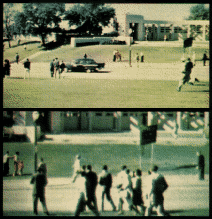
Hicks appears at the center of the plaza on the south side of Elm Street, near Houston Street. In the Zapruder film, he is seen during the shooting with both hands showing, no radio transmitter visible, and no other indication that he is doing anything but observing at the time of the shots (photos #1, 2, and 3). Hicks’ real role was as the radio system supplier and tester. Later Hicks shows up with the radio in his back pocket, walking down Elm Street (see photo #18, taken by Willis).
Photo #18: Hicks in light jacket with radio in back pocket (Same as #13 above) [see img #24, “Guns of Dallas” —ratitor])
In 1977, Cutler, Sprague, and Sharrett discovered the real radio coordinator in a series of photos. In photo #13 he appears with raised hand, standing to the left of the Stemmons Freeway sign, on the north curb of Elm Street. He is about twenty feet away from TUM. Because his identity is unknown, he will be called TA (The Accomplice) in this article. His raised hand appears in photos #4, 5, and 6. Early observations of his hand concluded he was waving at the President. Closer analysis shows he was not waving. His hand remains raised and motionless, except for a slight clenching.
TA can be seen sitting next to TUM in photo #14 and walking away down Elm Street in photos #15 and 16. The radio can be seen in photo #19, taken by Jim Towner, in TA’s belt at the back, and also in photos #14 and 15.
Photo #19: TA, radio in back pocket, heading down Elm Street
TA undoubtedly was using a button-type beeper transmission technique for signaling all radiomen to have the riflemen shoot in volleys. The button was in his raised hand. A wire connection to the battery-powered transmitter was mounted on his belt at the back. The first beep was transmitted as soon as TUM launched the flechette. The second beep was transmitted a second or two ahead of Z312. The first signal triggered rifle shots from the shooter in the Dal Tex building and the shooter on the west end of the sixth floor of the TSBD (Texas School Book Depository). The man on the knoll did not have a clear shot at that time and did not fire. The Dal Tex shot hit JFK in the back at Z225, and the TSBD shot hit Connally at Z237.
Three shots were fired in the second volley–by the Dal Tex rifleman, whose bullet narrowly missed JFK and hit the south curb of Main Street; by the TSBD rifleman, whose shot struck JFK in the head at Z312; and the man behind the fence on the grassy knoll, who now had a clear path and fired the fatal shot. His bullet struck JFK in the right temple and exploded at Z313. The fourth rifleman was positioned right by the octagonal structure at the west end of the semi-circular wall on the grassy knoll north. He did not shoot, because the Stemmons Freeway sign and a tree were in his way. He had a clear shot after the limousine had passed the sign, but by then JFK was dead. He would have fired had the others missed their target.
TA and TUM got together, for about two minutes, immediately after the shots, probably to discuss the results and to observe any police or Secret Service activity in the area (see photo #14). Then they went in separate directions, up and down Elm Street (see photos #15 and 16).
From left to right, Triggermen #1 to 4: Emilio Santana, William Seymour, `Frenchie,’ and Jack Lawrence locations indicated on diagram above”
ANSWERS TO THE QUESTIONS: The questions plaguing researchers can now be answered.The President’s small throat wound was caused by a small flechette.The flechette dissolved, leaving no trace, explaining why no bullet was found.No bullet was fired from the grassy knoll at the time of the first hit. TUM had a clear shot at Z189.TUM’s flechette was actually moving in a slightly upward trajectory, explaining the backward and upward motion of JFK’s head between Z189 and Z190.The flechette’s small momentum explains why there was no violent backward motion.JFK’s fists clenched and his head snapped to face forward while his right hand snapped downward because his muscles were paralyzed quickly by the poison.The bullet at Z225 didn’t knock JFK down, because he was paralyzed.The paralysis affected the muscles, fixing them in position and preventing those portions of JFK’s upper body from moving when he was hit in the back. His elbows were not fixed and were flung outward.JFK did not make a sound, because his vocal cords were paralyzed (see testimony).There were definitely two separate volleys of shots. Each of the four gunmen were prepared to shoot twice upon radio coordinating commands. One knoll gunman could not fire the first volley, because of obstructions. The other did not fire at all.All the questions about TUM and the umbrella are answered by knowing he was using an intelligence weapon system with umbrella launcher and flechette dart.Raising and lowering the umbrella was a signal to TA for a radio beep to order a second volley.The umbrella rotated because TUM was tracking JFK.TUM and TA sat down together to assess what happened.TA was the radio coordinator and was standing behind TUM, where he could see TUM’s signal and transmit a beep to the radiomen, ordering the first volley.
CONCLUSIONS:What conclusions can be drawn from this analysis?
FIRST: Some higher-level individuals within the CIA furnished one of their secret weapons systems to be used in the assassination. It is doubtful that more than a very few umbrella launchers were made for the CIA at Fort Detrick. This may have been the principal reason for the CIA cover-up that began on November 22, 1963.
SECOND: The degree of sophistication in such a complex intelligence murder–including the planning for the paralysis, the radio coordination, the firing positions creating a cross fire in two volleys, gaining access to the buildings, setting up a patsy (Oswald), and all of the other techniques used– indicate that lower-level anti-Castro Cubans, or even Mafia members, could not have pulled it off without CIA guidance and supervision. Skill and intelligence training, plus detailed management, were required from the only organization capable of running such an operation.
THIRD: The Select Committee on Assassinations and the Senate Intelligence Committee have a lot more interrogating to do. They must question the people who designed the weapon system and those who made it available to the assassination team.
Richard E. Sprague is currently a consultant to the Battelle Institute, a think tank in Columbus, Ohio, and was formerly a consultant to the House Select Committee on Assassinations. He has written numerous books and articles, including the self-published The Taking of America 1-2-3.
Robert Cutler is an architect and a assassination researcher. He has self-published five books on the Kennedy assassination, the latest of which is Seventy-six Seconds in Dealey Plaza. (Information on obtaining books by Mr. Sprague and Mr. Cutler is available from Gallery)
daveus rattus
yer friendly neighborhood ratman
Article: 568 of sgi.talk.ratical From: (dave “who can do? ratmandu!” ratcliffe) Subject: The Umbrella System: Prelude to an Assassination Keywords: pre-planned deception in JFK’s assassination was a terrible success Organization: Silicon Graphics, Inc. Date: Tue, 7 Apr 1992 21:56:52 GMT Lines: 973
The following article appeared in the June 1978 issue of Gallery magazine, and is reprinted here with permission of Mr. Sprague. The possibility that a very rare and special secret weapon system, developed by the CIA at Fort Detrick, Maryland, was used to immobilize JFK, and thus ensure the success of “the turkey shoot” carried out in Dealey Plaza is explored in great detail below.
Consider also that until the day of the JFK assassination in 1963, there was no place that anybody outside of the very small CIA and Special Forces group (perhaps as many as twenty people) could get access to that flechette-launching weapon system or anything like it.
To arrive at a solution to a murder as enigmatic and convoluted as that of JFK, we must confront the existence of the netherworld of secret operations carried out by covert agencies within our own government: “We have to start thinking like the CIA, people. . . . Black is white, and white is black.”
November 22, 1963, the day President Kennedy was slain, was bright and sunny in Dallas. Why, then, was there a young man with an open umbrella on Elm Street, less than 30 feet from the President’s car as it slowly passed by? Presented below is an answer to this puzzle by a former consultant to the House Select Committee on Assassinations.THE UMBRELLA SYSTEM: PRELUDE TO AN ASSASSINATION by Richard E. Sprague and Robert Cutler
As the President’s car rounds the corner from Houston Street turning left onto the fatal Elm Street, pictures show a man near a road sign, right next to where the President was killed. This man is holding a closed umbrella in a walking-cane position. It was high noon and no rain. No one else at Dealey Plaza had an umbrella.
IMG# 21: View of umbrella NUMBER 21. View of umbrella. (Photo by Willis.) As the shots are fired, this man is seen in several pictures with his umbrella open and over his head (some sort of signal). Then other pictures show him later with the umbrella lowered to his side. Although everyone else runs from the scene and races around in the excitement, the umbrella man stays there calmly, looking around. He is one of the last to leave the scene. [For a detailed analysis on this person and umbrella, see Sprague’s and Cutler’s article written 3 years later, “The Umbrella System: Prelude To An Assassination” —ratitor]
IMG# 22: View of umbrella NUMBER 22.* View of umbrella, Z-227.
IMG# 23: View of umbrella NUMBER 23.* Umbrella man. Note that umbrella is folded. (Photo by Bond.) This man shows up on a number of photographs. His actions certainly do arouse suspicion, and yet the Commission did not see these pictures, did not know about this strange man. He was never queried or identified in any way. This is no ordinary oversight. This is a strange and dangerous subversion of justice. Who did this? How could such evidence have been withheld from the Chief Justice of the Supreme Court and other singularly respected men who were serving with him? It begs credulity to attribute such gross errors to oversight. How was this Commission kept from investigating and “seeing” such things? This is the real issue.
When you arrive at this question you are facing the issue of conspiracy. A conspiracy that took over right from the beginning and began to control action even within the chambers of the Commission. It is ridiculous to say that all of the Commission members were that dumb. They were not. It is ridiculous to say that they did not have the authority to demand more assistance, more facts, more investigation, and more results. For too long, people have attributed such failings to the Commission. If you do, then you make the Commission part of the conspiracy. It is much more logical to recognize that the conspiracy controlled the Commission, too.
The single-bullet theory is overly contrived, especially when one is attempting to solve a major crime such as the murder of a President. Consider the following:
The fact that the Secret Service and the FBI both state three bullets were fired, but account for no miss.
The fact that the Commission states that three bullets were fired, including the near miss.
The fact that the Warren Commission missed the back-to-left motion of JFK’s head (see photos).
The fact that only three members of the Commission ever saw the Zapruder film in motion.
The fact that the Warren Commission missed seeing the evidence of three separate bullets hitting JFK and a fourth hitting Connally; and then disregarding the “umbrella man.” All of the discrepancies, one after the other, stagger the mind. Of course, the umbrella man could have been a perfectly innocent guy, why not find out?
Then there was the “communications man.” Photo Number 24 shows a man across the street from the umbrella man.
IMG# 24: James Tague IMG# 25: James Hicks NUMBER 24. Note first large figure on the right. He is the “communications man.” NUMBER 25.* James Hicks, the “communications man.”
This man was in the crowd near Houston and Elm Streets at the time of the shots. The photo shows a two-way radio in the man’s left hip pocket with a wire dangling down. This wire is an antenna. What did the Warren Commission say about this? Not a word. They did not see the pictures. This man is known. He is James Hicks, currently in an insane asylum.
IMG# 26: Oswald holding rifle NUMBER 26. Oswald holding rifle. Photos found in Oswald’s garage the day after the assassination. There is no need to trace each error and oversight in the twenty-six volume report which was thrown together by the staff of the Commission. Once one sees the hand of the conspiracy and the evidence that Oswald was made the patsy and then murdered to cover his true role, it does not take too much deduction to see that the whole thing was the work of a major conspiracy and that the cover-up has been an even more weighty threat to our freedom.
Why an assassination conspiracy in the first place? Once you decide that it was not the work of a lone nut, then there is no turning away from the next step. Why was the President killed and who would want to do it? These questions must be faced, cost what they may, and then having faced them, they must be resolved. This is what we have a government for. Individuals cannot subpoena, cross-examine, or pursue for the sake of justice. It is up to an honest government to do this. But why has the government for all of these long years avoided this essential work? This conspiracy has the power—in the face of public apathy—to control investigation and prosecution, or the lack thereof.
IMG# 27: enlargements of two photos found in the garage NUMBER 27.* These two photos are enlargements of the two photos found in the garage. The line where Oswald’s real head was glued onto the two photos of another man’s body at the chin line can be seen. A whole series of mistakes was made by the team who did this work. One of the most obvious is the way the shadow under Oswald’s nose in the two photos tilts with his head. This shows that the same head photo was glued on at two different angles. These fake photos taken with a camera that didn’t belong to Oswald were accepted as totally valid by the Warren Commission and the FBI. Marina Oswald was forced by the assassination team to testify that she took these two photos. I said earlier that it is now possible to trace the scenario of this master plot. I’ll try as best one man can and I’ll leave it to you to see how far you can go along this road with me. I’ll say right now that the more we know about this, the more we begin to think of today’s problems and the less we think of the JFK murder; but it takes an understanding of one to face squarely the issue of the other.
Kennedy had been in Miami in September 1963. Prior to that, a Miami police informer had uncovered the existence of a plot to kill JFK either in Miami or in some other city. The Miami police, in accordance with good practice, turned this information over to the FBI and the FBI informed the Miami Police that they had turned that information over to the Secret Service. When JFK went to Miami, he was well protected to and from the airport because he traveled by helicopter. This was the beginning of the plot and from that time on the FBI and the Secret Service should have been on maximum alert. Why weren’t they? Who pulled them off the job? Certainly not Oswald. Certainly not Castro. Certainly not Khrushchev.
Before that time, plans were being made to have Kennedy visit Texas “for political purposes.” In accordance with this plan, Eugene Zuchert, then Secretary of the Air Force, had suggested, perhaps unwittingly, that JFK should visit San Antonio and make a speech at the opening of an Air Force medical facility at Brooks Air Force Base. With this first step planned, someone else suggested that JFK should visit Fort Worth. A bitter multi-billion-dollar contest over the award of the TFX (F-111) airplane had ended with the contract being given to the General Dynamics Corporation’s facility in that city. The idea was that it would make good sense for Kennedy to make political hay out of the “good will” that Fort Worth might have for the President. JFK went from San Antonio to Fort Worth.
Considering Texas politics, it would not have been right for the President to go to Fort Worth and not go to Dallas; so plans were made for the President to mend fences there, too, and there were a lot of anti-Kennedy fences in Dallas at that time. This was done despite the warnings from Miami and the Miami police. Jerry Bruno, Kennedy’s advance man, went to Dallas. Kenneth O’Donnell, another Kennedy aide, worked on the trip, too. But somehow, after their initial work, the plans were changed. By whom? Who selected that unusual and devious route around Dealey Plaza? It was not Bruno or O’Donnell.
Then things began to get complicated. Someone decided that the Vice-President, Texan Lyndon B. Johnson, should go to Dallas with the President, and that he and his friend John Connally should be in the procession with Kennedy and other Democratic bigwigs. Also, someone else saw to it that another useful tool—Richard M. Nixon—should be in Dallas that day. Indoctrination and near-complicity is an excellent form of discipline, spelled BLACKMAIL. Here we must stop and begin another analysis.
The Secret Service was founded on June 23, 1860. It is an old, proud, and highly professional organization. I have traveled to foreign countries and have worked in support of the Secret Service. I am familiar with its operating procedures. I am familiar with what is called “Protection” in its most elaborate sense. I was at the Cairo Conference and the Teheran Conference, both in 1943. I participated in actions designed to safeguard the lives of the chiefs of state who attended those conferences. I traveled to Mexico City during the tenure of President Eisenhower as part of a mission to prepare for the security of his visit there. I was in Lima, Peru in 1964 while that city went through more than three months of preparation for a de Gaulle visit by the famous “gorillas” whose skilled work kept Charles de Gaulle alive in the face of repeated attempts on his life.
Because of my familiarity with these highly skilled and meticulous organizations, I have been doubly concerned over some of the events that did not take place in San Antonio, Fort Worth, and Dallas during and before the visit by Kennedy in 1963. This is of extreme significance. It is hard to teach an old dog new tricks. It is even harder to keep an old dog from doing his old tricks.
How could it have happened that the Secret Service, contrary to all good sense and all professional “Protection” practice, permitted the President and the Vice-President to be in close proximity in the same city, in the same procession? This is unheard of. The Secret Service dates back more than a century and they had never permitted that to take place before. Why this time?
Here we must go back to our scientific and systematic perusal of the thousands of pictures available about this incident. One of the most remarkable and important pictures taken of the entire 25,000 was one taken by James Altgens, a professional photographer from the Associated Press. (See photo 8.) By cross-referencing this remarkable photograph with the Zapruder film chronology, it is possible to determine that this picture was taken 3.6 seconds after the first shot was fired and 3.2 seconds before the last shot.
This is very important. This picture clearly shows JFK beginning to clench his fists. It shows Jackie’s gloved hand holding his left arm just above the wrist (she begins to sense something is wrong). It shows Connally sitting directly in front of JFK just beginning to turn to the rear as if to see what the trouble was. Then it shows a carload of Secret Service men immediately behind the Presidential car, and save for three of those eight men, one would say that they were, at that moment, unconcerned and more or less unaware that anything was happening. The three men are looking to the rear either because they had been looking to the rear, as they are supposed to do at all times, or because they may have heard something from that direction.
But then events in the third car show something quite startling. The third car was the Vice-President’s automobile. The driver and Lady Bird Johnson are smiling and unconcerned at 3.6 seconds into the assassination; Lyndon and his bodyguard are sitting in their seats in this photo, but are partially obscured by the edge of the car on the left.
Then we look at the fourth car in the procession. This was the Secret Service car following the Vice-President. Here we can see that a Secret Service agent by the name of Jerry Kivett has already opened the door of that car and that he is preparing to jump out—all by 3.6 seconds.
This one indelible record of a fragment in history tells a truer story than all twenty-six volumes of the Warren report. It is possible to place the first shot at Zapruder film frame 189 and the Altgens photograph at Z-255. It is interesting to note that nearly one half of the background of the Altgens photo is filled with that huge oak tree we mentioned earlier. It has keen carefully researched that a rifleman in the Oswald window could not possibly have shot at the President through that tree and thus could not have fired at the President until at least Z-210. In fact, under the prevailing physical conditions, no one could have fired from that window.
IMG# 28: official photo of snipers nest IMG# 29: Jack Beers 3:30pm 12/22/63 photo NUMBERs 28, 29. Two photographs showing that no one could have fired any shots from the sixth-floor window and that the cartons in the window were arranged to look like a sniper’s nest three days after the assassination. Photo number 28 is the official photo of the sniper’s nest taken by Dallas police photographer Robert Studebaker. It was probably taken on November 25, three days later. Photo number 29* was taken by Dallas Morning News photographer Jack Beers at 3:30 P.M. on the day of the assassination. The most important thing the photos show is that the real position of the boxes at the time of the shots did not allow enough space for anyone to be in a firing position.
As important as this Altgens photograph is, it was found that it had been severely cropped when it was tucked into the Warren report. Why did someone go to that trouble? Here again is the tricky hand of the conspiracy reaching into the Commission chambers.
We have wandered a little because of the extreme importance of that Altgens photo. Our objective was to show the seriousness of the Secret Service oversight in permitting the President and Vice-President to be under the same guns.
These were not the only oversights. I have always been concerned about the failure of the Secret Service to act in accordance with their long-established and highly professional standard operating procedures on Kennedy’s Texas trip. We know that the Secret Service does not have the numbers to permit it to cover every possible avenue and angle of danger; but what we also know is that over the years it has keen the practice of the Secret Service to call upon trained elements of the Armed Forces and other technical assistance to flesh out their strength in compliance with “Protection” policy.
In 1963 there was in Washington, D.C. the 113th Army Intelligence Unit, which was highly trained for this purpose. A counterpart of this unit was the 112th at 4th Army Headquarters at Fort Sam Houston, Texas. The 112th had a detachment, the 315th, in San Antonio. Its commanding officer, among others, complained bitterly that his unit was not used in protection along with the Secret Service after he had keen told that the services of his unit would not be needed. On more than one occasion he called his headquarters and called Washington to correct this “oversight.” Like the old dog, he and his men had keen well trained and they were ready to go into action. It takes strong and deft control from the top to keep a unit out of the action for which it has been trained.
After the assassination, some of the men of the 112th dug into the unit’s files and found that they had note cards on a Lee Harvey Oswald in Dallas, Texas. I do not know what other records they had; but failure to utilize this unit and its files was part of the conspiracy and an indication of how far up the hand of the conspirators went.
Not only did the Secret Service disregard experienced and qualified assistance from the Armed Forces, but they did not act in accordance with their own time-tested regulations. I recall, when we walked down Avenida Reforma in Mexico City before Eisenhower’s trip, being told that if we found a place where Eisenhower could not be properly protected, the Secret Service “manual” stated that the “President’s car must maintain not less than 44 mph until clear of any danger zones.” I joked with the Secret Service officer about the “44 mph.” Why not “45 mph” or “50 mph.” He answered that tests had determined that a car traveling 44 mph was going fast enough to guarantee all but 100 percent assurance that the President would be safe. It was Secret Service men working under the provisions of the same manual who let the President’s car creep around that corner at Dealey Plaza at 8-9 mph. Why?
Army Aid to Help Protect President Kennedy Was Refused
Trained U.S. Army Intelligence Units were told their assisstance was not needed in Dallas during the JFK visit. William McKinney, a former member of the crack 112th Military Intelligence Group at 4th Army Headquarters, Fort Sam Houston, Texas, has revealed that both Col. Maximillian Reich and his deputy, Lt. Col. Joel Cabaza, protested violently when they were told to “Stand Down” rather than to report with their units for duty in augmentation of the Secret Service in Dallas. McKinney said, “All the Secret Service had to do was nod and these units [which had been trained at the Army’s top Intelligence school at Camp Holabird, Maryland] would have performed their normal function of Protection for the President in Dallas.”
The 315th, the Texas unit which would have been involved if its support had not been turned down, had records in its files, according to McKinney, on Lee Harvey Oswald. The 315th had a Dallas office and its records were up to date.
McKinney added that, “Highly specialized classes were given at Camp Holabird on the subject of Protection. This included training designed to prepare this army unit to assist the Secret Service. If our support had not been refused, we would have been in Dallas.”
–L.F.P.
Also, as we looked up at the high buildings on Mexico City’s main street, he told me that agents would check and secure each floor and each window of each building. This is not as big a job as it may seem. The Secret Service knows the exact timing of the movements of the President and they see to it, using radios and men on rooftops, that his progress is covered all the way. This is their business and they are good at it.
But in Dallas, for some strange reason, someone picked a dangerous turn in the road. The procession passed slowly to the right, and then it turned slowly to the left, and all of the time the President’s car was right under hostile windows. How simple and how correct it would have keen for Secret Service men, aided by all of the Armed Forces required, to have checked those buildings, to have sealed any unused floors (such as that famous deserted sixth floor), and then to have shut all of the front windows. Then, by placing a radio-equipped man in the Plaza, all he would have had to do was to watch if a single window opened. If it did, he would call to the man on the roof and have someone dispatched to check that window, and with that same call he would have alerted the whole force, especially those with the President’s party.
This chronology and theme need not be pursued further here. What is important is to point out that trained and experienced organizations such as the Secret Service and the Army were somehow given instructions not to take part. In bureaucratic terms alone this is hard to do. Each organization fights for its prerogatives and for its role. Yet someone ordered them to stand down. The power to keep units from operating automatically would have to have been extreme and must have originated close to the top. Someone had to put out the word to the Secret Service and through them to the Army; and then that same power was able to rebuff repeated attempts to right that wrong.
Recognition of this fact leads to the delineation of the origin and source of the conspiracy, which was strong enough to directly influence the role of major government organizations even before the President was shot. I have spoken with men of these units. Many had keen trained at Fort Holabird, the Army’s top intelligence school. There can be no interpretation of this suppression of the forces created to protect the President other than that it was a part of the whole conspiracy.
IMG# 30: Dillard photo NUMBER 30.* Photo by Dillard shows black men on floor beneath the one from where Oswald supposedly fired. Turning once more to the infallible evidence of press photographs, we find an excellent picture of the Texas Book Depository Building taken by Thomas C. Dillard.
In the procession, he was in camera car number three. He took the picture only three seconds after the shooting, about ten seconds after the first shot. In this one picture one can see which windows were open and which were closed at that time. Actually, the Commission severely cropped this picture before it went into the report; however, Richard Sprague was able to obtain a copy of the full original. Again, why did the Commission see a cropped photo rather than the full original?
IMG# 31: Dillard photo enlargement
NUMBER 31. This enlargement of the Dillard photo was used by the Warren Commission in connection with the testimony of the black men in the fifth-floor windows. However, the Warren Commission did not realize that the photo was taken within 3.5 seconds after the fatal head shot and therefore showed that the witnesses—who said they saw a rifle sticking out of that window after the fatal shot—were imagining things. Nor does the original Dillard photo show any rifle or anyone holding a rifle in any window of the building 3 seconds after the last shot.
The importance of this picture is that it shows how easily and how effectively the role of the Secret Service can be performed when it is done correctly and in accordance with “Protection” doctrine. An agent or an Army man placed properly in the Plaza could have observed all of the buildings around the Plaza and all of their windows.
IMG#s 32-35: Policemen with ‘tramps’
NUMBERs 32-35.* Policeman with “tramps.” None of these pictures were seen by the Warren Commission.
Further evidence of the hand of the conspiracy is found immediately after the shooting. Security on the scene was almost nonexistent. Photographic evidence, including the famous “tramp” photographs, show that ten men were “arrested” at Dealey Plaza.
No record of these arrests exists and there is none in the Warren report.
In the case of the “tramps,” those three men who were rounded up on orders of Police Inspector J. Herbert Sawyer (the man in charge of security activity at Dealey Plaza), we find a sequence of astounding actions.
A Sergeant D.V. Harkness was ordered to stop a freight train and remove the men. Harkness arrested the three men and turned them over to policemen Marvin Wise and Billy Bass, who marched them all the way from the west side of the Book building, around the north side of the Plaza, and into the vehicle entrance of the Sheriff’s office.
Few people realize this entire procedure took place almost on the steps of the Sheriff’s office.
While Wise and Bass were marching these men to the Sheriff’s office, William Allen, George Smith, and Jack Beers of the Dallas Times Herald, the Fort Worth Star Telegram, and the Dallas Morning News, took several pictures of them.
Their remarkable pictures show clearly that Wise and Bass took them to the Sheriff’s office.
Yet Harkness and Sheriff Harold Elkins couldn’t remember that there were any other policemen with Harkness.
This is utterly ridiculous in the face of so many clear pictures. Why was this done? And why weren’t these amazing pictures shown to the Commission so that it could order the men before them.
And worse still, there is absolutely no record anywhere that these men were booked that day.
There are no “blotter” records at all. The men have simply vanished.
I have been given a list of the names of these men.
[Note here that Prouty would have recognized the names of E. Howard Hunt, Frank Strugis, and possibly Charles Harrelson. but since least two of the names were CIA the CIA operative Prouty usually detail orientated decides to omit what names he had been given as the Tramps (hobos in the freight car with nice shoes on) names.]
[Frank Anthony Sturgis (December 9, 1924 – December 4, 1993), born Frank Angelo Fiorini, was one of the five Watergate burglars whose capture led to the end of the presidency of Richard Nixon.[1] He served in several branches of the United States military and in the Cuban Revolution of 1958, and worked as an undercover operative for the Central Intelligence Agency.[2] “On April 14, 1942, William Donovan, as Coordinator of Information (forerunner of the Office of Strategic Services), activated units charged with gathering intelligence, harassing the Japanese through guerrilla actions, identifying targets for the Army Air Force to bomb, and rescuing downed Allied airmen.”[4] This was what led to Stilwell’s Chinese forces, Wingate’s Raiders, Merrill’s Marauders, in the war, and Frank got trained in Guerrilla tactics and gathering intelligence which became useful in his later events.[5]]
FIORINI, FRANK A.
December 4, 1993
Frank A. Sturgis [born Frank Angelo Fiorini Frank Fiorini (Sturgis) was born in Norfolk,Virginia, on 9th close to December 13th, December, 1924. Six years later his family moved to Philadelphia. In 1942 Sturgis joined the United States Marines and during the Second World War served in the Pacific.], one of the five Watergate burglars whose capture brought down the Nixon Administration, died today at a hospital in Miami, where he lived. He was 68.
He died of cancer a week after he was admitted to the Veterans Affairs hospital, said his lawyer, Ellis Rubin. Doctors diagnosed lung cancer that had spread to his kidneys.
Mr. Sturgis, a staunch anti-Communist, was a member of the burglary team caught after a break-in at the offices of the Democratic National Committee at the Watergate complex on June 17, 1972. They later admitted they went there to install wiretaps and scan the party’s files.
At the time of his trial, he said E. Howard Hunt Jr., a former aide for the Central Intelligence Agency, had recruited him for the burglary by saying it was a mission essential to the nation’s security. The mission was actually on behalf of President Richard M. Nixon’s 1972 campaign fund, the Committee for the Re-election of the President.
Mr. Sturgis served 13 months of a 1- to 4-year sentence for the burglary and was released in January 1974. He was denied a pardon by President Jimmy Carter.
In 1977, he and three others involved in the break-in sued the Committee for the Re-election of the President, saying they had been misled into thinking they were acting with Government sanction. The suit was settled out of court.
“In Watergate, he claimed to his dying day that he was acting under orders of the White House,” Mr. Rubin said. “He had no idea that he would be put in prison as a result.”
Interviewed last year on the 20th anniversary of the botched break-in that ultimately brought Mr. Nixon’s resignation, Mr. Sturgis said he thought the United States was better off for the experience.
“It really screwed up the country,” he said. “But it made our government a little bit stronger.”
He added, “I feel the laws that came about after Watergate didn’t give the President — whether it was Nixon or anybody else — the free rein to do what a dictator would do.”
A former police officer, private investigator and a Marine, Mr. Sturgis, who was Cuban-American, fought alongside Fidel Castro in Cuba but later broke with him as Mr. Castro turned toward Communism. Mr. Sturgis then became a leader of PUND, a Miami paramilitary group intent on toppling Mr. Castro.
He is survived by his wife, Jan, and a daughter.
[Everette Howard Hunt Jr. was an American intelligence officer and author. From 1949 to 1970, Hunt served as an officer in the Central Intelligence Agency, particularly in the United States involvement in regime change in Latin America including the 1954 Guatemalan coup d’état and the 1961 Bay of Pigs invasion. Wikipedia]
[Charles Harrelson ]
[The business cards Harrelson would give to prospective criminal clients were as shocking as the murders he committed: Wars Fought, Revolutions Started, Assassinations Plotted, Uprisings Quelled, Orgies Organized, (Racial Slur Inserted) Shot For Free. It also begs the question of whether Harrelson was in Dallas on the morning of November 22, 1963.]
[Harrelson claimed to have been one of the three boxcar hobos who were not fingerprinted but photographed before President Kennedy’s fateful motorcade in Dealey Plaza. Claims can only go so far in what is still considered the biggest unsolved murder in American history. According to Cavanagh, “After being introduced to Charles Harrelson and the myth about him, you start Googling and going down some rabbit holes and you go, ‘okay what’s real and what’s bullshit?’.” https://pleasekillme.com/charles-harrelson-woodys-dad/ ]
Did the Sheriff, or someone in that office, spirit them away?
And why did the Sheriff, who had all of these men in his custody, permit them to get away within minutes of the time that the President of the United States had been shot and killed on his doorstep?
These are tough questions, but let’s go a bit further. Why didn’t the all-powerful Warren Commission—which included the Chief Justice of the Supreme Court, the former Director of Central Intelligence, the man who is now our President, etc.—why didn’t they have an opportunity to see these pictures?
The photos would have led them to ask these questions and then to demand answers.
It is this type of grossly irrational action that leads any concerned and level-headed person to conclude that a massive conspiracy had taken over and was strong enough during 1964 to control the Warren Commission.
Many briths are “traditional” births and August 4 is one of them, tied to births and marriages by tradition in the English Royal family, as certain names are, and since I was born into one of these families with a February 20 fertilization (as Thorkill Kristensen Brain and Sociology and Economics of GDP correlator) sat with JFK on February 20 1961 and JFK seemed to be at my birth (as foreteold in a meeting about 9 months later on data left in the archives) in Manhattan Beach city, Los Angeles County, California with the Lawfoird Schriver family.
This is an important area. I was born at the Daniel Freeman St Josepshs Roman Catholic hospital Novermber 18 1961. The Inglewood neighborhood was where the North American Aviation plant produced the British avaiation Spitfire plane, North Amerian Avaiion makde he airframe and Hewllet Packard producing a copy of the Rolls Royce Spitfire V-16 power plant.
This is what my father appears to have flown in defense of London and Coventry in Brittan’s Finest Hour after France had Fallen, the Battle of France over, and now the Battle of Brittian.
Certainly my father flew after that with B-17s and B-29s over central Euorope as Recon with the bombers and seems at times have engaged Mesershmiddts and other planes in arial combat maneuvers.
Later he was in the first and second atomic bombings of Japan and after that in the Korean War as reconosaince likely with Lee Harvey Oswald at Atsugi air base Japan where planes like the P-51/F-86 Sabre and U2 with Francis Gary Powers flying conducted reonnosaiace for Richard Bissle Jr. and other spymasters.
Lee Harvey Oswald had attempted to call the Durhan North Carolina area before he was assassinated in custody.
That call was intercepted by the CIA connected mayor of Dallas Earle Cabell (who had placed Lee Harvey Oswald at the Dallas School Book repository) the same Earle Cabell that seems to have released E. Howard Hunt, Frnank Sturgis, and Charles Voyde Harrelson.
Facial recognition experts can confirm Charles Harreslon as one of the “Tramps” and I can corroborate that with a second science, a Divinci Code of statistically anomalous but hidden dates not in normal historgraphs of birthdays, but CIA used birthday ranges.
I mentioned earlier because of my birthdates and others birthdates I have learned to recognize names and birthdates used in certain families.
Brett Harrelson Born: June 4, 1963 (age 59 years), Midland, TX fits the code (June 4 July 4 April 1 Feb 20 Nov 18 Dec 13 and +/- 5 days or so, and minor spelling changes in the JoHanna name, such as Ann or Anna.)
Charles Harrelson was born on July 24th, 1938, in Lovelady, Texas,[3] the son of Alma Lee (née Sparks; 1907–2002) and Voyde Harrelson (1901–1976).
Charles Harrelson was married to Nancy Hillman Harrelson, Diane Lou Oswald, Jo Ann Harrelson, and Gina Adelle Foster.
Johanna Karolina Gobertina Barbara von Trapp (7 September 1919 – 25 November 1994) was the sixth child of Georg Ritter von Trapp and his first wife, Agathe Whitehead. She was a member of the Trapp Family Singers, whose lives were the inspiration for the play and film The Sound of Music.
No one can buy the idea that the Warren Commission was that incurious, that inexperienced, and that stupid. Having gone this far, it is not a long step to realize that this same cabal has been able to control these things for the past eleven years. This is the greater crime.
I happened to be far away in New Zealand at the time of JFK’s murder. I was on my way to breakfast (the crime occured at 6:30A.M. on the 23rd of November there) with a member of Congress from Ohio. As soon as possible, we purchased the first newspaper available—the Christchurch Star. It is amazing to re-read the front page of that paper today and find all of the detail, the remarkable detail, about Lee Harvey Oswald, about his service in the Marine Corps, about his living in Russia, about his Russian wife, and then the full scenario of the crime.[7]
Then one begins to wonder—understanding full well the capability of modern-day communications and reporting—who it was that was able in so short a time to come up with such a life history of so obscure a twenty-four-year-old “loner.” Even the Dallas police had not charged him with any crime by the time that paper had hit the streets. In the crime scenario it states that two Dallas cops, J.D. Tippit and M.N. McDonald, had chased Oswald into a theater and that Tippit was shot dead “as he ran into the cinema.” Who fabricated all of that news? Who was at the right place at that moment to flood the whole world with all of this news about Lee Harvey Oswald, when even the Dallas police weren’t too sure of their man, they said, because he carried two identities (Oswald and Alek Hidell) in his pocket.
IMG# 36: Oswald is arrested NUMBER 36.* Oswald is arrested. Actually fifteen policemen, one of them the Chief of Police for Personnel (a man who had never made an arrest before), and an FBI man stormed the theater in that strange episode, and Tippit did not. He was dead outside.
All of this proves that the American people, in their desire to be “loyal,” can be had. For eleven years we have been fed this pap. The Warren Commission report is trash. Because it is trash, the Warren Commission either was part of the conspiracy, and as part of the conspiracy they used their report to cover and obfuscate the crime, or they, too, had been put under the control of that powerful cabal.
I prefer to believe the latter. I have known some of the men of that Commission and I have known about many others. There was not an ignorant or stupid man on that Commission. So they may have been persuaded that the better part of discretion was to put out the report “to soothe the public.” But is that the way to solve a crime or to prevent others? Did that Commission agree, nobly, to let a whole team of criminals walk the streets? This is a big question.
By the end of 1964, LBJ was President and he was being carried along on the crest of a surging wave called Vietnam. Few people have ever been able to understand our involvement in Vietnam. It may be that clearing up the mystery of Dealey Plaza will help to clear up the mystery of Vietnam. By 1968, Lyndon Johnson had had all that one man could take of his ordeal. Uncharacteristically, he announced that he was through and that he would “devote his time to ending the war.”
Then the guns rang out again. Martin Luther King was shot dead on a motel balcony in Memphis and again we have had doubtful treatment about that crime. Hardly had the dust, the flames, and the seething anger settled over the country when Bobby Kennedy was ambushed in Los Angeles. It was becoming harder and harder to get good men to run for President. Then out of the wreckage of 1968 came Richard M. Nixon, the man who had been kicked around but who was ready when called. He became President because his real opposition had recently been buried in Arlington.
After a defeat in the mid-term elections during that winter of our discontent in 1970-71, Nixon faced a panel of reporters on an ABC broadcast in January 1971. When asked why he had been unable to bring the country “the lift of a driving dream” he had promised during the New Hampshire primaries, Nixon—in one of his rare human moments—looked at the reporters and then mumbled, “When you have inherited nightmares you are unable to bring the country the lift of a driving dream.” A few years later that lonely, abused and—quite properly so—captive man won one of the strangest elections this country has ever seen, and then was driven from the White House by a nightmare of tapes spun by someone with the power to plant tape recorders in the White House without giving the President a switch that would at least enable him to turn them off when he swore at his brood of worldbeaters.
It is fitting to note that Nixon’s own prosecutors were from among the old gang who worked with the Warren Commission, and that he was replaced as President by a man who was the most vociferous member of the Warren Commission and who had the best attendance record at the Commission’s meetings. All of these things are not random. All of these things did not just happen accidentally. We are caught up in this maelstrom and we must rise and rend this cloak. Like the great magician, conspiracy is only effective as long as the trick is a secret. We have the knowledge, we have the facts, we have the desire, and we have the power. It is now up to the American people to throw off this dreaded bondage. We have work to do. We want free elections in 1976 and we want to begin a glorious new century of the free.
Notes Even the tests which “prove” it could have been done in 5.7 seconds are faulty. The shots in Dallas were not fired evenly; this is proved by the Zapruder film and by the Commission’s own figures—Zapruder film frames 186-215-313. Tests were made with a “clip” of three bullets. No clip was found in the Book Depository Building.
The Warren Commission allowed even less time; according to their report, the elapsed time was 5.7 seconds.
X-rays show a piece of the bullet is still in Connally’s thigh bone, yet there is no fragment that size missing from that bullet.
It is entirely possible that some technician did fire that bullet in this manner from that gun in order to obtain a “laboratory perfect” ballistics specimen. Then, when some eager conspirators’ accomplice got it, he “planted” it as the “Miracle” bullet.
This is a highly technical point. Strangely, in its manipulations, the Commission “notes” that a “gap occurred in the leaves of the tree at Z-186,” then says nothing. If there was this split-second gap, then the gun would have had to have been aimed and fired in that split second (about 1/20th of a second), and the Zapruder film tree would have to confirm that possibility. It does not!
Edmund C. Berkeley is the publisher of the magazine People and the Pursuit of Truth, Newtonville, Mass.
First news reports that day said, “There were three bursts of gunfire from automatic weapons.” These reports were nearly correct.
daveus rattus yer friendly neighborhood ratman
KOYAANISQATSI
ko.yan.nis.qatsi (from the Hopi Language) n. 1. craz y life. 2. life in turmoil. 3. life out of balance. 4. life disinteg rating.
a state of life that calls for another way of living.
Leroy Fletcher Prouty was born in Massachusetts on 24th January, 1917. He graduated from Massachusetts State College in 1941 with a Bachelor’s degree.
During the Second World War he served as a army tank commander. He later joined the United States Air Force (USAAF) and in 1943 became the personal pilot of General Omar Bradley. Later that year he flew Chiang Kai-shek to the Tehran Conference.
Prouty also became involved in work for the Office of Strategic Services (OSS). In 1945 he served on Okinawa and was involved in transporting the bodyguard of General Douglas MacArthur to Tokyo. In 1946 Prouty was assigned by the U.S. Army to Yale University. In 1950 he established Air Defense Command and during the Korean War was based in Japan where he was Military Manager for Tokyo International Airport.
In 1955 Prouty was assigned to coordinate operations between the USAAF and the Central Intelligence Agency (CIA). For the next nine years he worked for the Pentagon. He was Briefing Officer for the Secretary of Defense (1960-61), Chairman of the Joint Chiefs of Staff and Chief of Special Operations (1962-63).
Colonel Prouty retired from the United States Air Force (USAAF) in 1964 and was awarded the Joint Chiefs of Staff Commendation Medal. He later worked for the General Aircraft Corporation (1964-65) and First National Bank (1965-68). He was also a senior director of a government and military marketing organization.
In 1973 Prouty published his book The Secret Team. In this controversial work Prouty claimed that the CIA had worked on behalf of the interests of a “high cabal” of industrialists and bankers. Prouty thought that the Executive Actionprogramme had not only been used against foreign leaders. He also claimed that the CIA was involved in the killing of President John F. Kennedy. Prouty even named Edward Lansdale as the leader of the operation. He claimed he was in Dallas on the day of the assassination: “He was there like the orchestra leader, coordinating these things.”
In July, 1975 Fletcher Prouty told Daniel Schorr that Alexander P. Butterfield had been the CIA’s spy in the White House. Butterfield denied this claim and threatened to sue the two men for libel. Time Magazine reported: “Despite his impressive record, Schorr gets into trouble because he is often too eager and cuts corners. He has been known to behave like an anxious rookie out to impress by elbowing others aside and pushing hard. Just before the Watergate cover-up indictments, for example, he went on-camera to predict that the grand jury would name more than 40 people. Seven names came down. At CBS, Washington Correspondent Leslie Stahl cordially detests him because, she tells friends, he hogged her Watergate stories.”
However, Butterfield never sued Fletcher Prouty and the fact remains that it was his evidence before the Watergate Committeee that Richard Nixon recorded meetings he was having in the White House that was the turning point in the investigation. Butterfield admitted details of the tape system which monitored Nixon’s conversations. Butterfield also said that he knew “it was probably the one thing that the President would not want revealed”. This information did indeed interest Archibald Cox and Sam Ervin demand that Nixon hand over the White House tapes. It was these tapes that resulted in Nixon resigning from office.
Prouty worked as Creative Advisor (1990-91) to Oliver Stone when he was making the film, JFK. The Mr. X character in the film played by Donald Sutherland is based on Prouty. He also published JFK: The CIA, Vietnam, and the Plot to Assassinate John F. Kennedy (1992). In this book Prouty argued that John F. Kennedy had been killed by a elements of the United States military and intelligence communities.
Leroy Fletcher Prouty died of organ failure following stomach surgery on 5th June, 2001.
▲ Main Article ▲ Primary and Secondary Sources (1) L. Fletcher Prouty, JFK: The CIA, Vietnam, and the Plot to Assassinate John F. Kennedy (1992) As the presidential motorcade began its procession through the streets of Dallas, we note that many things which ought to have been done, as matters of standard security procedure, were not done. These omissions show the hand of the plotters and the undeniable fact that they were operating among the highest levels of government in order to have access to the channels necessary to arrange such things covertly.
Some of these omissions were simple things that were done normally without fail. All the windows in buildings overlooking a presidential motorcade route must be closed and observers positioned to see that they remain closed. They will have radios, and those placed on roofs will be armed in case gunmen do appear in the windows. All sewer covers along the streets are supposed to be welded to preclude the sewer’s use as a gunman’s lair. People with umbrellas, coats over their arms, and other items that could conceal a weapon are watched.
(2) L. Fletcher Prouty, The Secret Team (1973) The Secret Team (ST) being described herein consists of security-cleared individuals in and out of government who receive secret intelligence data gathered by the CIA and the National Security Agency (NSA) and who react to those data, when it seems appropriate to them, with paramilitary plans and activities, e.g. training and “advising” – a not exactly impenetrable euphemism for such things as leading into battle and actual combat – Laotian tribal troops, Tibetan rebel horsemen, or Jordanian elite Palace Guards.
Membership on the Team, granted on a “need-to-know” basis, varies with the nature and location of the problems that come to its attention, and its origins derive from that sometimes elite band of men who served with the World War II Office of Strategic Services (OSS) under the father of them all, General “Wild Bill” William J. Donovan, and in the old CIA.
The power of the Team derives from its vast intragovernmental undercover infrastructure and its direct relationship with great private industries, mutual funds and investment houses, universities, and the news media, including foreign and domestic publishing houses. The Secret Team has very close affiliations with elements of power in more than three-score foreign countries and is able when it chooses to topple governments, to create governments, and to influence governments almost anywhere in the world.
Whether or not the Secret Team had anything whatsoever to do with the deaths of Rafael Trujillo, Ngo Dinh Diem, Ngo Dinh Nhu, Dag Hammerskjold, John F. Kennedy, Robert F. Kennedy, Martin Luther King, and others may never be revealed, but what is known is that the power of the Team is enhanced by the “cult of the gun” and by its sometimes brutal and always arbitrary anti-Communist flag waving, even when real Communism had nothing to do with the matter at hand.
At the heart of the Team, of course, are a handful of top executives of the CIA and of the National Security Council (NSC), most notably the chief White House adviser to the President on foreign policy affairs. Around them revolves a sort of inner ring of Presidential officials, civilians, and military men from the Pentagon, and career professionals of the intelligence community. It is often quite difficult to tell exactly who many of these men really are, because some may wear a uniform and the rank of general and really be with the CIA and others may be as inconspicuous as the executive assistant to some Cabinet officer’s chief deputy.
(3) L. Fletcher Prouty, The Secret Team (1973) By the time Cuban operations had been expanded to the point that they had become the beginnings of the Bay of Pigs operation, activity of all kinds had been discovered and compromised by the press of the world. There were no more secrets. The participation and support of the United States was known to be taking place in Puerto Rico, Panama, Guatemala, and Nicaragua, in addition to some unscheduled action in Mexico. Yet the ST continued to launch an increasing number of special operations without regard for real secrecy.
There was not only a breakdown in the traditional ethics of international relations but there was also a serious degradation of the usual high standard of technical operational methods within the Government. The flights from Guatemala themselves were not tactically sound nor were they politically effective. Most of these flights not only failed miserably to accomplish what the CIA thought they would do, i.e., put in place underground cadres of guerrillas and provide equipment and communications material for other underground groups in Cuba; but as a result of their amateurism and failures, they played into the hands of Castro. They never did become a rallying point for anti-Castroites. On the contrary, they exposed and compromised them and led to many unnecessary firing-squad deaths. The flight paths, by their crossing and recrossing, pinpointed and exposed ground-reception parties, which were mopped up by Castro’s troops; in other cases, aircraft were lured over drop-sites that proved to be ambushes. The whole series of operations exposed the weaknesses of ClA’s tactical capacity. The CIA cannot properly direct large operations. It has led many small ones successfully; but has failed miserably in a number of large ones.
(4) L. Fletcher Prouty, letter to Jim Garrison (6th March, 1990) It is amazing how things work, I am at home recuperating from a major back operation (to regain my ability to walk); so I was tossing around in bed last night…not too comfortable…and I began to think of Garrison. I thought, “I have got to write Jim a letter detailing how I believe the whole job was done.”
By another coincidence I had received a fine set of twenty photos from the Sprague collection in Springfield, Mass. As the odds would have it, he is now living just around the corner here in Alexandria. Why not? Lansdale lived here, Fensterwald lives here, Ford used to live here. Quite a community.
I was studying those photos. One of them is the “Tramps” picture that appears in your book. It is glossy and clear. Lansdale is so clearly identifiable. Why, Lansdale in Dallas? The others don’t matter, they are nothing but actors and not gunmen but they are interesting. Others who knew Lansdale as well as I did, have said the same thing, “That’s him and what’s he doing there?”
As I was reading the paper the Federal Express man came with a book from Jim, that unusual “Lansdale” book. A terrible biography. There could be a great biography about Lansdale. He’s no angel; but he is worth a good biography. Currey, a paid hack, did the job. His employers ought to have let him do it right.
I had known Ed since 1952 in the Philippines. I used to fly there regularly with my MATS Heavy Transport Squadron. As a matter of fact, in those days we used to fly wounded men, who were recuperating, from hospitals in Japan to Saigon for R&R on the beaches of Cap St Jacque. That was 1952-1953. Saigon was the Paris of the Orient. And Lansdale was “King Maker” of the Philippines. We always went by way of Manila. I met his team.
He had arrived in Manila in Sept 1945, after the war was over, for a while. He had been sent back there in 1950 by the CIA(OPC) to create a new leader of the Philippines and to get rid of Querino. Sort of like the Marcos deal, or the Noriega operation. Lansdale did it better. I have overthrown a government but I didn’t splash it all around like Reagan and Bush have done. Now, who sent him there?
Who sent him there in 1950 (Truman era) to do a job that was not done until 1953 (Ike era)? From 1950 to Feb. 1953 the Director of Central Intelligence was Eisenhower’s old Chief of Staff, Gen Walter Bedell Smith. Smith had been Ambassador to Moscow from 1946 to 1949. The lesser guys in the CIA at the time were Allen Dulles, who was Deputy Director Central Intelligence from Aug. 1951 to Feb. 1953. Frank Wisner became the Deputy Director, Plans (Clandestine Activities) when Dulles became DDCI. Lansdale had to have received his orders from among these four men: Truman, Smith, Dulles, and Wisner. Of course the Sec State could have had some input…i.e. Acheson. Who wanted Querino out, that badly? Who wanted HUKS there?
In Jan 1953 Eisenhower arrived. John Foster Dulles was at State and Gen Smith his Deputy. Allen Dulles was the DCI and General Cabel his deputy. None of them changed Lansdale’s prior orders to “get” Querino. Lansdale operated with abandon in the Philippines. The Ambassador and the CIA Station Chief, George Aurell, did not know what he was doing. They believed he was some sort of kook Air Force Officer there…a role Lansdale played to the hilt. Magsaysay became President, Dec 30, 1953.
With all of this on the record, and a lot more, this guy Currey comes out of the blue with this purported “Biography”. I knew Ed well enough and long enough to know that he was a classic chameleon. He would tell the truth sparingly and he would fabricate a lot. Still, I can not believe that he told Currey the things Currey writes. Why would Lansdale want Currey to perpetuate such out and out bullshit about him? Can’t be. This is a terribly fabricated book. It’s not even true about me. I believe that this book was ordered and delineated by the CIA.
At least I know the truth about myself and about Gen. Krulak. Currey libels us terribly. In fact it may be Krulak who caused the book to be taken off the shelves. Krulak and his Copley Press cohorts have the power to get that done, and I encouraged them to do just that when it first came out. Krulak was mad!
Ed told me many a time how he operated in the Philippines. He said, “All I had was a blank checkbook signed by the U.S. government”. He made friends with many influential Filipinos. I have met Johnny Orendain and Col Valeriano, among others, in Manila with Lansdale. He became acquainted with the wealthiest Filipino of them all, Soriano. Currey never even mentions him. Soriano set up Philippine Airlines and owned the big San Miguel beer company, among other things. Key man in Asia.
Lansdale’s greatest strategy was to create the “HUKS” as the enemy and to make Magsaysay the “Huk Killer.” He would take Magsaysay’s battalion out into a “Huk” infested area. He would use movies and “battlefield” sound systems, i.e. fireworks to scare the poor natives. Then one-half of Magsaysay’s battalion, dressed as natives, would “attack” the village at night. They’d fire into the air and burn some shacks. In the morning the other half, in uniform, would attack and “capture” the “Huks”. They would bind them up in front of the natives who crept back from the forests, and even have a “firing” squad “kill” some of them. Then they would have Magsaysay make a big speech to the people and the whole battalion would roll down the road to have breakfast together somewhere…ready for the next “show”.
Ed would always see that someone had arranged to have newsmen and camera men there and Magsaysay soon became a national hero. This was a tough game and Ed bragged that a lot of people were killed; but in the end Magsaysay became the “elected” President and Querino was ousted “legally.”
This formula endeared Ed to Allen Dulles. In 1954 Dulles established the Saigon Military Mission in Vietnam…counter to Eisenhower’s orders. He had the French accept Lansdale as its chief. This mission was not in Saigon. It was not military, and its job was subversion in Vietnam. Its biggest job was that it got more than 1,100,000 northern Vietnamese to move south. 660,000 by U.S.Navy ships and the rest by CIA airline planes. These 1,100,000 north Vietnamese became the “subversive” element in South Vietnam and the principal cause of the warmaking. Lansdale and his cronies (Bohanon, Arundel, Phillips, Hand, Conein and many others) did all that using the same check book. I was with them many times during 1954. All Malthuseanism.
I have heard him brag about capturing random Vietnamese and putting them in a Helicopter. Then they would work on them to make them “confess” to being Viet Minh. When they would not, they would toss them out of the chopper, one after the other, until the last ones talked. This was Ed’s idea of fun…as related to me many times. Then Dulles, Adm. Radford and Cardinal Spellman set up Ngo Dinh Diem. He and his brother, Nhu, became Lansdale proteges.
At about 1957 Lansdale was brought back to Washington and assigned to Air Force Headquarters in a Plans office near mine. He was a fish out of water. He didn’t know Air Force people and Air Force ways. After about six months of that, Dulles got the Office of Special Operations under General Erskine to ask for Lansdale to work for the Secretary of Defense. Erskine was man enough to control him.
By 1960 Erskine had me head the Air Force shop there. He had an Army shop and a Navy shop and we were responsible for all CIA relationships as well as for the National Security Agency. Ed was still out of his element because he did not know the services; but the CIA sent work his way.
Then in the Fall of 1960 something happened that fired him up. Kennedy was elected over Nixon. Right away Lansdale figured out what he was going to do with the new President. Overnight he left for Saigon to see Diem and to set up a deal that would make him, Lansdale, Ambassador to Vietnam. He had me buy a “Father of his Country” gift for Diem…$700.00.
I can’t repeat all of this but you should get a copy of the Gravel edition, 5 Vol.’s, of the Pentagon Papers and read it. The Lansdale accounts are quite good and reasonably accurate.
Ed came back just before the Inauguration and was brought into the White House for a long presentation to Kennedy about Vietnam. Kennedy was taken by it and promised he would have Lansdale back in Vietnam “in a high office”. Ed told us in OSO he had the Ambassadorship sewed up. He lived for that job.
He had not reckoned with some of JFK’s inner staff, George Ball, etc. Finally the whole thing turned around and month by month Lansdale’s star sank over the horizon. Erskine retired and his whole shop was scattered. The Navy men went back to the navy as did the Army folks. Gen Wheeler in the JCS asked to have me assigned to the Joint Staff. This wiped out the whole Erskine (Office of Special Operations) office. It was comical. There was Lansdale up there all by himself with no office and no one else. He boiled and he blamed it on Kennedy for not giving him the “promised” Ambassadorship to let him “save” Vietnam.
Then with the failure of the Bay of Pigs, caused by that phone call to cancel the air strikes by McGeorge Bundy, the military was given the job of reconstituting some sort of Anti-Castro operation. It was headed by an Army Colonel; but somehow Lansdale (most likely CIA influence) got put into the plans for Operation Mongoose…to get Castro…ostensibly.
The U.S. Army has a think-tank at American University. It was called “Operation Camelot”. This is where the “Camelot” concept came from. It was anti-JFK’s Vietnam strategy. The men running it were Lansdale types, Special Forces background. “Camelot” was King Arthur and Knights of the Round Table: not JFK…then.
Through 1962 and 1963 Mongoose and “Camelot” became strong and silent organizations dedicated to countering JFK. Mongoose had access to the CIA’s best “hit men” in the business and a lot of “strike” capability. Lansdale had many old friends in the media business such as Joe Alsop, Henry Luce among others. With this background and with his poisoned motivation I am positive that he got collateral orders to manage the Dallas event under the guise of “getting” Castro. It is so simple at that level. A nod from the right place, source immaterial, and the job’s done.
The “hit” is the easy part. The “escape” must be quick and professional. The cover-up and the scenario are the big jobs. They more than anything else prove the Lansdale mastery.
Lansdale was a master writer and planner. He was a great “scenario” guy. It still have a lot of his personally typed material in my files. I am certain that he was behind the elaborate plan and mostly the intricate and enduring cover-up. Given a little help from friends at PEPSICO he could easily have gotten Nixon into Dallas, for “orientation’: and LBJ in the cavalcade at the same time, contrary to Secret Service policy.
He knew the “Protection” units and the “Secret Service”, who was needed and who wasn’t. Those were routine calls for him, and they would have believed him. Cabell could handle the police.
The “hit men” were from CIA overseas sources, for instance, from the “Camp near Athena, Greece. They are trained, stateless, and ready to go at any time. They ask no questions: speak to no one. They are simply told what to do, when and where. Then they are told how they will be removed and protected. After all, they work for the U.S. Government. The “Tramps” were actors doing the job of cover-up. The hit men are just pros. They do the job for the CIA anywhere. They are impersonal. They get paid. They get protected, and they have enough experience to “blackmail” anyone, if anyone ever turns on them…just like Drug agents. The job was clean, quick and neat. No ripples.
The whole story of the POWER of the Cover-up comes down to a few points. There has never been a Grand Jury and trial in Texas. Without a trial there can be nothing. Without a trial it does no good for researchers to dig up data. It has no place to go and what the researchers reveal just helps make the cover-up tighter, or they eliminate that evidence and the researcher.
The first man LBJ met with on Nov 29th, after he had cleared the foreign dignitaries out of Washington was Waggoner Carr, Atty Gen’l, Texas to tell him, “No trial in Texas…ever.”
The next man he met, also on Nov 29th, was J. Edgar Hoover. The first question LBJ asked his old “19 year” neighbor in DC was “Were THEY shooting at me?” LBJ thought that THEY had been shooting at him also as they shot at his friend John Connally. Note that he asked, “Were THEY shooting at me?” LBJ knew there were several hitmen. That’s the ultimate clue…THEY.
The Connallys said the same thing…THEY. Not Oswald.
Then came the heavily loaded press releases about Oswald all written before the deal and released actually before LHO had ever been charged with the crime. I bought the first newspaper EXTRA on the streets of Christchurch, New Zealand with the whole LHO story in that first news…photos and columns of it before the police in Dallas had yet to charge him with that crime. All this canned material about LHO was flashed around the world.
Lansdale and his Time-Life and other media friends, with Valenti in Hollywood, have been doing that cover-up since Nov 1963. Even the deMorenschildt story enhances all of this. In deM’s personal telephone/address notebook he had the name of an Air Force Colonel friend of mine, Howard Burrus. Burrus was always deep in intelligence. He had been in one of the most sensitive Attache spots in Europe…Switzerland. He was a close friend of another Air Force Colonel and Attache, Godfrey McHugh, who used to date Jackie Bouvier. DeM had Burrus listed under a DC telephone number and on that same telephone number he had “L.B.Johnson, Congressman.” Quite a connection. Why…from the Fifties yet.?
Godfrey McHugh was the Air Force Attache in Paris. Another most important job. I knew him well, and I transferred his former Ass’t Attache to my office in the Pentagon. This gave me access to a lot of information I wanted in the Fifties. This is how I learned that McHugh’s long-time special “date” was the fair Jacqueline…yes, the same Jackie Bouvier. Sen. Kennedy met Jackie in Paris when he was on a trip. At that time JFK was dating a beautiful SAS Airline Stewardess who was the date of that Ass’t Attache who came to my office. JFK dumped her and stole Jackie away from McHugh. Leaves McHugh happy????
At the JFK Inaugural Ball who should be there but the SAS stewardess, Jackie–of course, and Col Godfrey McHugh. JFK made McHugh a General and made him his “Military Advisor” in the White House where he was near Jackie while JFK was doing all that official travelling connected with his office AND other special interests. Who recommended McHugh for the job?
General McHugh was in Dallas and was on Air Force One, with Jackie, on the flight back to Washington..as was Jack Valenti. Why was LBJ’s old cohort there at that time and why was he on Air Force One? He is now the Movie Czar. Why in Dallas?
See how carefully all of this is interwoven. Burrus is now a very wealthy man in Washington. I have lost track of McHugh. And Jackie is doing well. All in the Lansdale–deM shadows.
One of Lansdale’s special “black” intelligence associates in the Pentagon was Dorothy Matlack of U.S. Army Intelligence. How does it happen that when deM. flew from Haiti to testify, he was met at the National Airport by Dorothy?
The Lansdale story is endless. What people do not do is study the entire environment of his strange career. For example: the most important part of my book, “The Secret Team”, is not something that I wrote. It is Appendix III under the title, “Training Under The Mutual Security Program”. This is a most important bit of material. It tells more about the period 1963 to 1990 than anything. I fought to have it included verbatim in the book. This material was the work of Lansdale and his crony General Dick Stillwell. Anyone interested in the “JFK Coup d’Etat” ought to know it by heart.
I believe this document tells why the Coup took place. It was to reverse the sudden JFK re-orientation of the U.S. Government from Asia to Europe, in keeping with plans made in 1943 at Cairo and Teheran by T.V. Soong and his Asian masterminds. Lansdale and Stillwell were long-time “Asia hands” as were Gen Erskine, Adm Radford, Cardinal Spellman, Henry Luce and so many others.
In October 1963, JFK had just signalled this reversal, to Europe, when he published National Security Action Memorandum #263 saying…among other things…that he was taking 1000 troops home from Vietnam by Christmas 1963 and ALL AMERICANS out of Vietnam by the end of 1965. That cost him his life.
JFK came to that “Pro-Europe” conclusion in the Summer of 1963 and sent Gen Krulak to Vietnam for advance work. Kurlak and I (with others) wrote that long “Taylor-McNamara” Report of their “Visit to Vietnam” (obviously they did not write, illustrate and bind it as they traveled). Krulak got his information daily in the White House. We simply wrote it. That led to NSAM #263. This same Trip Report is Document #142 and appears on page 751 to 766 of Vol. II of the Gravel Edition of the Pentagon Papers. NSAM #263 appears on pages 769-770 (It makes the Report official). This major Report and NSAM indicated an enormous shift in the orientation of U.S. Foreign Policy from Asia back to Europe. JFK was much more Europe- oriented, as was his father, than pro-Asia. This position was anathema to the Asia-born Luces, etc.
There is the story from an insider. I sat in the same office with Lansdale, (OSO of OSD) for years. I listened to him in Manila and read his flurry of notes from 1952 to 1964. I know all this stuff, and much more. I could write ten books. I send this to you because I believe you are one of the most sincere of the “true researchers”. You may do with it as you please. I know you will do it right. I may give copies of this to certain other people of our persuasion. (Years ago I told this to Mae Brussell on the promise she would hold it. She did.)
Now you can see why I have always said that identification of the “Tramps” was unnecessary, i.e. they are actors. The first time I saw that picture I saw the man I knew and I realized why he was there. He caused the political world to spin on its axis. Now, back to recuperating.
(5) Lalo J. Gastriani, Fair Play Magazine, The Strange Death of Dorothy Hunt (November, 1994) In the latest issue of Steam Shovel Press in an article by photo analyst Jack White, L. Fletcher Prouty describes one of several known Tramp photos. This particular photo shows the tramps being escorted along a service entrance to the TSBD wall comprised of two high chain-link gates with large diamond-shapes in the center of each. The tramps are facing the camera and a man is seen walking in the opposite direction, back to the camera. Prouty believes that the man walking away from the camera is Edward Lansdale. Lansdale, a planner with the Air Force Directorate and then the CIA-affiliated Office of Special Operations, worked closely with E. Howard Hunt. Lansdale’s specialty, according to Prouty, who claims to have also worked closely with him, was staging real-time covers, diversions, and the general “smoke screens” under which assassinations took place. When asked to explain, Prouty alleges that it was Lansdale’s job to provide “actors”, and “screenplays” for certain black operations deployed by the covert operatives.
(6) L. Fletcher Prouty, An Introduction to the Assassination Business (1975) Assassination is big business. It is the business of the CIA and any other power that can pay for the “hit” and control the assured getaway. The CIA brags that its operations in Iran in 1953 led to the pro-Western attitude of that important country. The CIA also takes credit for what it calls the “perfect job” in Guatemala. Both successes were achieved by assassination. What is this assassination business and how does it work?
In most countries there is little or no provision for change of political power. Therefore the strongman stays in power until he dies or until he is removed by a coup d’etat – which often means by assassination…
The CIA has many gadgets in its arsenal and has spent years training thousands of people how to use them. Some of these people, working perhaps for purposes and interests other than the CIA’s, use these items to carry out burglaries, assassinations, and other unlawful activities – with or without the blessing of the CIA.
Crimes such as these, some of which have remained open for years, cannot be solved by any one individual. But there are patterns and motives that serve to expose methods. In 1963, about one month before President John F. Kennedy was murdered in Dallas, a prominent Washington lawyer died. It was ruled a suicide because it appeared that he had put his own rifle in his mouth and pulled the trigger. His name was Coates Lear, and he was a law partner of Eugene Zuchert, then Secretary of the Air Force. Lear knew a lot about special airlift contracts and about the plans for Kennedy’s fatal visit to Texas. Then, for unexplained reasons, he began drinking excessively. And when he drank, he talked. Soon he was dead.
The same pattern fits the case of William Miles Gingery, the scenario of whose death we have outlined above. He had been promoted to chief of the office of enforcement of the Civil Aeronautics Board. He had found many irregularities in that office when he took over, and he was scheduled to appear before Senator Edward M. Kennedy’s Committee of Administrative Practices and Procedures.
Gingery, a nondrinker, had begun drinking and was obviously terribly upset. One night he was found dead. His death, in early 1975, was ruled a suicide; it was found that he had put the muzzle of his rifle into his mouth and fired.
These are interesting cases. There were many reasons why both of these men might have been assassinated and they both died in the same manner. That type of “suicide” is one of the trademarks of the professional “mechanic,” the kind of killer who works in the international assassination game…
Eventually, practitioners of assassination by the removal of power reach the point where they see that technique as fit for the removal of opposition anywhere. That was why President Kennedy was killed. He was not murdered by some lone, gunman or by some limited conspiracy, but by the breakdown of the protective system that should have made an assassination impossible. Once insiders knew that he would not be protected, it was easy to pick the day and the place. In fact, those responsible for luring Kennedy to Dallas on November 22, 1963 were not even in on the plan itself. He went to Texas innocuously enough: to dedicate an Air Force hospital facility at Brooks Air Force Base in San Antonio. It was not too difficult then to get him to stop at Fort Worth – “to mend political fences.” Of course, no good politician would go to Fort Worth and skip Dallas. All the conspirators had to do was to let the right “mechanics” know where Kennedy would be and when and, most importantly, that the usual precautions would not have been made and that escape would be facilitated. This is the greatest single clue to that assassination. Who had the power to call off or drastically reduce the usual security precautions that always are in effect whenever a president travels? Castro did not kill Kennedy, nor did the CIA. The power source that arranged that murder was on the inside. It had the means to reduce normal security and permit the choice of a hazardous route. It also has had the continuing power to cover up that crime for twelve years.
(7) Edward Lansdale, quoted by Cecil B. Currey in his book Edward Lansdale: The Unquiet American (1998) I continue to be surprised to find Fletcher Prouty quoted as an authority. He was my “cross to bear” before Dan Ellsberg came along. Fletch is the one who blandly told the London Times that I’d invented the Huk Rebellion, hired a few actors in Manila, bussed them out to Pampanga, and staged the whole thing as press agentry to get RM (Magsaysay) elected. He was a good pilot of prop-driven aircraft, but had such a heavy dose of paranoia about CIA when he was on my staff that I kicked him back to the Air Force. He was one of those who thought I was secretly running the Agency from the Pentagon, despite all the proof otherwise.
(8) Robin Ramsay, Who Shot JFK (2002) The idea that Kennedy was too radical for the military-industrial complex is the thesis behind the two motion pictures about the case: the dull 1973 version. Executive Action, which starred Burt Lancaster, and Oliver Stone’s JFK. Stone emphasised Vietnam: Kennedy was shot to stop withdrawal from Vietnam. This is the thesis of the late L. Fletcher Prouty, former US Air Force Colonel, who had a remarkable book. The Secret Team, published in America in 1973. Prouty was a really important insider, not only the US Air Force’s liaison officer with the ClA’s covert operations in the 1950s, but someone who had also been in charge of presidential security. As former liaison with the CIA, Prouty had watched the growth of the agency covert operations. As a security officer, Prouty looked at the events that day in Dallas and saw the absence of presidential security. As Prouty pointed out, the absence of security is all you need to arrange.
(9) Time Magazine (28th July, 1975) The day after a story broke in the press alleging that the CIA had planted a spy in the White House, Colonel Fletcher Prouty telephoned CBS Newsman Daniel Schorr with the startling news that former Nixon Aide Alexander Butterfield was the man. Schorr rushed the retired Air Force officer onto the network’s Morning News for his disclosure, which generated sensational headlines. But last week, when Butterfield denied Prouty’s charges and hinted he might sue him for libel, the colonel, in an interview with his hometown paper in Springfield, Mass., expressed second thoughts. Then Prouty confused matters further with a switch back to his original story. This jack-in-the-box behavior roused questions not only about Prouty’s reliability but Schorr’s as well.
By week’s end, grizzled Veteran Schorr, 58, thought his exposé was looking “awful.” But he insists he had reason to trust Prouty because the colonel had earlier given him a rock-hard exclusive on his role in a plot to assassinate Fidel Castro. Still, Schorr concedes that he never took the time to check the Butterfield allegation with the two Air Force officers who Prouty claims gave him the information, or try very hard to reach Butterfield himself. Nevertheless, Schorr says, “I still think my only alternative was to go. We’re in a strange business here in TV news. You can’t check on the validity of everything… I can’t be in a position of suppressing Prouty. What if he’s right? I can’t play God.”
The controversy is not the first to embroil Schorr in recent years. Early in the Nixon Administration he angered the President by reporting, accurately, that there was no evidence to support Nixon’s claim that he had programs ready to aid parochial schools. His reward: Nixon ordered the FBI to investigate him.
During Watergate, Schorr became TV’s most visible investigative reporter and shared three Emmys with his colleagues. Last February Schorr moved into new territory by reporting President Ford’s fear that the clamor to investigate the CIA might reveal the agency’s role in foreign assassination plots. Two months later, former CIA Director Richard Helms denounced Schorr’s reporting as “lies” and called him “Killer Schorr, Killer Schorr.” Recent disclosures by the Senate Intelligence Operations Committee have largely vindicated Schorr.
Despite his impressive record, Schorr gets into trouble because he is often too eager and cuts corners. He has been known to behave like an anxious rookie out to impress by elbowing others aside and pushing hard. Just before the Watergate cover-up indictments, for example, he went on-camera to predict that the grand jury would name more than 40 people. Seven names came down. At CBS, Washington Correspondent Leslie Stahl cordially detests him because, she tells friends, he hogged her Watergate stories.
Civil libertarian and biographer of my own and other OSS CIA Cold War families tied to the Kennedy assasinatinos and related air disasters (UAL 553, TWA 800)
View more posts
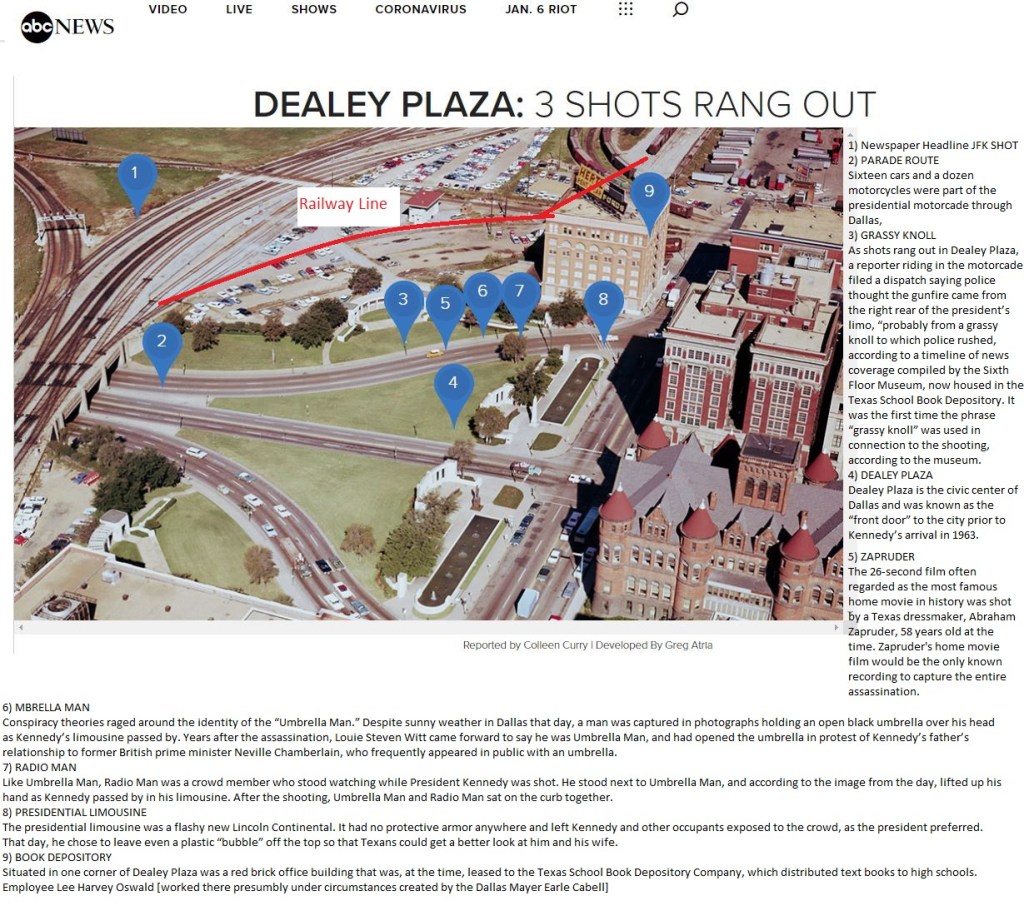
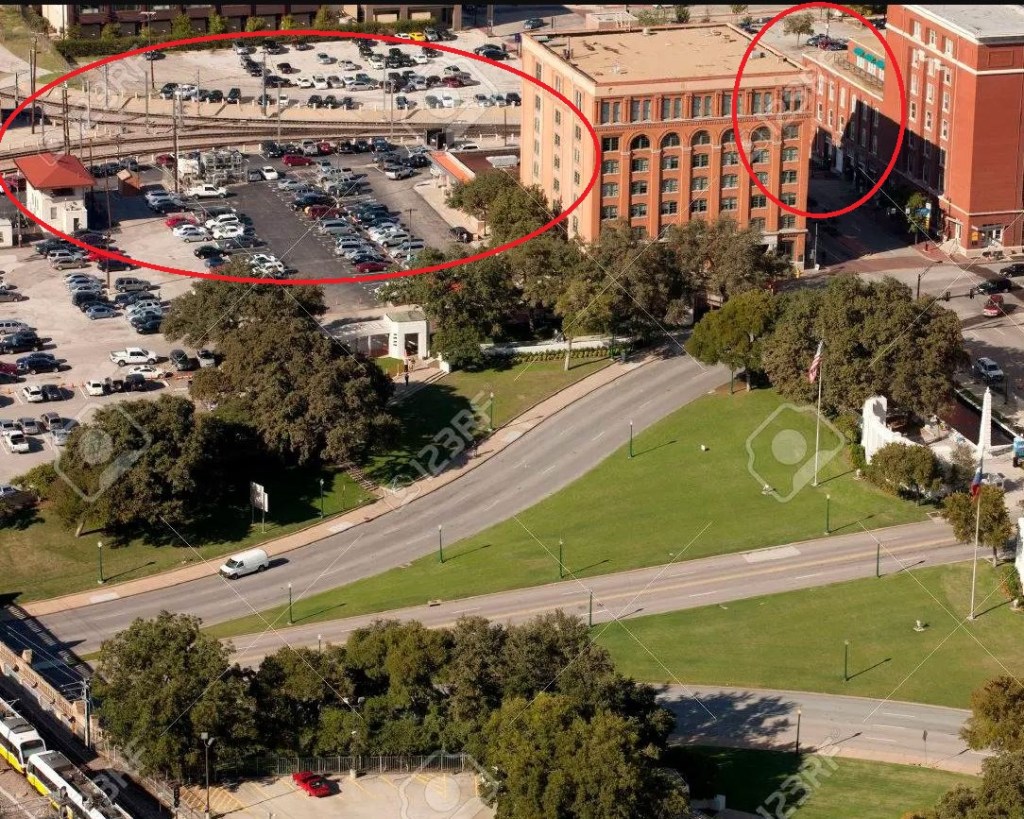
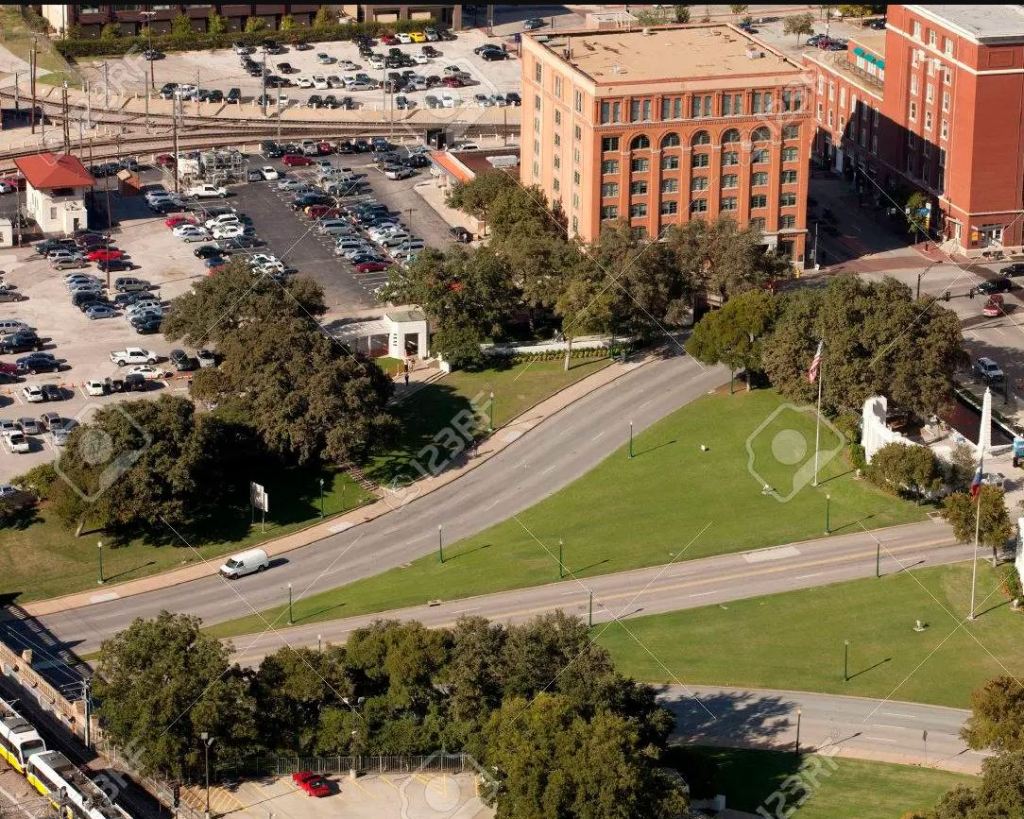
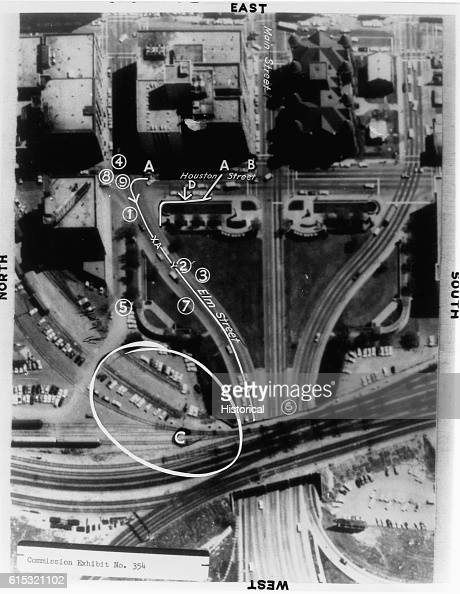
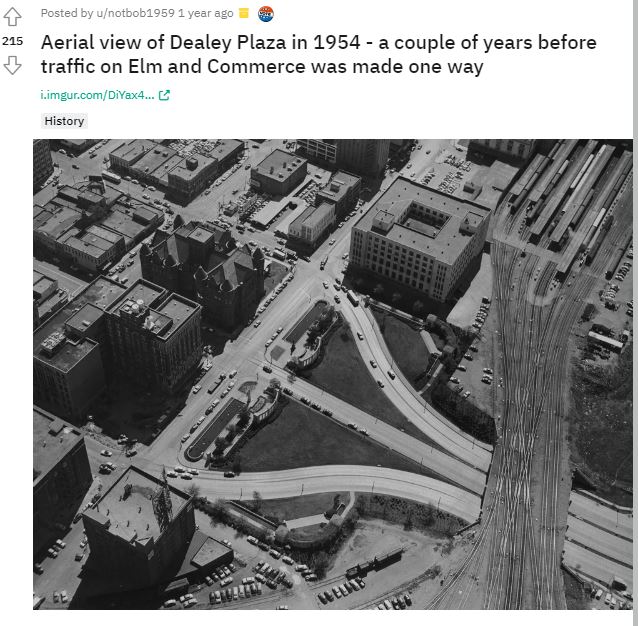
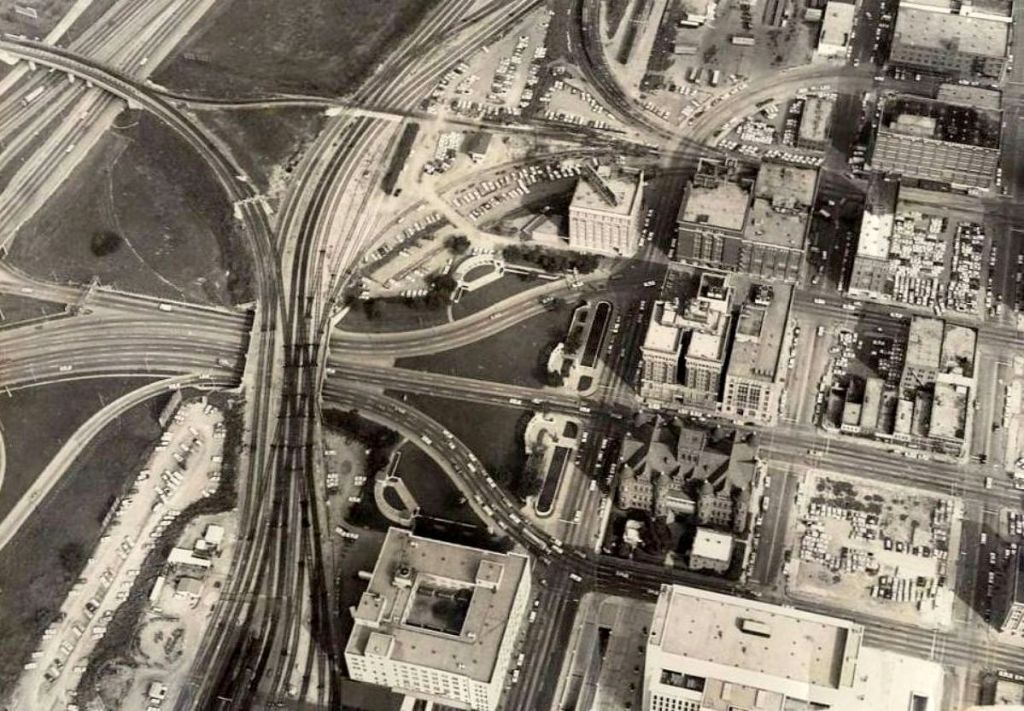

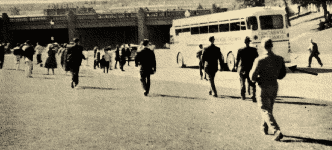
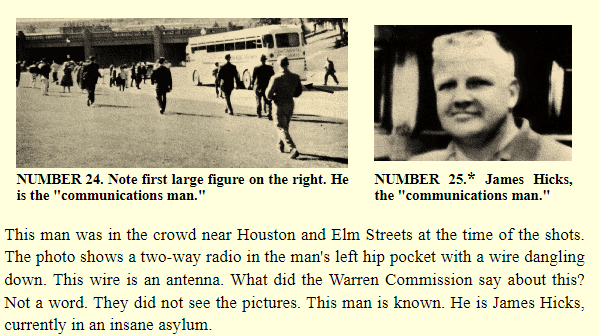
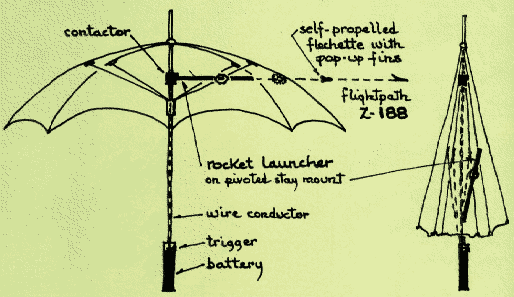
did the throat shot come from?