Trackback https://wordpress.com/post/targetedmanhattanprojectvictim.wordpress.com/2835
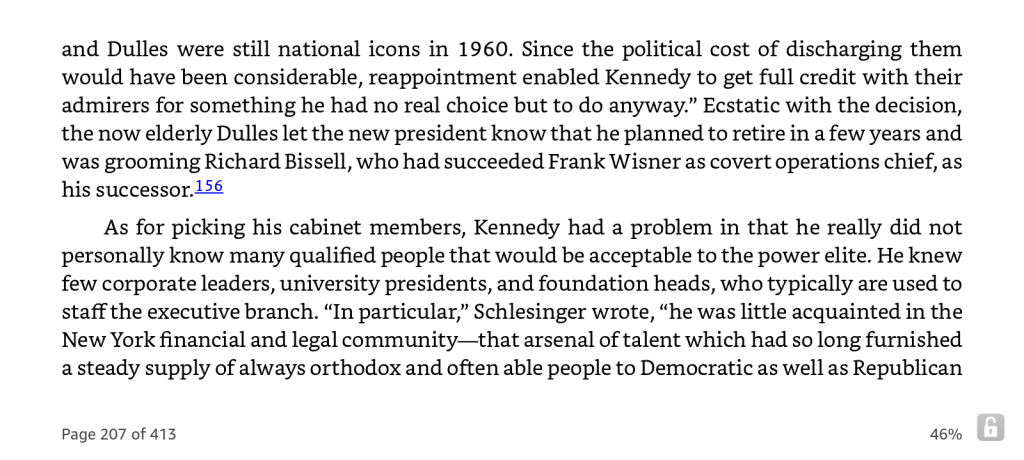
RIchard Bissle Jr and FBI and angletons moment of Recon Glory to left to die in Bay of Pigs and firing.
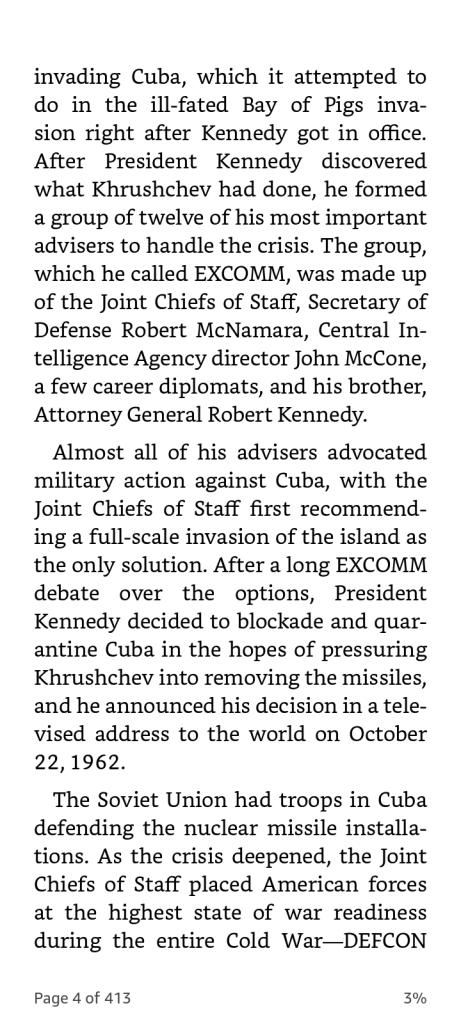
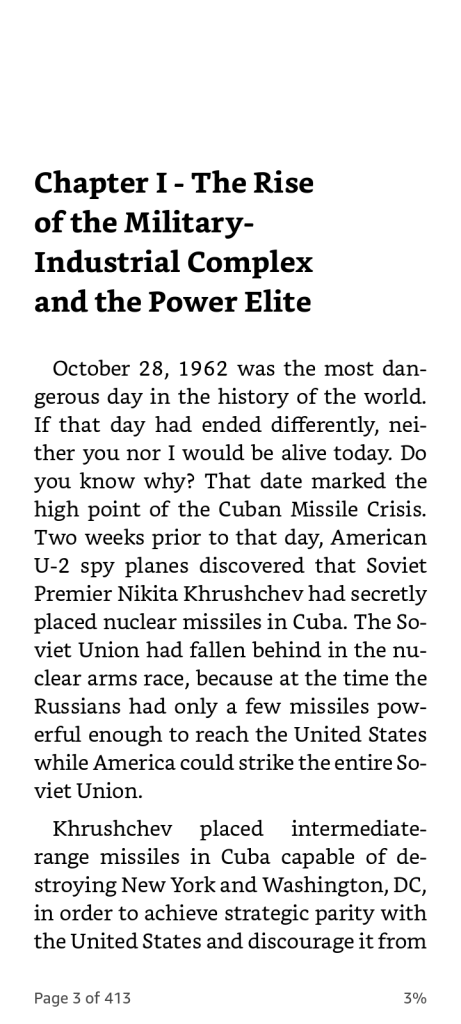
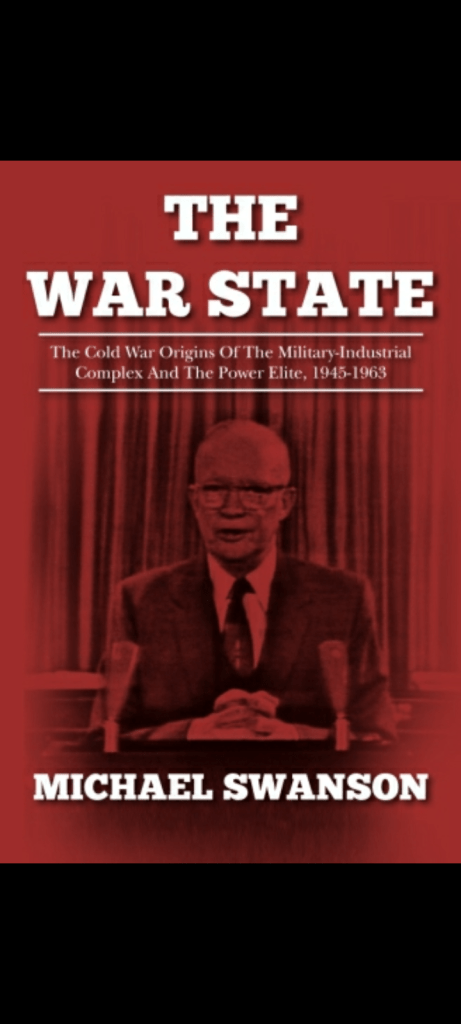
The Allen Dulles Revolutionary acts. THe CIA was his baby and he defended it – against JFK
Soft Power from State Dept and Leverage from CIA and US DOD
Dwight Eisenhower seemingly made a deal, a compact, with the Free Mason families, Walker family, and others for joint world operations. and this was done February 20 1954 as Free Mason lodges expanded on military bases encourage by the US Military.
During JFKs tenure he will try and fight that by distruting the Guns of August free to all officer clubs of the US MIlitary.
He and Ted Sorenson will be part of that action together and Cabot Lodge (Secretary of State will agree with the distribution.
The Guns of August: The Pulitzer Prize-Winning Classic About the Outbreak of World War I Mass Market Paperback – August 3, 2004
by Barbara W. Tuchman (Author), Robert K. Massie (Foreword)
PULITZER PRIZE WINNER • “A brilliant piece of military history which proves up to the hilt the force of Winston Churchill’s statement that the first month of World War I was ‘a drama never surpassed.’”—Newsweek
Selected by the Modern Library as one of the 100 best nonfiction books of all time
In this landmark account, renowned historian Barbara W. Tuchman re-creates the first month of World War I: thirty days in the summer of 1914 that determined the course of the conflict, the century, and ultimately our present world. Beginning with the funeral of Edward VII, Tuchman traces each step that led to the inevitable clash. And inevitable it was, with all sides plotting their war for a generation. Dizzyingly comprehensive and spectacularly portrayed with her famous talent for evoking the characters of the war’s key players, Tuchman’s magnum opus is a classic for the ages.
The Proud Tower, the Pulitzer Prize–winning The Guns of August, and The Zimmermann Telegram comprise Barbara W. Tuchman’s classic histories of the First World War era
[Edward VII was FOXP2 gene symptomatic and likely as Jen Moore said was part of going into WWI and WWII. (more about the Born Leaders Regime Change Plan ((BLRCP)) the term I have coined for study certain key family lines and picking the non expressive family members (often under changed or made-up names) to be Future Leaders.
This cronyism and famalial allegiances of the Aristocracy was part of WWI breaking out but that is just what Alan and John Foster Dulles were asking JFK and Ted Sorenson to help withy, planting grommed future world leaders designed to be leaders from birth and even planned at the time of fertiliation.
The Guns of August (1962) (published in the UK as August 1914) is a volume of history by Barbara W. Tuchman. It is centered on the first month of World War I. After introductory chapters, Tuchman describes in great detail the opening events of the conflict. Its focus then becomes a military history of the contestants, chiefly the great powers.
The Guns of August thus provides a narrative of the earliest stages of World War I, from the decisions to go to war, up until the start of the Franco-British offensive that stopped the German advance into France. The result was four years of trench warfare. In the course of her narrative Tuchman includes discussion of the plans, strategies, world events, and international sentiments before and during the war.
The book was awarded the Pulitzer Prize for General Non-Fiction for publication year 1963,[1] and proved very popular. Tuchman later returned to the subject of the social attitudes and issues that existed before World War I, which she had touched upon in The Guns of August, in a collection of eight essays published in 1966 under the title The Proud Tower: A Portrait of the World Before the War, 1890–1914.[2]
The Case Against Alan Dulles and Charles Cabell and Richard Bissle Jr.
John Foster Dulles (/ˈdʌləs/, /ˈdʌlɪs/; February 25, 1888 – May 24, 1959) was an American diplomat, lawyer, and Republican Party politician. He served as United States Secretary of State under President Dwight D. Eisenhower from 1953 to 1959 and was briefly a Republican U.S. Senator for New York in 1949. He was a significant figure in the early Cold War era who advocated an aggressive stance against communism throughout the world. -Wikipedia
Edward Donegan. Born near Februay 20 he is John Foster Dulles was likely a Rosicrucian connected family line.
Born in Washington, D.C., he was one of five children and the eldest son born to Presbyterian minister Allen Macy Dulles and his wife, Edith (née Foster). His paternal grandfather, John Welsh Dulles, had been a Presbyterian missionary in India. His maternal grandfather, John W. Foster, had been Secretary of State under Benjamin Harrison, and doted on Dulles and his brother Allen, who would later become the director of the Central Intelligence Agency. The brothers attended public schools in Watertown, New York and spent summers with their maternal grandfather in nearby Henderson Harbor.[1][2]
Dulles attended Princeton University and graduated as a member of Phi Beta Kappa in 1908. At Princeton, Dulles competed on the American Whig-Cliosophic Society debate team and was a member of University Cottage Club.[3][4] He then attended the George Washington University Law School in Washington, D.C.
Early career[edit]
Upon passing the bar examination, Dulles joined the New York City law firm of Sullivan & Cromwell, where he specialized in international law. After American entry into World War I, Dulles tried to join the Army, but was rejected because of poor eyesight. Instead, Dulles received an army commission as major on the War Industries Board. Dulles later returned to Sullivan & Cromwell and became a partner with an international practice.[5]
In 1917, Dulles’s uncle, Robert Lansing, the then-Secretary of State, recruited him to travel to Central America.[6] Dulles advised Washington to support Costa Rica’s dictator, Federico Tinoco, on the grounds that he was anti-German, and also encouraged Nicaragua’s dictator, Emiliano Chamorro, to issue a proclamation suspending diplomatic relations with Germany. In Panama, Dulles offered waiver of the tax imposed by the United States on the annual Canal fee, in exchange for a Panamanian declaration of war on Germany.[7]
Dulles developed colon cancer, for which he was first operated on in November 1956 when it had caused a bowel perforation.[38] He experienced abdominal pain at the end of 1958 and was hospitalized with a diagnosis of diverticulitis. In January 1959, Dulles returned to work, but with more pain and declining health underwent abdominal surgery in February at Walter Reed Army Medical Center when the cancer’s recurrence became evident. After recuperating in Florida, Dulles returned to Washington for work and radiation therapy. With further declining health and evidence of bone metastasis, he resigned from office on April 15, 1959.[38]
Dulles died at Walter Reed on May 24, 1959, at the age of 71.[39] Funeral services were held in Washington National Cathedral on May 27, 1959, and he was buried at Arlington National Cemetery, in Arlington, Virginia.[40]
Legacy[edit]
Bust of John Foster Dulles inside the eponymous airport.
Dulles was posthumously awarded the Medal of Freedom and the Sylvanus Thayer Award in 1959. A central West Berlin road was named John-Foster-Dulles-Allee in 1959 with a ceremony attended by Christian Herter, Dulles’s successor as Secretary of State.
The Washington Dulles International Airport in Dulles, Virginia and John Foster Dulles High, Middle, and Elementary Schools in Sugar Land, Texas (including the street (Dulles Avenue) where the school campuses are located), were named in his honor, as is John Foster Dulles Elementary School in Cincinnati, Ohio, and a school in Chicago, Illinois.[41] New York named the Dulles State Office Building in Watertown, New York in his honor. In 1960 the U.S. Post Office Department issued a commemorative stamp honoring Dulles. At Princeton University, Dulles’s alma mater, a section of Firestone Library is dedicated to Dulles, named the John Foster Dulles Library of Diplomatic History, which houses, among many American diplomatic documents and books, the personal documents of John Foster Dulles. The library was built in 1962.[42]
This quote is sometimes misattributed to Dulles: “The United States of America does not have friends; it has interests.” The words were spoken by President Charles de Gaulle of France, and the misquotation may be attributed to Dulles’s visit to Mexico in 1958, where anti-American protesters carried signs bearing de Gaulle’s quote.[43]
Popular culture[edit]
Dulles was named Time magazine‘s Man of the Year for 1954.[44]
Entertainer Carol Burnett rose to prominence in the 1950s singing a novelty song, “I Made a Fool of Myself Over John Foster Dulles”.[45] When asked about the song on Meet the Press, Dulles responded with good humor: “I never discuss matters of the heart in public.”
I Edward Paul Donegan can tell you the death of my brother Tom Donegan was very painfull even though we had not been close for 40 years and were sometimes bitter enemies.
John Foster and Alan Dulles (State Dept under Eisenhower VP Nixon and CIA under Eisenhower and VP Nixon) were part of Executive Action, sham companies like United Fruit Company and International Trade Mart (Clay Shaw) or Reily Coffee Company who were in Latin American Trade as well as front companies for CIA activities clearing the path for the commercial activities being approved within the natural or raw resources mined colonial states.
Gautemals did fall in 1954 as did Tehran and Alan Dulles talks about the CIA having easily made these changes (overthrows) and the value that was to the USA.
Alan Dulles also talks about his CIA friends who were in the Bay of Pigs getting killed, and that just on the death of his own brother who after childhood, after WWII, and then in adulthood in US Government and in business, both tied to United Fruit Company, were inseperable.
The Bay of Pigs Invasion (Spanish: Invasión de Bahía de Cochinos, sometimes called Invasión de Playa Girón or Batalla de Playa Girón after the Playa Girón) was a failed military landing operation on the southwestern coast of Cuba in 1961 by Cuban exiles, covertly financed and directed by the U.S. government. It was aimed at overthrowing Fidel Castro‘s communist government. The operation took place at the height of the Cold War, and its failure influenced relations between Cuba, the United States, and the Soviet Union.
In December 1958, American ally General Fulgencio Batista was deposed by Castro’s 26th of July Movement during the Cuban Revolution. Castro nationalized American businesses—including banks, oil refineries, and sugar and coffee plantations—then severed Cuba’s formerly close relations with the United States and reached out to its Cold War rival, the Soviet Union. In response, the Central Intelligence Agency (CIA) began planning the overthrow of Castro, which U.S. President Dwight D. Eisenhower approved in March 1960. Cuban exiles who had moved to the U.S. following Castro’s takeover had formed the counter-revolutionary military unit, Brigade 2506, which was the armed wing of the Democratic Revolutionary Front (DRF). The CIA funded the brigade, which also included some U.S. military[8] personnel, and trained the unit in Guatemala.
1,500 troops, divided into five infantry battalions and one paratrooper battalion, assembled and launched from Guatemala and Nicaragua by boat on 17 April 1961. Two days earlier, eight CIA-supplied B-26 bombers had attacked Cuban airfields and then returned to the U.S. On the night of 17 April, the main invasion force landed on the beach at Playa Girón in the Bay of Pigs, where it overwhelmed a local revolutionary militia. Initially, José Ramón Fernández led the Cuban Army counter-offensive; later, Castro took personal control. As the invasion force lost the strategic initiative, U.S. President John F. Kennedy decided to withhold further air support after the international community became aware of the operation.[9] The plan, devised during Eisenhower’s presidency, had required involvement of both air and naval forces. Without further air support, the invasion was being conducted with fewer forces than the CIA had deemed necessary. The invading force was defeated within three days by the Cuban Revolutionary Armed Forces and surrendered on 20 April. Most of the surrendered troops were publicly interrogated and put into Cuban prisons.
The invasion was a U.S. foreign policy failure. The Cuban government’s victory solidified Castro’s role as a national hero and widened the political division between the two formerly allied countries. It also pushed Cuba closer to the Soviet Union, setting the stage for the Cuban Missile Crisis in 1962. -Wikipedia
The Firing of General Charles Cabell (and likley NOT having fired William F. Burns yet)
During the The Garrison Tapes at about 3 mins 30 secords Garrison and others talk about firing General Cabell and Cabells deep resntment at being fired. This the USA, NOT an Aristocracy allowing a Prime Minister to serve at the Lords Leisure, the Prime Minister head of GOvernment could fire the British Aristocracy, exactly who they were the Cabells, The Dulles family, J. Edgar Hoover, Donald Barr, and many others, often Scotish Rites.
This was just as much the anti JFK RFK theory of government, both schools (Eisenhower Nixon Dulles Bush Cabell Burs Rockefeller Rothschild Joseph Kennedy Sr Richard Bissle Jr to replace Dean Rusk or Alan Dulles at State or CIA and the JFK RFK school against East India Tea Company or United Fruit Company running world aristocracy colonialism and wars and regime changes (Cuba and Vietnam.)
The CIA murder of RFK after the CIA murder of JFK
Robert Francis Kennedy (November 20, 1925 – June 6, 1968 [close to November 18), also known by his initials RFK and by the nickname Bobby,[1][2] was an American lawyer and politician who served as the 64th United States Attorney General from January 1961 to September 1964, and as a U.S. Senator from New York from January 1965 until his assassination in June 1968. He was, like his brothers John and Edward, a prominent member of the Democratic Party and has come to be viewed by some historians as an icon of modern American liberalism.[3]
Kennedy was born into a wealthy, political family in Brookline, Massachusetts. After serving in the U.S. Naval Reserve from 1944 to 1946, Kennedy returned to his studies at Harvard University, and later received his law degree from the University of Virginia. He began his career as a correspondent for The Boston Post and as a lawyer at the Justice Department, but later resigned to manage his brother John’s successful campaign for the U.S. Senate in 1952. The following year, he worked as an assistant counsel to the Senate committee chaired by Senator Joseph McCarthy. He gained national attention as the chief counsel of the Senate Labor Rackets Committee from 1957 to 1959, where he publicly challenged Teamsters President Jimmy Hoffa over the union’s corrupt practices. Kennedy resigned from the committee to conduct his brother’s successful campaign in the 1960 presidential election. He was appointed United States Attorney General at the age of 35, one of the youngest cabinet members in American history.[4] He served as his brother’s closest advisor until the latter’s 1963 assassination.[5]
On March 1, 1967, New Orleans District Attorney Jim Garrison arrested and charged New Orleans businessman Clay Shaw with conspiring to assassinate President Kennedy, with the help of Lee Harvey Oswald, David Ferrie, and others. Wikipedia
Dates: Mar 1, 1967 – Mar 1, 1969
Judge(s) sitting: Edward Haggerty
The FBI, CIA, nor J. Edger Hoover were letting out details of the secret office politics like the firing of Cabell and Dulles. On paper and at the ceremony they were heroes, at least Dulles.
But RFK knew why JFK fired them, and it was probably RFK who AKSED they be fired because they were bucking against the REAL authority JM/WAVE the DOJ authorized ovetrhrow activity.
After RFK was shot someone, a I think Felix Rodriguez said “We sure showed that bastard RFK” That is likely how the Cabell brothers, The Dulles Brothers, and rising star Richard Bissle jR felt.
And RFK knew it. He gave files to Roman Catholic Dorothy Killgalen, and also to Jim Garrision.
Thus the jury in the trial of Clay Shaw was told they were seing evidence the public had not seen, like the Zupruder film, that Garrison got a hold of, and made available to the public.
And advance of the trial of Clay Shaw as RFK was running for president he was gunned down.
Did the CIA kill Bobby Kennedy?
In 1968, Robert Kennedy seemed likely to follow his brother, John, into the White House. Then, on June 6, he was assassinated – apparently by a lone gunman. But Shane O’Sullivan says he has evidence implicating three CIA agents in the murder
Sun 19 Nov 2006 19.04 EST
At first, it seems an open-and-shut case. On June 5 1968, Robert Kennedy wins the California Democratic primary and is set to challenge Richard Nixon for the White House. After midnight, he finishes his victory speech at the Ambassador hotel in Los Angeles and is shaking hands with kitchen staff in a crowded pantry when 24-year-old Palestinian Sirhan Sirhan steps down from a tray-stacker with a “sick, villainous smile” on his face and starts firing at Kennedy with an eight-shot revolver.
As Kennedy lies dying on the pantry floor, Sirhan is arrested as the lone assassin. He carries the motive in his shirt-pocket (a clipping about Kennedy’s plans to sell bombers to Israel) and notebooks at his house seem to incriminate him. But the autopsy report suggests Sirhan could not have fired the shots that killed Kennedy. Witnesses place Sirhan’s gun several feet in front of Kennedy, but the fatal bullet is fired from one inch behind. And more bullet-holes are found in the pantry than Sirhan’s gun can hold, suggesting a second gunman is involved. Sirhan’s notebooks show a bizarre series of “automatic writing” – “RFK must die RFK must be killed – Robert F Kennedy must be assassinated before 5 June 68” – and even under hypnosis, he has never been able to remember shooting Kennedy. He recalls “being led into a dark place by a girl who wanted coffee”, then being choked by an angry mob. Defence psychiatrists conclude he was in a trance at the time of the shooting and leading psychiatrists suggest he may have be a hypnotically programmed assassin.
Three years ago, I started writing a screenplay about the assassination of Robert Kennedy, caught up in a strange tale of second guns and “Manchurian candidates” (as the movie termed brainwashed assassins). As I researched the case, I uncovered new video and photographic evidence suggesting that three senior CIA operatives were behind the killing. I did not buy the official ending that Sirhan acted alone, and started dipping into the nether-world of “assassination research”, crossing paths with David Sanchez Morales, a fearsome Yaqui Indian.
Morales was a legendary figure in CIA covert operations. According to close associate Tom Clines, if you saw Morales walking down the street in a Latin American capital, you knew a coup was about to happen. When the subject of the Kennedys came up in a late-night session with friends in 1973, Morales launched into a tirade that finished: “I was in Dallas when we got the son of a bitch and I was in Los Angeles when we got the little bastard.” From this line grew my odyssey into the spook world of the 60s and the secrets behind the death of Bobby Kennedy.
Working from a Cuban photograph of Morales from 1959, I viewed news coverage of the assassination to see if I could spot the man the Cubans called El Gordo – The Fat One. Fifteen minutes in, there he was, standing at the back of the ballroom, in the moments between the end of Kennedy’s speech and the shooting. Thirty minutes later, there he was again, casually floating around the darkened ballroom while an associate with a pencil moustache took notes.


 Arizona senator Kyrsten Sinema leaves Democrats tobecome independent – live
https://imasdk.googleapis.com/js/core/bridge3.549.0_en.html#goog_2099969667
https://imasdk.googleapis.com/js/core/bridge3.549.0_en.html#goog_305256008
https://imasdk.googleapis.com/js/core/bridge3.549.0_en.html#goog_1123731830
The source of early research on Morales was Bradley Ayers, a retired US army captain who had been seconded to JM-Wave, the CIA’s Miami base in 1963, to work closely with chief of operations Morales on training Cuban exiles to run sabotage raids on Castro. I tracked Ayers down to a small town in Wisconsin and emailed him stills of Morales and another guy I found suspicious – a man who is pictured entering the ballroom from the direction of the pantry moments after the shooting, clutching a small container to his body, and being waved towards an exit by a Latin associate.
Ayers’ response was instant. He was 95% sure that the first figure was Morales and equally sure that the other man was Gordon Campbell, who worked alongside Morales at JM-Wave in 1963 and was Ayers’ case officer shortly before the JFK assassination.
I put my script aside and flew to the US to interview key witnesses for a documentary on the unfolding story. In person, Ayers positively identified Morales and Campbell and introduced me to David Rabern, a freelance operative who was part of the Bay of Pigs invasion force in 1961 and was at the Ambassador hotel that night. He did not know Morales and Campbell by name but saw them talking to each other out in the lobby before the shooting and assumed they were Kennedy’s security people. He also saw Campbell around police stations three or four times in the year before Robert Kennedy was shot.
This was odd. The CIA had no domestic jurisdiction and Morales was stationed in Laos in 1968. With no secret service protection for presidential candidates in those days, Kennedy was guarded by unarmed Olympic decathlete champion Rafer Johnson and football tackler Rosey Grier – no match for an expert assassination team.
Trawling through microfilm of the police investigation, I found further photographs of Campbell with a third figure, standing centre-stage in the Ambassador hotel hours before the shooting. He looked Greek, and I suspected he might be George Joannides, chief of psychological warfare operations at JM-Wave. Joannides was called out of retirement in 1978 to act as the CIA liaison to the House Select Committee on Assassinations (HSCA) investigating the death of John F Kennedy.
Ed Lopez, now a respected lawyer at Cornell University, came into close contact with Joann-des when he was a young law student working for the committee. We visit him and show him the photograph and he is 99% sure it is Joannides. When I tell him where it was taken, he is not surprised: “If these guys decided you were bad, they acted on it.
We move to Washington to meet Wayne Smith, a state department official for 25 years who knew Morales well at the US embassy in Havana in 1959-60. When we show him the video in the ballroom, his response is instant: “That’s him, that’s Morales.” He remembers Morales at a cocktail party in Buenos Aires in 1975, saying Kennedy got what was coming to him. Is there a benign explanation for his presence? For Kennedy’s security, maybe? Smith laughs. Morales is the last person you would want to protect Bobby Kennedy, he says. He hated the Kennedys, blaming their lack of air support for the failed Bay of Pigs invasion in 1961.
We meet Clines in a hotel room near CIA headquarters. He does not want to go on camera and brings a friend, which is a little unnerving. Clines remembers “Dave” fondly. The guy in the video looks like Morales but it is not him, he says: “This guy is fatter and Morales walked with more of a slouch and his tie down.” To me, the guy in the video does walk with a slouch and his tie is down.
Clines says he knew Joannides and Campbell and it is not them either, but he fondly remembers Ayers bringing snakes into JM-Wave to scare the secretaries and seems disturbed at Smith’s identification of Morales. He does not discourage our investigation and suggests others who might be able to help. A seasoned journalist cautions that he would expect Clines “to blow smoke”, and yet it seems his honest opinion.
As we leave Los Angeles, I tell the immigration officer that I am doing a story on Bobby Kennedy. She has seen the advertisements for the new Emilio Estevez movie about the assassination, Bobby. “Who do you think did it? I think it was the Mob,” she says before I can answer.
“I definitely think it was more than one man,” I say, discreetly.
Morales died of a heart attack in 1978, weeks before he was to be called before the HSCA. Joannides died in 1990. Campbell may still be out there somewhere, in his early 80s. Given the positive identifications we have gathered on these three, the CIA and the Los Angeles Police Department need to explain what they were doing there. Lopez believes the CIA should call in and interview everybody who knew them, disclose whether they were on a CIA operation and, if not, why they were there that night.
Today would have been Robert Kennedy’s 81st birthday. The world is crying out for a compassionate leader like him. If dark forces were behind his elimination, it needs to be investigated
· Shane O’Sullivan’s investigation will be shown tonight on Newsnight, BBC2,
 Dynastic Successions Book
