Franklin Delano Roosevelt, often referred to by his initials FDR, was an American politician and attorney who served as the 32nd president of the United States from 1933 until his death in 1945. Wikipedia
Early political career (1910–1920)
New York state senator (1910–1913) then
FDR is Assistant Secretary of the Navy (1913–1919) during the span of WWI
Roosevelt as Assistant Secretary of the Navy, 1913
The first successful torpedo program by the U.S. Navy began in 1870. Lieutenant Commander John A. Howell created a torpedo that was driven by a 132-pound flywheel that spun to 10,000 revolutions per minute. A steam turbine housed on the torpedo tube spun the flywheel before it launched. The Navy produced about 50 of the Howell torpedoes for tactical use. Eventually, the U.S. would go to the Whitehead and Bliss-Leavitt torpedoes that would make up the U.S. arsenal until 1910. The Whitehead Mk 5 could go about 4,000 yards at speeds up to 27 knots.
From 1910 to 1915, the torpedo detonator saw many modifications. Before the modifications, torpedoes would have to strike a direct hit to explode, but the improved detonators could explode from any direction or even a glancing blow to a hull. Torpedo development was minimal during World War I. The Mk 7 was the first steam-driven torpedo that could be fired from both destroyers and submarines.
The post-World War I/pre-World War II era defined the modern torpedo. The first American airdrop torpedo test occurred in 1920. The Mk 13, the aircraft launched torpedo, was 13-½ feet long, had a range of 7,000 yards, and could get up to a speed of about 30 knots. The Mk 14 torpedo was deployed from submarines. That type of torpedo was responsible for sinking more than four million tons of Japanese shipping during World War II. The Mk 15 torpedo that was on destroyers had an 825-pound warhead and remained in service until the 1950s.
Around 1941, German submarine U-570 was captured and with it came the design of the electric torpedo. Within a year of the U-boats capture, the Mk 18 was available to the fleet. The electric torpedo had two advantages: it was wakeless and required less manufacturing effort. Another torpedo developed during the war was the homing torpedo. The idea was the torpedo attacked what it heard. The Mk 24, nicknamed “Fido,” was responsible for sinking approximately 15 percent of enemy submarines from 1943 to war’s end. https://www.history.navy.mil/browse-by-topic/exploration-and-innovation/navy-torpedoes.html
THE USA allies with Brittan France Russia against Germany Austria Hungry (as usual.)
Central Powers peace overtures
“They shall not pass“, a phrase typically associated with the defence of Verdun
On 12 December 1916, after ten brutal months of the Battle of Verdun and a successful offensive against Romania, Germany attempted to negotiate a peace with the Allies.[178] However, this attempt was rejected out of hand as a “duplicitous war ruse”.[178]
Soon after, US president Woodrow Wilson attempted to intervene as a peacemaker, asking in a note for both sides to state their demands and start negotiations.
Lloyd George’s War Cabinet considered the German offer to be a ploy to create divisions amongst the Allies. After initial outrage and much deliberation, they took Wilson’s note as a separate effort, signalling that the United States was on the verge of entering the war against Germany following the “submarine outrages”. While the Allies debated a response to Wilson’s offer, the Germans chose to rebuff it in favour of “a direct exchange of views”.
In modern language, a “torpedo” is an underwater self-propelled explosive, but historically, the term also applied to primitive naval mines.
Whitehead torpedo’s general profile: A. war-head B. air-flask. B’. immersion chamber C’. after-body C. engine room D. drain holes E. shaft tube F. steering-engine G. bevel gear box H. depth index I. tail K. charging and stop-valves L. locking-gear M. engine bed-plate P. primer case R. rudder S. steering-rod tube T. guide stud U. propellers V. valve-group W. war nose[6]Z. strengthening band
A prototype of the self-propelled torpedo was created on a commission placed by Giovanni Luppis, an Austro-Hungarian naval officer from Rijeka (modern-day Croatia), at the time a port city of the Austro-Hungarian Monarchy and Robert Whitehead, an English engineer who was the manager of a town factory. In 1864, Luppis presented Whitehead with the plans of the Salvacoste (“Coastsaver”), a floating weapon driven by ropes from the land that had been dismissed by the naval authorities due to the impractical steering and propulsion mechanisms.
Agathe Gobertina von Trapp (née Whitehead; 14 June 1891 – 3 September 1922) was a British-Austrian heiress and aristocrat. She was the first wife of Georg Ritter von Trapp and the mother of seven children of the Trapp Family singers
Whitehead was born on 14 June 1891 in Fiume as the first daughter and third child of John Whitehead and Countess Agathe Gobertina von Breunner-Enckevoirth.[1] Her father, a British engineer who had been made a knight of the Order of Franz Joseph, was the son of Robert Whitehead, the eponym of the Whitehead torpedo.[2][3][4] Her mother, an amateur architect and pianist, was a member of the Austrian and Hungarian nobility.[5] Through her father, Whitehead was a niece of the diplomat Sir James Beethom Whitehead, who served as the British Minister to Serbia, and a first cousin of Sir Edgar Whitehead, who served as Prime Minister of Southern Rhodesia.
14 November 1905 (aged 82) Shrivenham, Berkshire, England, UK[1]
In 1866, Whitehead invented the first effective self-propelled torpedo, the eponymous Whitehead torpedo. French and German inventions followed closely, and the term torpedo came to describe self-propelled projectiles that traveled under or on water. By 1900, the term no longer included mines and booby-traps as the navies of the world added submarines, torpedo boats and torpedo boat destroyers to their fleets.[7][8]
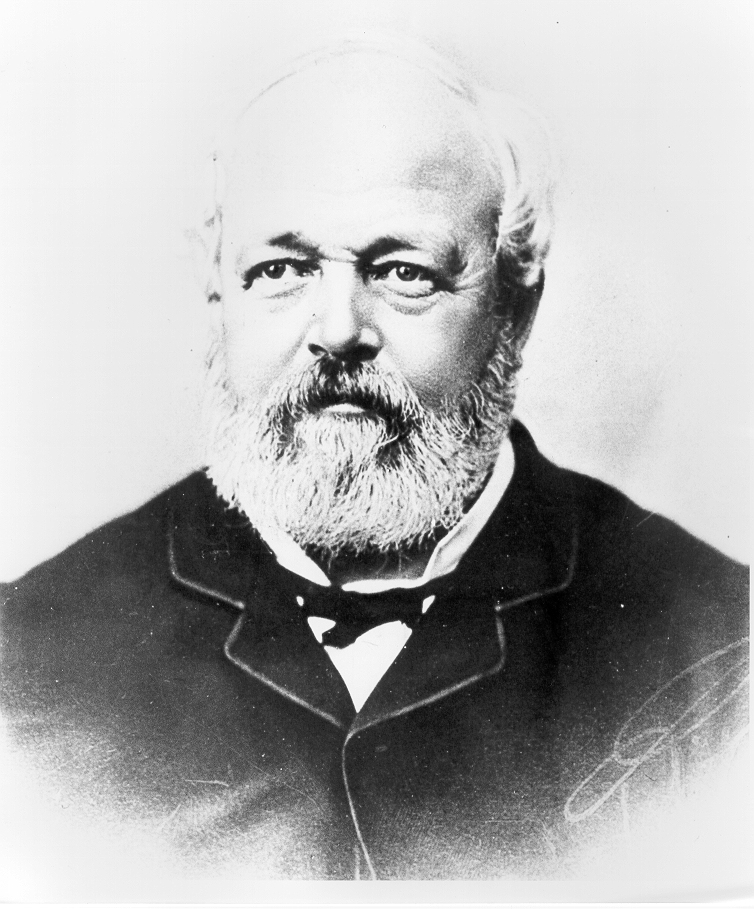
Robert Whitehead (3 January 1823 – 14 November 1905) was an English engineer who was most famous for developing the first effective self-propelled naval torpedo.
While the 19th-century battleship had evolved primarily with a view to engagements between armored warships with large-caliber guns, the invention and refinement of torpedoes from the 1860s onwards allowed small torpedo boats and other lighter surface vessels, submarines/submersibles, even improvised fishing boats or frogmen, and later light aircraft, to destroy large ships without the need of large guns, though sometimes at the risk of being hit by longer-range artillery fire.
One can divide modern torpedoes into lightweight and heavyweight classes; and into straight-running, autonomous homers, and wire-guided types. They can be launched from a variety of platforms.
Learning of the German response, the Allied governments were free to make clear demands in their response of 14 January. They sought restoration of damages, the evacuation of occupied territories, reparations for France, Russia and Romania, and a recognition of the principle of nationalities.[179]
This included the liberation of Italians, Slavs, Romanians, Czecho-Slovaks, and the creation of a “free and united Poland”.[179]
On the question of security, the Allies sought guarantees that would prevent or limit future wars, complete with sanctions, as a condition of any peace settlement.[180] The negotiations failed and the Entente powers rejected the German offer on the grounds that Germany had not put forward any specific proposals.
Assistant Secretary of the Navy (1913–1919)
THIS DAY IN HISTORY
APRIL 06
1917
April 06
The United States officially enters World War I
April 6, 1917: Two days after the U.S. Senate voted 82 to 6 to declare war against Germany, the U.S. House of Representatives endorses the declaration by a vote of 373 to 50, and America formally enters World War I.
When World War I erupted in 1914, President Woodrow Wilson pledged neutrality for the United States, a position that the vast majority of Americans favored.
Britain, however, was one of America’s closest trading partners, and tension soon arose between the United States and Germany over the latter’s attempted quarantine of the British Isles.
Several U.S. ships traveling to Britain were damaged or sunk by German mines, and in February 1915 Germany announced unrestricted warfare against all ships, neutral or otherwise, that entered the war zone around Britain.
One month later, Germany announced that a German cruiser had sunk the William P. Frye, a private American vessel. President Wilson was outraged, but the German government apologized and called the attack an unfortunate mistake.
On May 7, the British-owned Lusitania ocean liner was torpedoed without warning just off the coast of Ireland. Of the 1,959 passengers, 1,198 were killed, including 128 Americans.
The German government maintained that the Lusitania was carrying munitions, but the U.S. demanded reparations and an end to German attacks on unarmed passenger and merchant ships. In August, Germany pledged to see to the safety of passengers before sinking unarmed vessels, but in November sunk an Italian liner without warning, killing 272 people, including 27 Americans. With these attacks, public opinion in the United States began to turn irrevocably against Germany.
World War I, also known as the Great War, began in 1914 after the assassination of Archduke Franz Ferdinand of Austria. His murder catapulted into a war across Europe that lasted until 1918.
Roosevelt as Assistant Secretary of the Navy, 1913
Roosevelt’s support of Wilson led to his appointment in March 1913 as Assistant Secretary of the Navy, the second-ranking official in the Navy Department after Secretary Josephus Daniels who paid it little attention.[65] Roosevelt had an affection for the Navy, was well-read on the subject, and was a most ardent supporter of a large, efficient force.[66][67] With Wilson’s support, Daniels and Roosevelt instituted a merit-based promotion system and made other reforms to extend civilian control over the autonomous departments of the Navy.[68] Roosevelt oversaw the Navy’s civilian employees and earned the respect of union leaders for his fairness in resolving disputes.[69] No strikes occurred during his seven-plus years in the office,[70] as he gained valuable experience in labor issues, wartime management, naval issues, and logistics.[71]
“On Dupont Circle: Franklin and Eleanor Roosevelt and the Progressives Who Shaped Our World” by James Srodes
By Jonathan Yardley
August 10, 2012
In January 1916, the young journalist Walter Lippmann dropped a note to Franklin Roosevelt, the young assistant secretary of the Navy. Lippmann was planning a visit to Washington and “would like to see you if it is possible for a little talk while I am there. . . . I shall be staying at 1727 19th Street,” he wrote, a boarding house described by James Srodes in “On Dupont Circle” as “a nondescript row house on a tree-shaded side street just two blocks east of busy Connecticut Avenue — jocularly known to its inhabitants and many visitors as The House of Truth.” It had “a raffish, slightly bohemian atmosphere that made it highly attractive to the young people who were drawn there.”
They were drawn to it out of a shared commitment to the progressive cause, a belief that the best and the brightest could employ modern science to solve the nation’s and the world’s most pressing issues. They were “a hybrid of various reformist movements that had come and gone before,” now united by “the revolutionary concept that a strong and active government was needed to intercede for the individual citizen as a referee and advocate in the increasingly exploitative relationships people had with big corporations and big city governments, which had agendas that too often ignored the public good.” Many of them were “university-trained, fiercely ambitious intellectuals” who believed — to use a phrase that by now has become hopelessly trite but then seemed fresh and new — that they could change the world.
The names of some of them remain familiar to this day: Franklin and Eleanor Roosevelt, Felix Frankfurter, John Foster Dulles and his brother Allen. Herbert Hoover, though he does not seem to have hung around at 1727 19th St. NW — indeed it is difficult to imagine the reserved, humorless Hoover “hanging around” anywhere — was not part of the group, but as a leading apostle of the notion that engineering could conquer all, he was certainly an ally. Supreme Court Justice Oliver Wendell Holmes Jr., though far older than the others, lived in the neighborhood and “relished ruling over the dinner table debates as both referee and devil’s advocate.” Communism was much in the air at the time but was resisted by these well-dressed young revolutionaries, as was socialism. Lippmann had flirted seriously with it but eventually rejected it:
Frankfurter, in many respects the wisest and most principled of them, told Roosevelt in 1928 — FDR had just been elected to his first term as governor of New York — that he was against “a new type of oligarchy, namely government by experts . . . experts should be on tap but not on top.”
The electoral successes of Roosevelt, first as governor and then as president, gave the progressives the opportunity they had so eagerly sought to put their ideas into action. Though FDR was neither an expert nor an idea man — nor, for that matter, an ideologue — he relied heavily on real or self-described experts during all of his eventful years in elective office. Experts gave the country the alphabet-soup agencies of the New Deal, they packed the offices of the White House and the federal departments, they wrote the bills that were sent to Congress. Even though we have become increasingly skeptical about the power of expertise to cure societal and political ills, the persistence of their influence can be seen throughout not only the agencies of the federal government but also those of government at all levels.
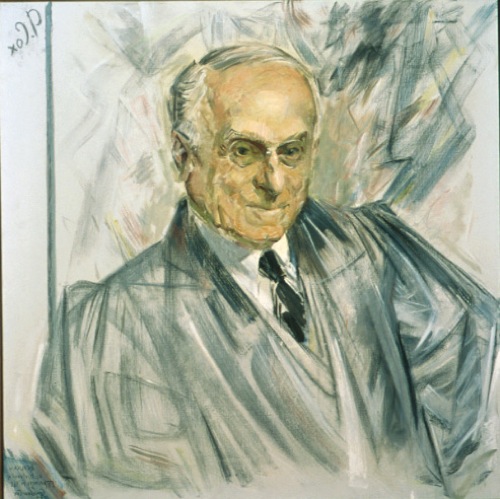
BORN Nov 15, 1882 Vienna, Austria DIED Feb 22, 1965 RELIGION Jewish MOTHER Emma Winter FATHER Leopold Frankfurter FATHER’S OCCUPATION Merchant
ASSOCIATE JUSTICE OF THE SUPREME COURT OF THE UNITED STATES
SUPREME COURT OF THE UNITED STATES
Jan 30, 1939 — Aug 28, 1962APPOINTED BYFranklin D. RooseveltCOMMISSIONEDJan 20, 1939SWORN INJan 30, 1939SEAT3
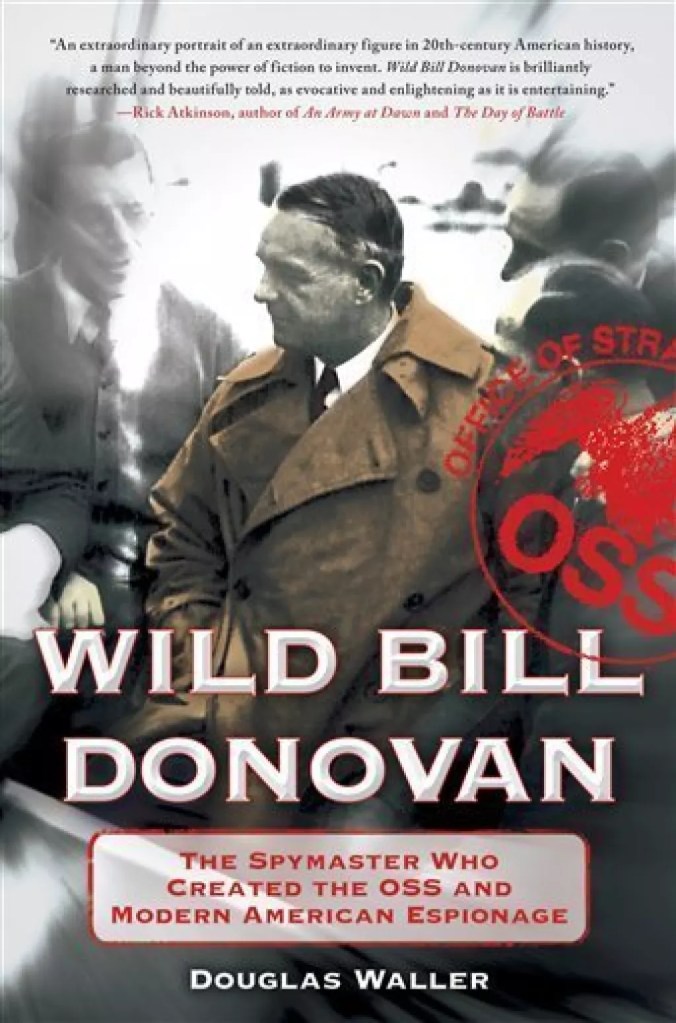
“Wild Bill Donovan: The Spymaster Who Created the OSS and Modern American Espionage” (Free Press, $30), by Douglas Waller: The burgeoning size and scope of America’s intelligence-gathering efforts during and after the Cold War mask the harsh reality that the nation’s capacity for clandestine warfare at the outset of World War II was virtually nonexistent.
Thus it was essential for President Franklin Roosevelt to select a go-getter with the skills, background and drive needed to organize a new intelligence agency and whip it into shape to confront the Axis threat.
The man FDR selected to head the Office of Strategic Services, William “Wild Bill” Donovan, was a larger-than-life figure whose career has the makings of a Hollywood screenplay. A Medal of Honor winner during World War I who went on to become a millionaire Wall Street lawyer and an unsuccessful Republican candidate for governor of New York, Donovan displayed a thirst for action more akin to an infantry commander than a spymaster.
“Wild Bill Donovan: The Spymaster Who Created the OSS and Modern American Espionage” (Free Press, $30), by Douglas Waller: The burgeoning size and scope of America’s intelligence-gathering efforts during and after the Cold War mask the harsh reality that the nation’s capacity for clandestine warfare at the outset of World War II was virtually nonexistent.
Thus it was essential for President Franklin Roosevelt to select a go-getter with the skills, background and drive needed to organize a new intelligence agency and whip it into shape to confront the Axis threat.
The man FDR selected to head the Office of Strategic Services, William “Wild Bill” Donovan, was a larger-than-life figure whose career has the makings of a Hollywood screenplay. A Medal of Honor winner during World War I who went on to become a millionaire Wall Street lawyer (for London) and an unsuccessful Republican candidate for governor of New York, Donovan displayed a thirst for action more akin to an infantry commander than a spymaster.
The Pro-British clutch of FDR and Wild Bill Donovan and the Dulles Brothers, Felix Frankfurter, and others was long running.
FDR built his war machine following WWI.
Recall
Joseph Kennedy Sr.’s first job after graduating from Harvard was a position as a state-employed bank examiner; this job allowed him to learn a great deal about the banking industry. In 1913, the Columbia Trust Bank, in which his father held a significant share, was under threat of takeover. Kennedy borrowed $45,000 (equivalent to about $1.2 million today)[11] from family and friends and bought back control. At the age of 25, he was rewarded by being elected the bank’s president. Kennedy told the press he was “the youngest” bank president in America.[13]
Kennedy emerged as a highly successful entrepreneur who had an eye for value. For example, he was a real estate investor who turned a handsome profit from ownership of Old Colony Realty Associates, Inc., which bought distressed real estate.[14]
Although he was skeptical of American involvement in World War I, Kennedy sought to participate in wartime production as an assistant general manager of Fore River, a major Bethlehem Steel shipyard in Quincy, Massachusetts. (the poor part some Donegans were from including I believe my father James Paul Donegan’s father.)
There, he oversaw the production of transports and warships. Through this job, he became acquainted with Assistant Secretary of the Navy Franklin Delano Roosevelt.[citation needed]
Happy birthday to you Happy birthday to you Happy birthday Mr. President Happy birthday to you
Thanks, Mr. President For all the things you’ve done The battles that you’ve won The way you deal with U.S. Steel And our problems by the ton We thank you so much
Everybody, happy birthday
Ladies and gentlemen, the president of the United States!
Thank you! I can now retire from politics after having had the birthday sang to me In such a sweet way
Bethlehem Steel played an instrumental role in manufacturing U.S. warships and other military weapons used in World War I and later by the Allied forces in ultimately winning World War II. Over 1,100 Bethlehem Steel-manufactured warships were built for use in defeating Nazi Germany and the Axis powers in World War II. Historians cite Bethlehem Steel’s ability to quickly manufacture warships and other military equipment as decisive factors in American victories in both world wars.[1]
Bethlehem Steel’s roots trace to an iron-making company organized in 1857 in Bethlehem, which was later named the Bethlehem Iron Company. In 1899, the owners of the iron company founded Bethlehem Steel Company and, five years later, Bethlehem Steel Corporation was created to be the steelmaking company’s corporate parent.
Establishment and involvement with the Bethlehem Iron Company[edit]
In 1899, Bethlehem Steel Company was established. This was the first company to carry the name Bethlehem Steel. The Bethlehem Steel Company (also known as Bethlehem Steel Works) was incorporated to take over all liabilities of the Bethlehem Iron Company.[5][6][7] The Bethlehem Iron Company and the Bethlehem Steel Company were separate companies under the same ownership. The Bethlehem Steel Company leased the properties that were owned by the Bethlehem Iron Company.
In 1901, Charles M. Schwab (no relation to the stockbroker Charles R. Schwab), purchased the Bethlehem Steel Company and made Samuel Broadbent its vice president.[8][7] During this time, the company’s lease with the Bethlehem Iron Company came to an end as the Bethlehem Steel Company gained control of all properties from the Bethlehem Iron Company and the Bethlehem Iron Company ceased operations.[7]
Operating as a subsidiary of the United States Shipbuilding Company[edit]
Schwab transferred his ownership of the Bethlehem Steel Company to the United States Steel Corporation (U.S. Steel), the company he was president of. This period was brief; Schwab repurchased Bethlehem Steel Company, then sold it to the United States Shipbuilding Company. The United States Shipbuilding Company owned Bethlehem Steel Company only a brief time. The United States Shipbuilding Company was in turmoil; its subsidiaries, including the Bethlehem Steel Company, contributed to the United States Shipbuilding Company’s problems. Schwab again became involved with Bethlehem Steel Company through the parent company, the United States Shipbuilding Company.[8][7]
The United States Shipbuilding Company planned in 1903 to reorganize as the Bethlehem Steel and Shipbuilding Company, which would be the second company to use the name Bethlehem Steel. However, the United States Shipbuilding Company was not reorganized as the Bethlehem Steel and Shipbuilding Company; instead a plan was drawn up for a new company to be formed to replace the United States Shipbuilding Company. The new company was initially to be named Bethlehem Steel and Shipbuilding Company, but, in 1904, assumed instead the name Bethlehem Steel Corporation.
Marylin Monroe (I think Kutchera daughter with undislosed Windsor farthe) was raised secretly by Jospeh Kennedy Sr living accross the street from RKO pictures.
Recognizing it was a mistake of epic proportions, the crew was eventually given another assignment… in Alaska. Appropriately enough, when the USS William D. Porter would come into a Harbor or encounter another ship, she was often greeted with the phrase, “Don’t Shoot, I’m a Republican!”
Civil libertarian and biographer of my own and other OSS CIA Cold War families tied to the Kennedy assasinatinos and related air disasters (UAL 553, TWA 800)
View more posts