Clark Gabel Born: February 1, 1901 – November 16, 1960,
Marilyn Monroe Born: June 1, 1926, Los Angeles, CA Died: August 4, 1962, Brentwood, Los Angeles, CA ,
John F. Kennedy Born: May 29, 1917, Brookline, MA Assassinated: November 22, 1963,.Dallas, TX .
Malcom X Born: May 19, 1925, Omaha, NE Assassinated: February 21, 1965.
Martin Luther King Jr. Born: assassinated January 15, 1929, Atlanta, GA Assassinated: April 4, 1968, Memphis, TN
Robert F. Kennedy Born: November 20, 1925, Brookline, MA Assassinated: June 6, 1968, PIH Health Good Samaritan Hospital, Los Angeles, CA
Jen Moore pointed her camera at me and my mother’s house and our lives were part of oss CIA history that resulted in the JFK assassinations. I have been told if we wrote books or talked we would be silemneces by beatings knife or gun. Any white woman near was once told to me would be killed and several tackled in front of me by two black women.
Cabell, Dulles, William King Harvey, and the assasination of JFK according to Prouty and others. Mostly occuring inside US Army Air Corps then USAF.
L. Fletcher Prouty (1917–2001), a retired colonel of the U.S. Air Force, served as the chief of special operations for the Joint Chiefs of Staff during the Kennedy years. He was directly in charge of the global system designed to provide military support for the clandestine activities of the CIA. He was the author of JFK: The CIA, Vietnam, and the Plot to Assassinate John F. Kennedy and The Secret Team: The CIA and Its Allies.
Charles P. Cabell was born in Dallas, Texas on October 11, 1903, the son of Ben E. (son of Confederate general William L. Cabell) and Sadie E. (Pearre) Cabell.[1][2] He attended Oak Cliff High School in Dallas, Texas, and graduated from West Point in 1925.[2][3] He was initially commissioned as an artillery lieutenant and served in the field artillery until 1931, when he went to flying school, and was transferred to the Air Corps.
In February 1942, Cabell was assigned as assistant executive for technical planning and coordination in the Office of the Chief of the Air Corps, and promoted to colonel. During the summer of 1943, he attended the first course of the Army and Navy Staff College. In late 1943, he was transferred to the Eighth Air Force and assumed command of the 45th Combat Bombardment Wing. In April 1944, he became director of plans for the U.S. Strategic Air Force in Europe, and later that year, having achieved the rank of brigadier general, became director of operations and intelligence for the Mediterranean Air Forces. During the war he served both at air force headquarters at the Pentagon and in the European Theater.
In May 1945, he was assigned to Air Force headquarters as chief of the Strategy and Policy Division. In December 1945, he was detailed to the United NationsMilitary Staff Committee, where he held roles as deputy and chief U.S. Air Force delegate to the committee. In August 1947, he was promoted major general and returned to Air Force headquarters, serving in planning and intelligence roles, and became director of Air Force Intelligence in May 1948. In 1949, Cabell set up Project Grudge to “make a study reviewing the UFO situation for AF HQ.” However, Grudge quickly became all but moribund, while simultaneously reporting that all UFO cases were being closely investigated. When Cabell learned of this, he ordered Grudge dissolved and ordered that the “open minded”[4]Project Blue Book be created.
Edward Geary Lansdale was a United States Air Force officer until retiring in 1963 as a major general before continuing his work with the Central Intelligence Agency. Lansdale was a pioneer in clandestine operations and psychological warfare. Wikipedia Born: February 6, 1908, Detroit, MI Died: February 23, 1987, McLean, VA
That the power elite, that the super class, that the military industrial complex, that the secret team exist, are not necessarily a threat that’s just an injustice.
The terror cell that is a subset of that which conduct murders and assassinations inside the US and elsewhere is a threat. It is that terror cell much of it depends on. It is at influence with the media this terror cell depends on.
The mighty greenback travels everywhere but for whom and doing what?
———————
Col Fletecher Prouty (as he introduces his article Guns of Dallas)
As we prepare now to celebrate the beginning of the third century of the founding of this country, we wonder if we live in the land of the free. We wonder if at least we still have a government of the people and by the people. Certainly, it is no longer a government for the people. The sound throughout the land is ugly: there is frustration, hate, and fear. We must act while there may still be time.
There is a grave conspiracy over the land. The people have come alive because of Vietnam and Watergate; but they have scarcely scratched the surface. A President and a Vice-President have been forced to resign. A President has been shot to death. Two Presidential candidates have been shot, one of them killed. Many of the President’s men have been forced to leave, some have gone to jail; others are still under indictment.
Yes, history has been made by a series of murders, but not enough has been done to solve them. The trial of Watergate was the trial of the cover-up. There has been no trial about the real crime of Watergate. There has been no trial of the big power behind Watergate. The Hunts, Liddys, McCords, and the Cubans were not drawn into that drama solely for their own interests. They were working for someone much higher up. They were all pawns, just like Nixon was. This is a game for the biggest stake of all—absolute control of the government of the United States of America; and, with control of this government, control of the world. And yet the real crime underlying all of this has not even been identified, stated, and charged. The real criminals still walk the streets, run their corporations, control their banks, and pull strings throughout their political and financial machines.
This control mechanism did not start in 1972 with Watergate. It began, in a tentative way, in the Korean War era, when the military and the executive branch found out how easy it was to fool the Congress and the American public. And with that recognition, power-hungry and money-mad industrialists began to usurp more and more power. And when those rifles crackled over Dealey Plaza, in Dallas, Texas on November 22, 1963 and John F. Kennedy’s brain was splattered across the road, they had made their move into the big time. They took over control of the President and of the Presidency. The man they had killed was no longer a problem and they had made certain that his successor, Lyndon Johnson, heard and remembered the sound of those guns. It is the sound of those guns in Dallas, and their ever-present threat, which is the real mechanism of control over the American government.
It is possible now to reconstruct the scenario of that day, and, with new information, to show why the murder of JFK may properly be called the “Crime of the Century.” If we the people of the United States do not demand its resolution this year, it will stand in the way of a free election in 1976. It will doom a third century of democratic government in this country.
—–
Treason Cabal – A Primer on the violent overthrow of John F. Kennedy and his Presidency by Barry L. Jones is aptly titled and communicates the same urgency of the matter and depth of research as James DiEugnio, lisa Pease, Ralph Thomas, and many others.
A Lie to Big To Fail though focused on the assassination of RFK by title squats the entire ground of many of her and James DiEugenio’s other writings and themes and is in the RFK focused book as well.
Terrorism to overthrow a county is no small operation and leaves no small swath of destruction.
What is more frightening as that when you add the data from Edward Paul Donegan and other others focused on the Special Relationship with Great Brittan (a nation composed of numerous commonwealths) dating to large banking and commercial interests of 1902 and going into Vatican activities of Catholic Galdio in WWII under The ghost James Jesus Angleton of the CIA it is found that a gentlemen’s club of wealth that has evolved multiracial and mulitgender and of enourmous CIA backing has created as weave of social control more powerful than thought before.
This had in fact been the plan and was since at least the 1920s and into the 1930s formed by Wild Bill Donovan, Aland and John Foster Dulles, the Walker family, Bush family, Joseph Kennedy Sr, the Rotchschilds, DuPonts and many others.
If you accept or come to believe Edward Paul Donegan’s perspective on this history a sudden Cabal did not emerge in 1952 nor in 1961 that would buck against John F. Kennedy and his presidency.
Like most authors such as The War State by Michael Swanson it is necessary to realize the Wild Bill Donovan intelligence structure of WWII going into Nixon creating the CIA in 1946 (Treason Cabal Barry Jones) and recruiting Mafia for it like Jack Rubenstien and Jimmy Hoffa (Roger Stone) forming post WWII policy; however, while that was formalized under the Marshall Plan and other Executive Action NSC activities mechanism (meaning White House more than US Dept of Defense) the arbitrary powr of Mafia bosses was a British model dating back long before East-India Tea Company and flowing into United Fruti Company (Sullivan and Cromwell and Dulles Brothers) International Trade Mart (Clay Shaw) BCCI Bank (Oliver North, William Barr) and other sleaze activity or the small matter of Zapata Patroleum of George H.W. Bush and Dulles backing leading into a 54 Biillioin dollar company.
The Donald Barr, Rumsfeld, Nixon, Rockefeller, Chenney Bush contributions to mafia sleaze and slush are many.
What I Edward Paul Donegan intend to do is show the Rise of Kennedys was a buck against the British Trend back into Constitutional USA that world interests would not tolerate.
The Treason Cabal did not need to create itself in 1946 though it morphed into an idenfiable form then and after that.
It was pro-Great Brittian all along and the Rise of Kennedys against it led to its already established mechanisms crushing the Roman Catholic US Sovereignty movements from England with ease.
While it is tragic the Vatican tragically did back the Gladio mafia that runs world espionate inside and outside the USA there is some rays of sun shining through the clouds.
Nothing could be more illegal. Every bit of Power of Purse, Religious Non Establishment, Unconstitutional Governmental structural form and many other violations of law and transparency are violated.
I intend to unite the Mafia to the deaths of Clark Gable, Marilyn Monroe, Malcom X, Martin Luther King,JFK, Lee Harvey Oswald Dorothy Killgallen, Jack Ruby, Robert F. Kennedy, and serveral other Kennedy family members, Sony Bono, and numerous government official democrat (Stephanie Tub Jones, Ron Brown) and others and the attempt on Ronald Reagan’s life as part of the Cabals defensive activities like the GangStalk of Edward Paul Dongean.
Further the cost in US blood and lives of journalist and political figures led to the treason gain of power by Cabal itself with enough double-down killing power they have escaped justice and gained glory up to and even beyond many of their already occurred deaths.
Further I suggest these activities including ties to Bandar Bush as Standard Oil and Office of Naval Intelligence work tied into the Boston Bombing and 9/11 attacks.
At the furthest edges of the Internet “proof” exists online of Defense Contractors in an attack on the Boston Marathon, and FBI foreknowledge of many attacks including 9/11 that hit the ONI.
Pieces of the puzzle can be curiosities. Until they are put together and then we get a complete picture.
I am going to give you one. I am going to pass it on as it was given to me by my own family members and four more people now deceased by assasination.
Ted Gunderson, Jen Moore, Jim Garrison, and Col Fletcher Prouty.
Sinceerly, Edward Paul Donegan
And now that effort with Robert F. Kennedy and his circle as the starting point.
Unfortunately to know Robert F. Kennedy is to be loyal to the USA, loyal to the rule of law, to the Constitution, and it is also likely to die from that as though who knew of what then and now illegal and covered up remains so.
Knowing who the parties and how and when they inter-relate
Attorney General during John F. Kennedy adminstration Robert F. Kennedy was in charge of JMWAVE with final authority of all operations.
Preceding this was willy-nilly Operation40 and other CIA FBI programs of cliques inside and outside government setting up slush funds, snit circles of cooperation, cartels, abuse of power, profiteering from influence pedddling or influence obtaining, loosley defined as “the CIA” and that is to say business owned, operated, and favored by big name big money insiders who share world outlook with strategic thinkers about how global business could be the thread of international allegiances of treaties and allies
JMWAVE underwent its first major development when it was established as the operations center for Task Force W, the CIA’s unit dedicated to “Operation Mongoose,”[3][7][8] a U.S. effort to overthrow Fidel Castro‘s Communist government in Cuba. JMWAVE was also active in some form during the failed U.S.-sponsored “Bay of Pigs” invasion of Cuba in April 1961.[9] The JMWAVE operation grew out of an earlier fledgling CIA office in Coral Gables.[2]
The station’s activities reached their peak in late 1962 and early 1963 around the Cuban Missile Crisis. Under Ted Shackley‘s leadership from 1962 to 1965, JMWAVE grew to be the largest CIA station in the world outside of the organization’s headquarters in Langley, Virginia, with 300 to 400 professional operatives (possibly including about 100 based in Cuba) as well as an estimated 15,000 anti-Castro Cuban exiles on its payroll. The CIA was one of Miami‘s largest employers during this period. Exiles were trained in commando tactics, espionage and seamanship and the station supported numerous exile raids on Cuba.[2][3][10]
The main front company for JMWAVE was “Zenith Technical Enterprises, Inc.” In addition, about 300 to 400 other front companies were created throughout South Florida with a large range of “safe houses“, cover businesses and other properties. With an annual budget of approx. US$50 million (in 1960s dollars; US$50 million in 1962 dollars are worth US$403 million in 2017 dollars (PPP)[11]), the station had a major impact on the economy of South Florida, creating a local economic boom – particularly in the real estate, banking and certain manufacturing sectors. It also operated a fleet of aircraft and boats – this has been described as the third largest navy in the Caribbean at the time after the main US and Cuban navies. JMWAVE’s activities were so widespread that they became an open secret amongst local Florida government and law enforcement agencies.[2][3]
On June 26, 1964, Look magazine published an exposé by David Wise and Thomas B. Ross which revealed that Zenith was a CIA front. University of Miami authorities denied knowledge of the CIA operation (though Shackley would claim privately that University President Henry King Stanford was fully aware) and JMWAVE changed its main front company name from Zenith to “Melmar Corporation”.[2]
By 1968, JMWAVE was increasingly regarded as obsolete. There was also concern that the station would become a public embarrassment to the University of Miami. Consequently, it was deactivated and replaced with a substantially smaller station at Miami Beach.[2]
As of 2004, the facilities on the Richmond Naval Air Station site were still used by several US government agencies, including the CIA’s Foreign Broadcast Information Service, the United States Air Force and the United States Army. Several original JMWAVE buildings were still standing. As of 2007, Building 25 has been the subject of a local government effort to convert it into a military museum and memorial.[3][12][13]
In September 1960, Allen W. Dulles, the director of the CIA [John Foster Dulles was the Secretary of State under 1952 to 1960 President General (ret.) Eisenhower Supreme Allied Command and VP Richard Nixon] , initiated talks with two leading figures of the Mafia, Johnny Roselli and Sam Giancana. Later, other crime bosses such as Carlos Marcello, Santos Trafficante and Meyer Lansky became involved in this plot against Castro.
[This was conducted by Richard Nixon VP in his office(s) under his duties as “Executive Action” also known as “Flexible Response” allowing for Nixon or others of the CIA and National Security Council( Whitehouse staffers lead by VP Nixon) to put Mafia hits out on problematic leaders hoping a better leader will follow. In 1946 Nixon was a Congresmmen from Areospace area Los Angeles then District 12 and as a Congressman worked on the Marshall Plan for Postwar Europe designed by the Dulles Brothers, Wild Bill Donovan, James Jesus Angleton, and other WWII even 1920’s era Espionage elite socialites tied closely to the CIA or MI5 or Rockefellers or Rothschilds, the Windsors, big business, Vatican secret banks, etc.,]
After the Bay of Pigs disaster President John F. Kennedy created a committee called Special Group Augmented (SGA) [note Augmented] charged with overthrowing Castro’s government.
The SGA, chaired by Robert F. Kennedy (Attorney General), included John McCone (CIA Director), McGeorge Bundy (National Security Adviser), Alexis Johnson (State Department), Roswell Gilpatric (Defence Department), General Lyman Lemnitzer (Joint Chiefs of Staff) and General Maxwell Taylor. Although not officially members, Dean Rusk (Secretary of State) and Robert S. McNamara (Secretary of Defence) also attending meetings.
At a meeting of this committee at the White House on 4th November, 1961, it was decided to call this covert action program for sabotage and subversion against Cuba, Operation Mongoose. Attorney General Robert F. Kennedy also decided that General Edward Lansdale (Staff Member of the President’s Committee on Military Assistance) should be placed in charge of the operation. – https://spartacus-educational.com/JFKsga.htm
Richard Bissle Jr was a CIA operative who created and led Special Projects like overthrow of leaders or harrassment of enemy by covert operations. Studying the enemy positions and activites by Reconossaince was his major workproduct machinary and included F-86 recon, earlier P-51, the U2 spylane, and other intelligence gathering used for studing needs and carrying out plans.
Charles Pearre Cabell CBE (October 11, 1903 – May 25, 1971) was a United States Air Force general and Deputy Director of the Central Intelligence Agency (1953–1962).
He was transferred to Randolph Field, Texas, as flight instructor in 1934 and subsequently served as post adjutant, beginning in 1937. He was detailed to Air Corps Tactical School at Maxwell Field, Alabama in 1938, graduating in 1939, then detailed to Command and General Staff College at Leavenworth, Kansas, in 1939, graduating in 1940. He was promoted to major sometime during this period. He was assigned to the Photographic unit at Wright Field, Ohio during 1940, and as an observer with the Royal Air Force; in April 1941, he was assigned to the Office of the Chief of the Air Corps as chief of the photographic unit. He was promoted to lieutenant colonel sometime during this period.
In February 1942, Cabell was assigned as assistant executive for technical planning and coordination in the Office of the Chief of the Air Corps, and promoted to colonel. During the summer of 1943, he attended the first course of the Army and Navy Staff College. In late 1943, he was transferred to the Eighth Air Force and assumed command of the 45th Combat Bombardment Wing. In April 1944, he became director of plans for the U.S. Strategic Air Force in Europe, and later that year, having achieved the rank of brigadier general, became director of operations and intelligence for the Mediterranean Air Forces. During the war he served both at air force headquarters at the Pentagon and in the European Theater.
In May 1945, he was assigned to Air Force headquarters as chief of the Strategy and Policy Division. In December 1945, he was detailed to the United NationsMilitary Staff Committee, where he held roles as deputy and chief U.S. Air Force delegate to the committee. In August 1947, he was promoted major general and returned to Air Force headquarters, serving in planning and intelligence roles, and became director of Air Force Intelligence in May 1948. In 1949, Cabell set up Project Grudge to “make a study reviewing the UFO [Freemasons in Iluminati speak] situation for AF HQ” as Free Masonry lodges grew more common on military bases in the 1950s. ] However, Grudge quickly became all but moribund, while simultaneously reporting that all UFO cases were being closely investigated.
When Cabell learned of this, he ordered Grudge dissolved and ordered that the “open minded”[4]Project Blue Book be created.
Allen Welsh Dulles 5th Director of Central Intelligence In office February 26, 1953 [Eisenhower /Nixon]– November 29, 1961 [JFK/LBJ] appointed byPresident Dwight D. Eisenhower fired byJohn F. Kennedy Allen Dulles CIA Deputy Charles P. Cabell.
When JFK was sworn in on January 20 1961 he left some Espionage DOD inteact including Allen Dulles who served as CIA under Eisenhower Nixon, and Dean Rusk was brought in formerly of the Rockefeller Fund part of the Nixon branch of GOP leaning global business, and Charles Cabell remained from Eisenhower Nixon.
In the these positions that staff would continue the plans they had running from Eisenhower Nixon up until 1960. Secretary of State John Foster Dulles under Nixon Eisenhower had already died of cancer when JFK was sworn in .
Dean Rusk 54th United States Secretary of State In office January 21, 1961 – January 20, 1969. LBJ as bottom half of the President Vice President Democrat Party Ticket was able to get many picks he wanted for the administration and this almost was a Nixon pick but since Standard Oil, Rockefeller Republicans, and Texas were synomous then effetively Prescott Bush, George H.W. Bush, and LBJ got their way and on Oil based State Department was carried on.
Born to a poor farm family in Cherokee County, Georgia, Rusk graduated from Davidson College and was a Rhodes Scholar at Oxford University, where he immersed himself in English history and customs. After teaching at Mills College in California, he became an army officer in the war against Japan. He served as a staff officer in the China Burma India Theater, becoming a senior aide to Joseph Stilwell, the top American general. As a civilian he became a senior official in 1945 at the State Department, rising to the number three position under Dean Acheson. He became Assistant Secretary of State for Far Eastern Affairs in 1950. In 1952, Rusk left to become president of the Rockefeller Foundation.
After Kennedy won the 1960 presidential election, he asked Rusk to serve as secretary of state. Rusk was a quiet advisor to Kennedy, rarely making his own views known to other officials. He supported diplomatic efforts during the Cuban Missile Crisis, and, though he initially expressed doubts about the escalation of the U.S. role in the Vietnam War, he became known as one of its strongest supporters. Asked to stay on by President Lyndon Johnson after Kennedy’s assassination in 1963, Rusk was known to be a favorite of Johnson’s. He left the Secretary role in January 1969, and taught international relations at the University of Georgia School of Law.
I will be connecting Dean Rusk and Glorian Donegan in 1926 later but for now let’s look again at the Regime Change plan of Subversion and Overthrow, the flexible response alternative to outright war (if it is undected and thus doesn’t lead to all out war.)
Richard Bissle Jr., General Charles Cabell, and Richard Nixon and Donald Barr, Wild Bill Donovan, the OSS, CIA, James Jesus Angleton (CIA) and others were working on shaping what one author has called “The Devil’s Chessboard,” a series of toppled goverments from red to black as the USA need for a complete global security posture.
After the Bay of Pigs most of the Nixon “Executive Action” (overthrow by assasinations} team get fired and that hardly is a problem for Robert F Kennedy who hates the Mafia, hates Nixon, and is part of (as Attorney General chairing SAG) the more military based chain of command than mafia backed companies, CIA backed crime lords, and deals with crime lords to fight various political parties and movements.
Dulles was recruited into the Office of Strategic Services by William J. Donovan in October 1941, after the outbreak of the Second World War in Europe, and on November 12, 1942, he moved to Bern, Switzerland, where he lived at Herrengasse 23 for the duration of World War II.[20] As Swiss Director of the OSS,[2] Dulles worked on intelligence about German plans and activities, and established wide contacts with German émigrés, resistance figures, and anti-Nazi intelligence officers. He was assisted in intelligence-gathering activities by Gero von Schulze-Gaevernitz, a German emigrant. Dulles also received valuable information from Fritz Kolbe, a German diplomat, one whom he described as the best spy of the war. Kolbe supplied secret documents about active German spies and plans for the Messerschmitt Me 262 jet fighter.
DCI Smith recruited Dulles to oversee the agency’s covert operations as Deputy Director for Plans, a position he held from January 4, 1951. On August 23, 1951, Dulles was promoted to Deputy Director of Central Intelligence, second in the intelligence hierarchy. In this capacity, in 1952–53 he was one of five members of the State Department Panel of Consultants on Disarmament during the last year of the Truman administration.[29]
After the election of Dwight Eisenhower in 1952, Bedell Smith shifted to the Department of State and Dulles became the first civilian Director of Central Intelligence. Dulles played a role in convincing Eisenhower to follow one of the conclusions of the State Department Panel report, that the American public deserved to be informed of the perils of possible nuclear war with the Soviet Union, because even though America held numerical nuclear superiority, the Soviets would still have enough nuclear weapons to severely damage American society regardless of how many more such bombs the United States might possess or how badly those U.S. weapons could destroy the Soviets.[29]
At Dulles’s request, President Eisenhower demanded that SenatorJoseph McCarthy discontinue issuing subpoenas against the CIA. In March 1950, McCarthy had initiated a series of investigations into potential communist subversion of the Agency. Although none of the investigations revealed any wrongdoing, the hearings were potentially damaging, not only to the CIA’s reputation but also to the security of sensitive information. Documents made public in 2004 revealed that the CIA, under Dulles’s orders, had broken into McCarthy’s Senate office and fed disinformation to him in order to discredit him, in order to stop his investigation of communist infiltration of the CIA.[30]
CIA ID card of Allen Dulles
In the early 1950s, the United States Air Force conducted a competition for a new photo reconnaissance aircraft. Lockheed Aircraft Corporation‘s Skunk Works submitted a design number called the CL-282, which married sailplane-like wings to the body of a supersonic interceptor. This aircraft was rejected by the Air Force, but several of the civilians on the review board took notice, and Edwin Land presented a proposal for the aircraft to Dulles. The aircraft became what is known as the U-2 ‘spy plane’, and it was initially operated by CIA pilots. Its introduction into operational service in 1957 greatly enhanced the CIA’s ability to monitor Soviet activity through overhead photo surveillance. The aircraft eventually entered service with the Air Force.[31] The Soviet Union shot down and captured a U-2 in 1960 during Dulles’s term as CIA chief.[2]
Dulles is considered one of the essential creators of the modern United States intelligence system and was an indispensable guide to clandestine operations during the Cold War. He established intelligence networks worldwide to check and counter Soviet and eastern European communist advances as well as international communist movements.[32][19][33][page needed]
Eduardo Galeano described Dulles as a former member of the United Fruit Company‘s Board of Directors.[38] However, in a detailed examination of the connections between the United Fruit Company and the Eisenhower Administration, Immerman makes no mention of Dulles being part of the United Fruit Company’s Board, although he does note that Sullivan & Cromwell had represented the company.[39]
Several failed assassination plots utilizing CIA-recruited operatives and anti-Castro Cubans directly against Castro undermined the CIA’s credibility. The reputation of the agency and its director declined drastically after the Bay of Pigs Invasion fiasco of 1961. President Kennedy reportedly said he wanted to “splinter the CIA into a thousand pieces and scatter it into the winds.” However, following a “rigorous inquiry into the agency’s affairs, methods, and problems … [Kennedy] did not ‘splinter’ it after all and did not recommend Congressional supervision.”[40]
Who was Jame Paul Donegan father of Edward Paul Donegan? P-51 pilot who took on German aircraft over London and Gernamy in the propeller days and in 1952 Korean War was an F-86 pilot flying out of Atsugi Naval Air Base Japan up very far north near Alaska Pacific Ocean Side, Russia, Korea, and of course the Nation of Japan and where Lee Harvey Oswald would operate RADAR on bogies spotted for the response flight interceptors to investigate or challenge.
My father would likely say “i dunno we didn’t do anything wrong” if asked why Bissle Jr who directed these programs was fired by JFK.
IT was the Bay of Pigs the CIA, Bissle Jr, Cabell, and Aland Dulles were blamed for and I think Indonesia too, part of the CIA plans of Nixon and his Republican Party adminstration plans Rockefeller based had plans for.
We need to look now to who Col Prouty was, the closest friend in Massachuttes (Boston) my father James Paul Donegan had.
Edward Donegan <edwarddoneganauthor@gmail.com>
Tue, Jan 17, 7:29 PM (17 hours ago)
to Kirk.W.Piper@gmail.com, rangers, rob.hallbach, HPD, Barry
CENTRAL INTELLIGENCE AGENCY
WASHINGTON 25, D. C.
OFFICE OF DEPUTY DIRECTOR OF CENTRAL INTELLIGENCE – 6 JAN 1958
MEMORANDUM FOR: CHIEF OF STAFF, UNITED STATES AIR FORCE
SUBJECT: Commendation of Lieutenant Colonel Leroy F. Prouty, 7730A
1. I am pleased to call to your attention the exceptionally fine assistance and cooperation extended to the several components of the Central Intelligence Agency by Lieutenant Colonel Leroy F. Prouty, Chief, Team B, Subsidiary Plans Division, Directorate of Plans, DCS/P&P, Headquarters USAF.
2. Since his assignment as Chief of Team B, in August 1955, Colonel Prouty has been called upon frequently to assist this Agency in the support of sensitive activities of the greatest importance to the National Security. His effective assistance and numerous contributions to the solution of varied and difficult problems have been consistently successful and have marked him as an outstanding officer of unusual professional competence and potential.
3. Colonel Prouty’s keen understanding of the many unique and complex problems which confront both the operational and support elements of this Agency and his personal interest and application to them have consistently produced efficient and outstanding results.
4. It is recommended that this letter of recommendation be placed in Colonel Prouty’s personnel folder.
Charles. P. CABELL
Lieutenant General, USAF Deputy Director
Col. Prouty was the model for the ‘Man X’ in Oliver Stone’s film ‘JFK’. Col. Fletcher Prouty answered e-mail from this site while he was alive. His responses and comments are posted here
Col. L. Fletcher Prouty Jan 24th 1917 – June 5th 2001
Col. Prouty spent 9 of his 23 year military career in the Pentagon (1955-1964): 2 years with the Secretary of Defense, 2 years with the Joint Chiefs of Staff, and 5 years with Headquarters, U.S. Air Force.
In 1955 he was appointed the first “Focal Point” officer between the CIA and the Air Force for Clandestine Operations per National Security Council (NSC) Directive 5412. He was Briefing Officer for the Secretary of Defense (1960-1961), and for the Chairman of the Joint Chiefs of Staff.
At times he would be called to meet with Allen Dulles and John Foster Dulles at their home on highly classified business. He was assigned to attend MKULTRA meetings.
In this capacity Col. Prouty would be at the nerve center of the Military-Industrial Complex at a time unequalled in American History. He has written on these subjects, about the JFK assassination, the Cold War period, and Vietnamese warfare, and the existence of a “Secret Team”.
He backs up his his work with seldom seen or mentioned official documents – some never before released.
Fletcher Prouty offers a rare glimpse of the “Power Elite” as described by Buckminster Fuller, or “The High Cabal” as Winston Churchill refered to them; and how they really operate.
Those who have not been in a position to witness events such as these from the inside would not understand how invisible but ultimately effective they and their power structures are.
Len Osanic Web site administrator
If you have any questions, or are interested in his CD-Rom you can reach Len Osanic by E-mail at osanic@prouty.org or call 604 525-3974
[1976] Indonesia 1958: Nixon, the CIA, and the Secret War By L. Fletcher Prouty [1975] AN INTRODUCTION TO THE ASSASSINATION BUSINESS By L. Fletcher Prouty
Jim Garrison Tapes (Video)
Books THE SECRET TEAM The CIA and Its Allies in Control of the United States and the World –L. FLETCHER PROUTY Col., U.S. Air Force (Ret.) JFK: The CIA, Vietnam, and the Plot to Assassinate John F. Kennedy by L. Fletcher Prouty
External UNDERSTANDING SPECIAL OPERATIONS And Their Impact on The Vietnam War Era 1989 Interview with L. Fletcher Prouty Colonel USAF (Retired)
The Fourth Force — initial CIA “expansion” via 40s Pentagon War Plans, 12/75 (ASCII text)
The Guns of Dallas, 10/75 (ASCII text)
How the CIA Controls President Ford, 7/75 (ASCII text)
Indonesia 1958: Nixon, the CIA, and the Secret War, 8/76 (ASCII text)
An Introduction to the Assassination Business, 9/75 (ASCII text)
Playing God With the Forty Committee, 2/75 (ASCII text)
The Sabotaging of the American Presidency — the U-2 debacle, 1/78 (ASCII text)
Quotes “The Kennedy assassination has demonstrated that most of the major events of world significance are masterfully planned and orchestrated by an elite coterie of enormously powerful people who are not of one nation, one ethnic grouping, or one overridingly important business group. They are a power unto themselves for whom those others work. Neither is this power elite of recent origin. Its roots go deep into the past.” —L. Fletcher Prouty, JFK: The CIA, Vietnam, and the Plot to Assassinate John F. Kennedy
…he had been published in the likes of The Nation, The New Republic, (including cover-story features), and Air Force Magazine. It is a telling indictment of the reality of lack of public access to the mainstream corporate press, that a man like Fletcher Prouty—who served in the Air Force for 23 years, rose to the rank of Colonel, was a briefing officer in the Pentagon from 1955 thru 31 December 1963, serving also as Focal Point Officer (liason) between the DOD and the CIA, first in the Headquarters of the Air Force (1955 to 1960), where he set up and then ran the structures that supplied Air Force logistical (military hardware) support for CIA clandestine operations world-wide, then in the Office of the Secretary of Defense (1960 into 1961), and then in the Office of the Joint Chiefs of Staff (1961 thru 12/31/63) where he ran the same support for all branches of the military … (author notes he was not taken seriously in media until Oliver Stone movie )
So for a review now though Prouty stayed on under JFK and was there until JFK was assasinated he WORKED FOR directly Richard Bissle Jr,. Charles Cabell USAF, and Aland Dulles, all CIA from the Nixon era.
Col Prouty will push the point these fired people are close to Nixon and to Earl Cabell, Mayor of Dalles, and later that Nixon benefitted again when Democrat RFK was to be the Republican Nixon challenger for President.
Nixon was long bitter JFK had beaten him to become President of the USA when Senator John F. Kennedy carried the election against Vice President Richard Nixon.
Much of the debate was how to handle Foreign Policy. JFK wanted to publicly pressure communism and argue against it, Nixon wanted to pretend to be its friend and have assasins stab it in its back.
Over the past three decades, dozens of official and semi-official sources have come forward with their own evidence. “I no longer feel we simply had no credible evidence or reliable evidence in proof of a conspiracy,” former Warren commissioner John J. McCloy admitted in 1978.
William Sullivan, Domestic Intelligence Chief, also doubted the findings saying, “there were huge gaps in the case, gaps we never did close.” And Dallas Police Chief Jesse Curry later stated he believed that two gunmen were involved.
“We don’t have any proof that Oswald fired the rifle,” Curry said in 1969. Kennedy’s own aid Kenneth O’Donnell, who rode in the motorcade immediately behind the president, told House Speaker Tip O’Neil that he was pressured by the FBI not to say what he strongly believed: that gunfire came from in front of the motorcade. The House Select Committee on Assassinations concluded in 1978 that there had “probably” been a conspiracy in Dealey Plaza.
For one top level Washington insider, it didn’t take that long for he truth about the JFK assassination to become frighteningly clear.
It was a coup d ‘etat, not an assassination of one man,” says Fletcher Prouty. “It was a very well planned overthrow of the government.”
Prouty, a retired colonel of the U.S. Air Force jet pilot and former professor of air science anti tactics at Yale University, was Chief of Special Operations for the Joint Chiefs of Staff during the Kennedy years. He spent nine years in charge of the global system providing military support for the clandestine activities of the Central Intelligence Agency: Black Ops, assassinations, coups d’etat, election riggings, propaganda and psych-warfare.
As a high-ranking military operative, Prouty was often the briefing officer for the chiefs in matters involving the CIA. By fall 1963, Prouty knew as much as anyone about the inner workings of the world of Special Operations. In fact, the character of “X” played by Donald Sutherland in Oliver Stone’s “JFK” was based on Prouty.
Now 82, Prouty is revealing explosive and damning information about the assassination that few insiders have had the guts to disclose before.
He has written two books, “The Secret Team, The CIA and it allies in control of the World” (Prentice-Hall) and “JFK, The CIA, Vietnam and the Plot to Assassinate John F. Kennedy” (Birch Lane Press).
For the last three decades, independent researchers have uncovered important details and red herrings. Everyone had a theory: it was either the Mafia, the KGB, Fidel Castro, anti Castro Cubans or the CIA. Study the volatile political climate at the height of the Cold war and the players and pawns on the high-stakes chess board of 1960 American politics become obvious. A mistake is to assume only one faction was involved. In the early 1960s, the CIA was working hand-in-glove with the Mafia and anti-Castro Cubans to topple Fidel Castro. The Cubans wanted to regain their homelands, the mob wanted their cash and lucrative casinos, and the CIA wouldn’t settle for a communist country less than 150 kilometers from the shores of America, let alone the loss of American investments. With the front organizations doing the dirty work, the agency camouflaged its involvement with as many red herrings as necessary.
Kennedy had certainly created formidable enemies within the government during his first 1,000 days in office, including FBI Director J. Edgar Hoover, CIA Director Allen Dulles (fired by Kennedy after the Bay of Pigs disaster), several powerful factions of the CIA, and the anti-Castro Cuban community.
Horrified by the agency’s involvement – and its Mafia connections – Kennedy refused to allow a second invasion of Cuba and vowed to “smash the CIA into a thousand pieces.” He made a pact with Soviet Premier Nikita Khrushchev to stop the assassination attempts against Castro. When Kennedy learned the CIA had ignored his direct orders he sent the FBI and local law agencies to close down the agency’s s training camps in Florida and Louisiana. With Attorney General Robert Kennedy waging war on the Mafia on one hand, and the president’s decision not to invade Cuba a second time on other, the mob would never see its profitable Cuban operations again. A boiling cesspool of bitterness and greed was swirling around JFK. He was a marked man.
But Prouty scoffs at those who believe the Mafia orchestrated JFK’s murder.
“From my official experience, I know that there are two parts to any assassination. One, the hit, and two, the cover-up. By far and away the cover story is the most difficult. It requires the most professionalism and creative ability. The cover story must continue for years, as the JFK scenario does. The Mafia, Castro, etc. could not have done part two and have maintained it for 33 years.”
“I have worked on assassinations and I know the business.” he continues. “The master plan was fantastic.”
The decision to kill Kennedy, Prouty asserts, was actually made within the military industrial complex to preserve the enormous dollar potential of the Vietnam War – orchestrated by the CIA from 1945 to l965.
Prouty was one of the authors of National Security Action Memorandum #263, which outlined Kennedy’s plan to have 1,000 military men home by Christmas and all U.S. personnel out of Vietnam by the end of 1965. He says the word “personnel” rather than “military” meant that JFK was planning to get CIA people out too. NSAM #263 was the straw that broke the camel s back,” says Prouty. “It made elements of the military-industrial complex purchase nails for JFK’s coffin.”
One of his routine duties had he been in Washington would be to arrange additional security in Texas.
“I checked back and I found out that someone had told 112th Intelligence Group at the Army Headquarters at Fort Sam Houston in San Antonio to “stand down” that day over the protests of the unit commander Col. Reich. When I talked to a member of that army unit later, I was told that the commander had offered the services of his unit for protection for the entire trip through Texas, and he was point-blank and categorically refused and there were hot words between agencies. Even Secret Service men from Fort Worth were told that they would not he needed in Dallas.”
That’s not all. Those wide-open and empty windows over looking Dealey Plaza were another major security breach. So was slowing the Presidents car to 12 kilometers per hour. To take that unusual 90 degree curve at Huston and Elm street – a last minute addition to the motorcade route.
“An assassination like this doesn’t happen with some kid shooting by himself”, states Prouty. “I mean my God, he wouldn’t have made it out of the building alive. It would have been over right there on the front steps of the building. But there were very few police anywhere.” “The streets should have been filled with military. The military were all trained for this. If you see a man open an umbrella, just go stand beside him. And just about that time, the President’s coming and he moves that umbrella, you knock him down. A man with a coat over his arm, or holding a rolled up newspaper, you stand beside him. You watch everything. We take guys down weeks ahead of time and study the area. You have snipers covering the area, and the moment a window goes up, you re on the radio. None of that was in place for Dallas.”
It was in 1967 that Prouty discovered one of the most explosive proofs of CIA involvement, buried within a series of six photos snapped within minutes of the assassination. The infamous photos show three ‘tramps’ arrested behind the grassy knoll being marching through Dealey Plaza by two uniformed officers. The three men remain a mystery-no arrest records were made and no names were taken. For years it was speculated that two were CIA agents E. Howard Hunt and Frank Sturgis, who would later gain notoriety for their part in the Watergate break in.
“What caught my eye right away was the fact that some other person is in the first photo walking in the opposite direction.” says Prouty, singling out one particular shot. “Here he is, during one of the most important events in our history, casually walking past two police with guns and the tramps, not even looking at what could’ve been the killers of the President. This is all within 30 minutes or less after the assassination. It’s unbelievable. And note that these tramps have not been handcuffed either, and a civilian is allowed to walk within inches of them.”
Then Prouty looked even more closely at the photo. “I was stunned to realize that this unconcerned bystander was none other than my long-time friend and associate Ed Lansdale.”
“Right away, since he was there, I just knew that he must be concerned with the cover story. That was his gift…his specialty.”
Gen. Edward G. Lansdale was a celebrated CIA man who masterminded various assassination plots for the CIA and was heavily involved in Vietnam. He was CIA, but worked under the cover of an air force colonel. He and Prouty had worked closely together for several years before his resignation (“a paper resignation to comply with his CIA ‘cover’ assignment”) in October 1963. At the time of the assassination, Lansdale was supposed to be visiting his son in San Antonio, but a claim check found in his personal papers places him at a hotel used by the presidential entourage the night before the assassination.
“I personally have no doubt that the photo is of Lansdale,” affirms Prouty.
“***I knew him from 1952 in the Philippines to the time of his death. He was one of my neighbors.**”
Prouty sent copies of the photos to a friend – another high-ranking Kennedy-era officer who also knew Lansdale.
“The two policemen are carrying shotguns, not rifles,” the friend wrote back. “Their caps are different (one a white chinstrap, one black). One has a Dallas Police shoulder patch, one does not, and their caps differ from that of another police officer in photo four. Reasonable conclusion — they are either reservists or phoneys. And as you know, city cops don’t have anything to do with sheriff’s offices.”
Major General Edward G. Lansdale, who ran Pentagon special operations targeting Fidel Castro in the early 1960s. (Wikipedia)
Most people who know of Mongoose associate it with Air Force officer Edward G. Lansdale, who became involved as the Pentagon’s task force leader in November 1961.[2] This leaves out the important fact that operations against Cuba continued throughout the period. The day after Castro’s troops rounded up the last of the CIA’s Cuban exile brigade, April 20, the CIA had a commando unit of 35 exiles, a dozen agents or radio operators ready to infiltrate, 170 recruits who had not left the United States, and 26 agents in Cuba, most in the Havana region, with whom the agency still had contact. The black propaganda unit “Radio Swan” continued its broadcasts, while CIA programming got air time across Latin America and even on several Florida stations.
President Kennedy personally briefed his predecessor, Dwight D. Eisenhower, on April 22, admitting problems with the CIA operation. That same day, at a National Security Council (NSC) meeting, the president’s brother, Robert F. Kennedy, fiercely criticized advice given to the president prior to the invasion. On May 6 the NSC “agreed that U.S. policy toward Cuba should aim at the downfall of Castro,” with President Kennedy ordering the CIA to make a detailed study of possible Cuban weaknesses and vulnerabilities.[3] The deputy director of plans of the CIA (that is, the senior leader for covert operations) held a follow-up meeting May 9 where he discussed supporting Cuban exile groups’ independent operations against the Cuban government. The first CIA plan for its own operations would be submitted on May 19.[4] On May 24 CIA Director Allen W. Dulles discussed, in general, covert operations approvals by the interagency 5412 Special Group, and learned that senior CIA officials Richard M. Bissell and C. Tracy Barnes were to meet that very day with White House aide Richard N. Goodwin to discuss a 5412-type operation against Cuba (Document 1).
The Cuban exiles came up again at a 5412 Group meeting on June 8, when Director Dulles sought guidance on what support to give to exile political groups, which it was subsidizing at a level of $90,000 per month ($773,000 in 2019 dollars). The next day an internal CIA memorandum (Document 2) discussed these requirements but went beyond that to consider base facilities for Cuban operations, sabotage schools, and acquisition of a new mother ship to facilitate missions. Presidential adviser Arthur M. Schlesinger, Jr. took a dim view of the CIA plan in a memorandum to White House colleague Goodwin on July 8 (Document 3). Schlesinger saw the CIA as recruiting exiles to suit its own “operational convenience” rather than figures who could build the political strength to oust Castro, thus favoring “mercenaries” and “reactionaries” associated with the former dictatorial regime of Fulgencio Batista, discriminating “against those groups most eager to control their own operations.” Despite these criticisms the CIA plan would be presented to the 5412 Group on July 20, providing a $13.8 million budget for Fiscal Year 1962 ($117.8 million in 2019). Langley trimmed that amount slightly, then State Department officials cut it to $5.3 million before sending the paper to President Kennedy. The text received minor revisions prior to forwarding to higher authority, with the secret warriors standing by for the result.[5]
The Kennedy administration had been quick to set up a Cuba Task Force—with strong representation from CIA’s Directorate of Plans—and on August 31 that unit decided to adopt a public posture of ignoring Castro while attacking civilian targets inside Cuba: “our covert activities would now be directed toward the destruction of targets important to the [Cuban] economy” (Document 4). Refineries and plants using U.S. equipment were mentioned specifically. While acting through Cuban revolutionary groups with potential for real resistance to Castro, the task force “will do all we can to identify and suggest targets whose destruction will have the maximum economic impact.” The memorandum showed no concern for international law or the unspoken nature of these operations as terrorist attacks. On October 5 the White House issued National Security Action Memorandum (NSAM) 100, requiring a plan for what to do if Castro were removed from leadership, and the 5412 Group executive secretary asked CIA’s Tracy Barnes for an up-to-date report on program status, which the agency delivered a week later (Document 5). Agency planners anticipated beginning infiltration operations plus possible sabotage within 30 to 60 days. In the meantime, perhaps pursuant to NSAM-100, JFK himself had a conversation with journalist Tad Szulc in which the president startlingly asked Szulc’s opinion of the idea of Kennedy ordering Castro’s assassination (Document 8).
All of this took place before November 1, when Richard Goodwin wrote to Kennedy recommending a “command operation,” a program conducted from an even higher level than the CIA (Document 7). President Kennedy accepted Goodwin’s advice, and on November 30 issued orders creating a new Cuba-oriented unit of the 5412 Group, the Special Group (Augmented), as well as the “command operation” itself. This became the basic directive for Operation Mongoose. The order also specified that Edward Lansdale would lead the project from his post at the Pentagon (Document 9).
With Edward Lansdale’s prodding, activities began to accelerate. An initial meeting of the Special Group (Augmented) [SG (A)] took place on December 1. Bobby Kennedy took the lead, asserting a role he would continue through the operation. He emphasized that President Kennedy wanted higher priority given to Cuba and that the Special Group would be in charge with Lansdale as chief of operations. The meeting instructed Lansdale to prepare a plan. The SG (A) further set up a Caribbean Survey Group composed of the action officers of each of the participating agencies, to specify the roles each agency would play in the operation as it unfolded. A Lansdale memo to Brigadier General William Craig (Document 10) is representative of the initial planning.
General Lansdale felt the CIA’s project had been misguided, focused on armed raids rather than actions to implant a popular movement that could overthrow Castro. He wanted the agency to use its fleet of seven boats on infiltration and exfiltration missions, attempting to build intelligence nets and resistance groups in Cuba. Lansdale saw potential for using the underworld, the Church, women, labor, students and other groups as part of the operation.
Mongoose might have been a priority but there was still a matter of capability. The CIA’s little fleet of boats might infiltrate a few people but it was not up to a massive campaign. The two big “Landing Craft Infantry” (LCIs) that had participated in the Bay of Pigs invasion were renamed, given a new corporate cover, and added to the Mongoose fleet. The agency’s station in Miami, JM/WAVE, expanded rapidly. Robert Davis headed the station at first, followed by Albert L. Cox. William K. Harvey led the CIA’s operational task force. An interrogation center at Opa Locka, Florida, at first promised for mid-February, opened a month late. Harvey had doubts on his station chief’s performance. He sent Theodore Shackley, an officer who had previously worked with Harvey in Berlin, to Miami to look at what JM/WAVE might need. Harvey then engineered Shackley’s appointment as chief of operations in Miami, and Shackley later replaced Cox as station chief.
All of these figures, William King Harvey, Cabell Brothers, Landsdale, and others seem tied to the assasination of JFK, Landsdale after Bay of Pigs off the cuff comenting it was JFK who should be killed.
Allen Dulles, Gen. Ed Lansdale, Gen. Charles P. Cabell, Mr. Nathan Twining.
“He worked for years to overthrow the president of the Philippines – he did it almost all by himself.”
That’s not the only bombshell Prouty dropped over the course of numerous meetings and conversations in Washington. Look closely at the famous Zapruder film of the assassination, and standing alongside the motorcade on Elm Street is an unidentified man holding up an open, black umbrella, even though the weather is sunny and warm. He is standing in front and to the right of Kennedy’s car at the moment Kennedy was struck in the throat. Prouty asserts that was no ordinary umbrella, and again finds evidence of Lansdale.
Prouty remembers Lansdale introducing him to a man in 1961 or ’62 who had invented a new weapon ideal for clandestine operations: silent rocket-propelled darts, only a few centimeters long and fired from a tube no longer than a milk shake straw. After an impressive demonstration in which the man imbedded a dart in Prouty’s office wall, Prouty arranged for research money. Within months, the CIA had adapted the device for many uses – including hiding it in an umbrella.
“When the umbrella was closed, nothing showed. When it was open, the bearer would hold it over his head and on the center rod of the umbrella there was a small wire-like piece that was his end of the sighting mechanism, as he sighted toward the object with one umbrella rib-tip directly in line. The nylon dart – just one – was located in a small tube that was aligned with the sighting mechanism.”
Prouty says he never thought of the weapon again until shortly after the assassination. “I knew the rules of Presidential protection and I knew that no one along the parade route was ever permitted to open an umbrella as the President’s car went by. They let that happen. Why this omission? Why that umbrella? And when you watch the Zapruder film, you can see the man slowly rotating the umbrella as he lines up his shot as the car approaches.”
This corroborates the medical findings of Dr. Charles Crenshaw, who worked to save JFK’s life in Trauma Room One at Parkland Hospital. “The throat wound in the president was a very small wound of entry — three to five millimeters,” says Crenshaw, who is now director and chairman of the surgery department at Tarrant County Hospital District.
“Intimidation, fear and career mindedness,” is what Crenshaw admits were his reasons for not refuting the all shots from-behind story Kennedy’s wounds. ”Back then, it became quite obvious very fast that something funny was going on. I was very fearful in the first few years. So I never said anything. But now it’s in the open, I don’t fear anything. Kennedy’s fatal gunshot wound is now believed to have come from in front, sending him hurtling beck and to his left at 100.3 feet per second. There was no doubt in my mind that the bullet that entered his head come from in front,” Crenshaw concurs. “As it passed through he cranium, the high velocity missile obliterated part of the temporal and the parietal and occipital lobes before it lacerated the cerebellum.”
“The whole right side of his head was shot off, and the back of his head was blown out.”
As for the designated patsy, Oswald, Prouty confirms what has been suspected: Oswald was specially selected for the CIA, as one of between 3,000 and 5000 military personnel intended to give support to CIA operations. It was a program Prouty himself established in 1955.
“The Marines selected Oswald for this on merit,” Prouty says. “Then he went to the CIA’s military personnel offices. They had to approve of him and provide him with the necessary security clearances the FBI ran those check-ups.”
“It proves that Oswald was a selected and valuable man in those days,” explain Prouty “Neither the CIA, or the FBI can claim they did not know him. I had created that system with Larry Houston, the general Counsel of the CIA. It has worked for 40 years…give or take a North, Secord or Wilson.”
But for Prouty; talking about Oswald misses the point, since he’s not the man who shot JFK. Oswald was only the cover story designed to lead people away from what really happened.
‘That’s what you do in a coup d’etat: you try to lead people over here while you go over there,” Prouty says, “JFK was killed by two or three professionals. Probably seven or eight bullets fired in all, if that many. And then the professionals just faded. Because when it’s done by a hit team that are pros, you’ll never know who they are. When they kill the President, there is a change of government and that is a coup d’etat and anybody involved will never be tried because the coup d’etat worked. “Anybody that doesn’t realize that isn’t using his head.”
https://prouty.org/ Could this be Lee Oswald talking to a policeman in the doorway? Landsale is visible in disguise as well in another photo, several recgonie him including Prouty. Read the Letter To Jim Garrison from Fletcher Prouty. for substantive and extremely interesting information about General Ed Lansdale and Gen. Charles Cabel, who’s brother Earle Cabel happened to be the Mayor of Dallas on that fateful Nov.22nd, 1963.
Dear Col. Prouty
I have several questions about the assassination:
Has General Ed Landsdale been accounted for his whereabouts during the days Thursday the 21st thru the weekend?
Also Gerry Patrick Hemming, Frank Sturgis, E.Howard Hunt, Joseph Milteer..where do these folks fit in? Where they in Dallas that day? It appears that Hunt may have been in Dallas the day before the Assassination.
In the Willis photo, there is a figure called “Black Dog Man” in front of the concrete wall near the grassy knoll, could this be Gordon Arnold?
In the Zapruder film, in the beginning, a motorcycle policeman appears to leave the motorcade as he turns on to Elm street. Has this ever been investigated? I thought I read that Lee Bowers stated that he “saw a motorcycle cop come up the road that breaks away from Elm and into the parking lot”, or something like that. He didn’t know why he was there?
The cars that Lee Bowers saw prior to the assassination, could they have been the ones that were driven from Florida stated in Mark Lane’s book Rush For Judgement: The Last Word segment? After all those cars had out of state license plate and the one Chevy impala had been muddy up to the door.
Thanks Chris
Reply to Chris
There is no question of the fact that Ed Lansdale was in Ft Worth, TX on Nov 21; and “happened” to stay in the same hotel where JFK stayed that night.
Then he is spotted as the passing pedestrian in front of the Schoolbook depository as the ‘Tramps were being left by, past that same spot in the “Phoney” uniforms. etc. That entire ”Tramps” scene was staged, the way so much else was a fake on that day.
Later Lansdale returned to Washington and worked in the CIA-leased office building in Arlington. I worked in the bank across the street and saw him there many times. Also he moved to a house in Alexandria not too far from where I have lived since 1965 or 1966 to the present. As I recall Ed died at age 80 a few years ago.
You have listed Hemming, Sturgis, Howard Hunt and Milteer. I used to know Hunt very well during my Office of Special Operations days. I haven’t “studied” the others.
You ask about “Black Dog Man. If he happened to have come from an over-seas “Assassin” village, I might have met him. I do not know Gordon Arnold.
Re the Motorcycle police man on Elm St I have heard that he is considered to have been some sort of message receiver. I can’t be much help about the cars from Florida.
For those who wish to understand the JEK assassination they must learn about the [‘Around the World” villages where such experts are trained and house, families and all. They are not to be construed as living in the USA. The “Power Elite” or ”High Cabal” (Winston Churchill’s term are rarely if ever users of local types. They use highly skilled, well equipped and well taken care of foreign experts. The Warren Commission and all the rest are fine cover for them.
L. Fletcher Prouty Colonel, USAF (Ret’d)
O: Len Osanic FROM: Fletch Prouty
FOR: No Name– E-Mail/wimlibr/Wimberley village Library, Dated 10 Mar 1997 SUBJECT: “Jake Engler” and Ed Lansdale re Bay of Pigs
Peter Wyden’s book “BAY OF PIGS” is a good narrative; but he did not have access to the real facts–such as the name “Jake Engler11 In fact, in the Index, he puts (pseudonym; Bay of Pigs project director.) I knew Jake, a true CIA career man; and, because of that I have not revealed his real name either.
However now, more than 35 years later, I will say that in Thomas Powers book, “THE MAN WHO KEPT THE SECRETS: Richard Helms and the CIA” he does correctly include “Jake Engler’s” real name: Jake Esterline, and he does give us a Marine Colonel’s name; but it is not the one who was the senior Marine on that project.
The actual man behind the tactical plan of the Bay of Pigs landing was an experienced U.S. Marine Corps Colonel. Wyden never mentioned him, nor did Powers and neither will I.
Also, I had placed an experienced Air Force officer in charge of the aircraft operations, for planning and training purposes only, over the Cuban Exile fleet which was actually a larger and stronger Air Force than existed in Latin America at the time. The failure was that these aircraft were not exploited as President Kennedy had ordered them to be used.
One of the most important results of Wyden’s incomplete knowledge of that entire operation is evidenced by reference “President Kennedy’s order that no Americans were to participate in Cuban military operations.” That was not a Kennedy order. That was an Eisenhower Administration NSC Directive, which was still in force. We all knew that. The air strikes had to be flown by Cubans.
Back when an operation against Castro was first discussed, and the CIA was given directions at the National Security Council level during the Eisenhower term in the Spring of 1960, a few CIA “Fun and Games” i.e. covert operations types came to my office to discuss “Cuban exile force support matters by the U.S. military.” (Note “support” not operational.) Their first requirement was a military base for Cuban exile training purposes. I took them to Panama where there was adequate space and the facilities for that task at Ft Gulick until the other bases in Nicaragua and Guatemala were readied.
(For those who may be interested in my book, “JFK, the CIA, Vietnam and the Plot to Assassinate John F. Kennedy” ha been re-issued in paperback and is available. It contains the full coverage of the items we are discussing now.)
The important matter, and the one that is rarely in print, is that the Eisenhower order that “No active duty U.S. Military personnel were to be involved in the Bay of Pigs operation” was not exclusively applied to that operation.
In 1954 the Eisenhower, National security Council issued a tap-level directive, number 5412, that prohibited the employment of active duty U.S. military personnel in any covert operation. This directive was in effect during the entire Kennedy administration; and it was not JFK’s order that the U.S. Military aircraft could not be used to support the faltering Bay of Pigs operation. He simply reminded the Defense Dept. and the CIA that the Eisenhower policy was still in effect.
In fact it was JFK who ordered that crucial Cuban exile crew and B-26 attack for the morning of the landing in Cuba and it was McGeorge Bundy, the National Security Advisor, who for reasons that have never been made clear, telephoned the Deputy Director, Central Intelligence, General C.P. Cabell directing him to cancel the Cuban Exile force B-26 attack. This was the immediate cause of the failure of that operation as determined by the Cuban study Group established by President Kennedy the day after the Cuban exile brigade surrender.
As for your reference to “who organized Lansdale in his (Prouty’s) theory that Ed Lansdale organized Dealey Plaza?” this begins with the evidence that Lansdale appears in the first of the four “Tramps” photos taken shortly after the shots had been fired killing JFK. That photo which is included in Jim Garrison’s 1988 book, “On the Trail of the Assassins” clearly shows Lansdale in front of the Text Book building casually walking past the “Tramps” and their escorting “Police Officers”.
Because it becomes undeniable that Lansdale was there, at that time; it must follow that he must have had a reason for being there. That type of covert operation had been his specialty since years before I met him first in 1952. By “his specialty” I mean his unequalled ability to plan and effectively carry out the “Cover Story” of such an operation. The “Cover Story” is much more intricate and much more crucial than the technical matter of the fatal shots. Just think: the Dealey Plaza “Cover Story” is as strong or stronger today than it was in 1963. This is the type of work in which Lansdale specialized. The shots were simply fired by technically competent “Hit Men”.
Of course the essential “Top Level” decision was made by others whose names will never be known, for obvious reasons.
Thank you for your good questions. They are still important
L. Fletcher Prouty
Who was the man, Robert F. Kennedy?
RFK was a lawyer who worked for the Department of Justice after law school.
During the time Vice President Richard Nixon was using mafia such as Jimmy Hoffa and Jack Rubenstein (later Jack Ruby leaving the Yiddish “La Kosher Nostra” WWII Jewish immigres trying to make a start in slums through the quickly available gang activity) VP Nixon and Hoffa and J. Edgar Hoover would be a thorn in the side of RFK as Lead Council for the Mclellan “get Hoffa” hearings on the mid 1950s.
Seemingly RFK was part of the Kennedy family but at time uncomfortably.
Patricia Kennedy (daughter of Joseph Kenndy Sr as RFK and TK and JFK were also) had married British actor Peter Lawford, tied into various indirect routes to mobster Sam Giacanca and others (through big names in entertainment and casinos.)
England and British inteligence and US intelligence the Kennedy Family of Joseph Kennedy Sr. was part of as Ambassador to Great Brittian pre WWII and tied to State Department and intlligence and navy matters, the British system was East India Tea Company, sort of an extreme version of the most illegal days of Pinkerton Security, thug strike breakers, roughians, etc., but for political violence at rallies, assasinations, rebel groups secretly tie to foreign powers, etc.,,
RFK had always wished JFK would cut ties with Mafia and JFK was caught in the middle of their father’s plans and “the brother in lawford” loyalty to Peter Lawford.
As JFK grew into the Presidency and the Bay of Pigs proved a failure, his own Profiles in Courage now with an introduction by RFK ghost written by Ted Sorenson (pacifism leaning advisor who gained even more power with JFK after the Bay of Pigs and war mongers of the Nixon Great Britain Boston Brahim days) were losing their clout with JFK.
As power shifted in the JFK administration from the missions and methods of Richard Nixon, the CIA, Mafia, and allegiances with NGOs like Operation40, the Vatican’s Catholic Gladio (rebel allegiance in Latin American and elsewhere endorsed by the CIA and James Jesus Angleton who may even have interfered in Papal elections) led to JFK to move away from, distrust, and threaten to out “The Secret Society” that was Cecil Rhodes plans of continuing British imperialism enforced by thugs as nations tried to succeed from it.
JFK and RFK came from a Roman Catholic Irish (Republic of Ireland NOT Northern Ireland) sentiment expressed in his speech at Wexford Ireland and the Troubles of 1961 Belfast were underway again, to the misery of Protestant forces in the USA including Nixon’s surviving espionage establishment.
Ted Gunderson will be RFKs right hand man against the Mafia and NWO “Secret Society” international powerbroker forces and he will later assert (credibly to Edward Paul Donegan) that group of power wielding Cabal had poisoned him and were firing at his windows, etc.,
Ted Gunderson held views not far from Prouty, but was less reticent than Prouty on some matters and still though worked hard on bringing the assasins fo JFK to justice and saving victims of the NWO (a green beret surgeon) to vindication.
As Robert F. Kennedy a leading Democrat for the DNC nomination is likely to face Richard Nixon GOP candidate for the general election o 1968 at the same time VP Richard Nixon’s 1952 to 1960 Mafia Cabal (included in that Mafia Cabal J. Edgar Hoover) RFK will be shot to death and this is also the timeline (presidential election for 1969 that Clay Shaw assett of the CIA will go on trial in United Fruit Company Orleans Lousiana Reily Coffee Company Office of Naval Intelligence FBI building Clay Shaw and Lee Harvey Oswald as RFK dies a victim of the Nixon Executive Action apparatus of Wild Bill Donovan, Cabell brothers, Angleton, Bissle Jr, and others.
The election activity between the Kennedy’s and Nixon is visible in 1960 and 1968 and so is the illegal workers of the Nixon administration in those years and again in the Watergrate Breakins of Larry Obrian’s DNC offices working on th e1968 election RFK versus Nixon.
Watergate 50 years later: Son of DNC chair Larry O’Brien fears ominous repeat of history.
The son of Irish immigrants, Lawrence, who was a saloon keeper, and Myra (Sweeney) O’Brien, Larry O’Brien first achieved national fame as strategist and manager in the presidential election campaign of John F. Kennedy in 1960. According to an article published in The Republican at the time of his death in 1990, Larry O’Brien “once said his earliest memories were political. He would walk with his father through Springfield’s North End and Hungry Hill neighborhoods with nomination petitions, urging people to register and vote. His father told him: “The votes are out there, Lawrence, if we can only get them out.”
It was Prouty’s assertion (who worked for and with Bissle Jr, General Charle Cabell and Alan Dulles tied to Nixon Executive Action that the Mafia had killed JFK over disputes of using mafia and protecting them during the Bay of Pigs.
Many felt the three fired were heroes and the Kennedy’s zeros but mere transient politicians without the skill to percieve or govern.
Some of JFKs closest advisors felt Oil Barrell Politics (one of the advisors British) were a corruptive threat corrupting corruptible private interests who were in fact publicly acceptable criminal who exploited foreign countries and foreigners in those countries for the benefit if oil barron railroad barron very rich.
Understanding Vice President Nixon, the Dulles Brothers, CIA, and USAF Japan based attack on Indonesia against Sukarno
Article: 582 of sgi.talk.ratical From: (dave “who can do? ratmandu!” ratcliffe) Subject: Indonesia 1958: Nixon, the CIA, and the Secret War Keywords: Nixon chaired the 5412 committee that ran the Indonesian “rebellion” Organization: Silicon Graphics, Inc. Date: Fri, 17 Apr 1992 13:54:33 GMT Lines: 724
This was important administratively because by that time Frank Wisner, the CIA Deputy Director of Plans, had set up his forward headquarters in Singapore and at the direction of the 5412 Committee of the National Security Council, headed by Nixon, Wisner occupied that faraway headquarters himself.
(It should be noted that in 1958 Allen Dulles was the head of the CIA, his brother John Foster Dulles was the Secretary of State, Eisenhower was President, and Nixon, as Vice President, chaired the clandestine affairs committee, then known as the “Special Group 5412/2.” In other words nothing was done in Indonesia that was not directed by Nixon. If an action had not been directed by the NSC, then it was done unlawfully by the CIA.)
In 1958 Allen Dulles would have brought such a major operation to the attention of the Special Group and he would operate with its approval. This was an essential step in national policy because it then empowered the Department of Defense to provide the necessary support requested by the CIA. Much of this fell within the area of my responsibility at Air Force Headquarters, and I was kept informed on a regular basis of approved action and of Nixon’s keen interest in this project. the following appeared in the August, 1976 issue of Gallery magazine:
Indonesia 1958: Nixon, the CIA, and the Secret War By L. Fletcher Prouty reprinted with the permission of the author
— The CIA was demanding so much support for its far-flung operations that a top-level committee was established in the Pentagon. Its purpose was to keep track of how much war equipment was being requested and sent to Indonesia. Not unlike the Lemnitzer-Shoup rifle problem, there were problems in the Pentagon because of the way the CIA requested equipment through phony “military” cover channels. —
Blood ran in the streets. Villages were wiped out and a million people massacred in a battle for the riches and political control of Indonesia. Nixon and the CIA wanted Sukarno overthrown. But the creator of Indonesia knew how to fight.
A letter from one of the most beautiful women in the world lies buried in a stack of mail on President Ford’s desk. Written in Paris on July 24, 1975, by Dewi Sukarno, the former First Lady of Indonesia and widow of Dr. Achmed Sukarno, the charismatic Father of Indonesia, the letter is an appeal to President Ford for a complete explanation of the CIA-led and supported rebellions that took place in Indonesia in 1958 and 1965.
It is not well known in the United States that the 1958 rebellion led to a major Indonesian civil war. The CIA-inspired uprising in Indonesia, unlike the Bay of Pigs invasion of Cuba, was a full-scale military operation. The Bay of Pigs invasion in 1961 was made by a thin brigade of about 1,500 Cuban exiles trained by the CIA in Guatemala. But the 1958 Indonesian action involved no less than 42,000 CIA-armed rebels supported by a fleet of bombers and vast numbers of four-engine transport aircraft as well as submarine assistance from the U.S. Navy. It also involved a major training and logistical supporting effort on the part of the Philippines, Okinawa, Taiwan, and Singapore. But despite this massive armed force, the 1958 rebellion, like the Bay of Pigs invasion, was a total failure. Sukarno’s army drove the rebels on Sumatra and Celebes into the sea.
What is not generally known about the complex Indonesian struggle is the role that was played by the then Vice President of the United States, Richard M. Nixon, and the bitter aftermath that involved the sudden ouster of Allen Dulles’ protege, Frank Wisner, who at that time was the head of the clandestine arm of the CIA. After Watergate, when Anthony Lukas wrote in his book Nightmare, about the growing mistrust between Nixon and the Director of Central Intelligence, Richard Helms, he could have added that since the 1958 Indonesian rebellion there were many in the CIA who made a career of hating Nixon because of what he had done to Frank Wisner, among others.
The Indonesian campaign began rather casually as so many CIA ventures do. Few if any ever originate at the top.
During an unguarded conversation in Washington the Indonesian military attache mentioned earlier made it known to certain U.S. military acquaintances that there were many prominent and strong people in Indonesia who would be ready to rise against Sukarno if they were given a little support and encouragement from the United States. It happened that one of those U.S. military friends he talked to was not a military man at all, but a member of the CIA. The provocative words got back to Frank Wisner, then the Deputy Director of Plans. He was in charge of the CIA’s clandestine activity and he authorized agents to follow up on that first conversation.
The Indonesian attache was wined and dined and encouraged to talk more. Reasons for the attache’s return to Indonesia on official business were successfully arranged. He was accompanied by CIA agents traveling under the cover of “U.S. military” personnel. During this visit they spoke with rebel leaders. They learned enough about the potential strength of this opposition to encourage the CIA to set in motion its biggest operation up to that date.
In the Philippines there was a strong nucleus of military men, chief among them a Colonel Valeriano, who had been President Magsaysay’s military assistant. He had also worked on paramilitary exercises with the CIA during the Magsaysay campaign against the leftist rebel Huk movement. This military group had gained considerable power during the Magsaysay tenure. Many of these special warfare experts from the Philippines had volunteered for duty in South Vietnam in 1955 when the CIA was deeply involved in providing undercover support for the new and uncertain regime of President Ngo Dinh Diem.
By early 1958 these Filipinos and their CIA counterparts were prepared to involve the Philippines in the rebellion against Sukarno by setting up special warfare “Green Beret” training bases and by providing the Indonesian revolutionary council with clandestine air bases. One of those bases was on Palawan, the most western island of the Philippine archipelago, in the vicinity of the airfield at Puerto Princessa on Honda Bay. The other base was on the big southern island of Mindanao, near Davao Gulf.
Concurrently, in Washington, operations were being organized. Frank Wisner took over direct command of the everyday operations of the Indonesian project. A large staff under Desmond Fitzgerald of the Far East Division was set up. The most active element of this special staff came from the CIA’s clandestine Air Division which at that time was under the control of Dick Helms. As the plans expanded for this major undertaking, requirements for military equipment, people, aircraft, weapons, bases, submarines, and communications skyrocketed.
In the Pentagon there are thousands of nondescript offices in which all sorts of tasks are done. One of these unobtrusive offices was an Air Force Plans Division office. One day in 1958 two men from the CIA entered that office. After being identified they were permitted entrance to an interior office that was the “Focal Point” office for all U.S. Air Force Support of the clandestine operations of the CIA. I had established that office in 1955 on orders from Gen. Thomas D. White, then Chief of Staff of the Air Force. This came about after several meetings with Allen W. Dulles, the Director of Central Intelligence, and others. When the CIA men entered that office in 1958, I ( Col lProuty) was still in charge.
The agents outlined the Indonesian Plan, the Philippine support and training program, and told me about their own special operations staff that had been put together specifically for this vast project. Then they urgently requested light bombardment aircraft and long-range transport aircraft. We decided to take a number of twin engine B-26 aircraft out of mothball storage, put them through a retrofit line, and modify them so that they could be armed with a special 50-caliber machine gun package of eight guns, in the nose of the plane. This would give the B-26 more firepower than it ever had during the Korean War or World War II. The project was given top priority and covered in deep secrecy. Programs for pilot training and the recruitment of “mercenaries” were established.
Concurrent with our work the CIA was putting together a “wartime” operational staff. Lt. Gen. Earl Barnes, who had been a senior air commander during World War II under Gen. Douglas MacArthur, was brought in to run all clandestine air activities.
At that time Gen. Lyman L. Lemnitzer was Commander in Chief of the Ryukyu Command on Okinawa. One day he received a call from General David M. Shoup, the U.S. Marine Commander on Okinawa, asking if the Army could spare 14,000 rifles for a Marine requirement. Surprised at the Marine request for such a large order of guns, Lemnitzer acquiesced nonetheless and ordered the transfer of these weapons on the condition that they would be quickly replaced.[1]
High on the ridge line of central Okinawa overlooking the city of Naha there was a modest size “Army” installation that hustled with considerable activity. This was the main CIA operational base in the Far East. It was under the direction of Ted Shannon, one of the Agency’s most powerful agents. It was Shannon’s office that had actually requested 42,000 rifles from General Shoup and since the order was so large Shoup had been unable to supply them, and had therefore borrowed 14,000 from the Army.
On nearby Taiwan, the CIA had another large facility — a “Navy” base known as the Naval Auxiliary Communication Center (NACC). This “Comm Center” controlled a large and very active air base a few miles south of Taiwan’s capital, Taipei, and the huge Air America facilities near Taipei and the city of Tainan.
The B-26 bombers were ready to fly and a special ferrying arrangement was made with the Air Force to fly them across the Pacific to the Philippines and Menado.
Rebel Indonesians, trained and equipped in the Philippines, were returned to Sumatra. Some were air-dropped and others landed on the beach from submarines that the U.S. Navy was operating, in support of the CIA, in the oceans south of Indonesia near the Christmas Islands.
The war was on.
On Feb. 9, 1958, rebel Colonel Maluddin Simbolon issued an ultimatum in the name of a provincial government, the Central Sumatran Revolutionary Council, calling for the formation of a new central government. Sukarno refused and called upon his loyal army commander, General Abdul Haris Nasution, to destroy the rebel forces. By Feb. 21 loyal forces had been airlifted to Sumatra and had begun the attack. The rebel headquarters was in the southern coastal city of Padang. Rebel strongholds stretched all the way to Medan, near the northern end of the island and not far from Malaysia.
This was important administratively because by that time Frank Wisner, the CIA Deputy Director of Plans, had set up his forward headquarters in Singapore and at the direction of the 5412 Committee of the National Security Council, headed by Nixon, Wisner occupied that faraway headquarters himself. (It should be noted that in 1958 Allen Dulles was the head of the CIA, his brother John Foster Dulles was the Secretary of State, Eisenhower was President, and Nixon, as Vice President, chaired the clandestine affairs committee, then known as the “Special Group 5412/2.” In other words nothing was done in Indonesia that was not directed by Nixon. If an action had not been directed by the NSC, then it was done unlawfully by the CIA.)
In 1958 Allen Dulles would have brought such a major operation to the attention of the Special Group and he would operate with its approval. This was an essential step in national policy because it then empowered the Department of Defense to provide the necessary support requested by the CIA. Much of this fell within the area of my responsibility at Air Force Headquarters, and I was kept informed on a regular basis of approved action and of Nixon’s keen interest in this project.
The rebellion flared sporadically from one end of Indonesia to the other.
While the CIA was supporting up to 100,000 rebels, the State Department professed innocence. The U.S. ambassador, Howard P. Jones, maintained that the United States had nothing to do with the rebellion and he protested the capture of the American oil properties. On the other hand, Sukarno had asked for more arms aid from the United States. He must have had strong suspicions about the source of rebel support. The vast number of guns, the bombers and heavy air transport aircraft dropping hundreds of tons of arms and equipment, as well as submarines supporting beach operations were just too sophisticated to be anything but major power ploys. Thus, his appeal for U.S. arms aid had the ring of gamesmanship.
Playing along with the game, John Foster Dulles issued a statement saying that the United States would not provide arms to either side. And while he was publishing that falsehood, the United States furnished and piloted B-26 bombers, and these were bombing shipping in the Makassar Straits. Some had even flown as far south as the Java Sea. Almost immediately all insurance rates on shipping to and from Indonesia went on a wartime scale and costs became so prohibitive that most shipping actually ceased. The bombing attacks, kept so quiet in the United States that they hardly made the news, were being viewed with great alarm by the rest of the world. What was “Top Secret” in Washington was barroom gossip in the capitals of the world.
While Wisner communicated with Washington clandestinely, anyone in the bar at the Raffles Hotel in Singapore, in the Peninsula Hotel in Kowloon, or even on the streets of Istanbul, could learn all about the “American CIA attack” on Sukarno.
The CIA was demanding so much support for its far-flung operations that a top-level committee was established in the Pentagon. Its purpose was to keep track of how much war equipment was being requested and sent to Indonesia. Not unlike the Lemnitzer-Shoup rifle problem, there were problems in the Pentagon because of the way the CIA requested equipment through phony “military” cover channels.
Early in this operation I had put some men from my office into the air-combat section in the Philippines, and the Air Force was reasonably well aware of what was going on. But that was not so for the other services. At the time, Admiral Arleigh Burke was the Chief of Naval Operations. He went one step further than we did. At the height of the rebel operations, Burke sent his Chief of Naval Intelligence, Admiral Luther Frost, to Jakarta, Indonesia’s capital, where he stayed for several months carrying on a delicate relationship with the American ambassador and with the Indonesian naval chiefs. This, while U.S. Navy submarines were aiding the rebels south of Sumatra. It turned out to have been a masterful gambit because later, when the rebellion collapsed, the U.S. Navy was able to declare innocence. The Air Force was not so fortunate.
The pretense that the U.S. Government was in no way involved in this massive civil war against Sukarno was wearing thin. It was a reasonable cover as long as the United States could plausibly deny its role in the action. But one day, a lone B-26 out of the rebel CIA base at Menado, flying low over the Straits of Makassar, came upon an Indonesian ship — an ideal target.
The pilot banked to take a good run at the ship and began strafing it with those eight lethal .50-caliber machine guns.
He was committed to the attack before he found out that the freighter was armed. The B-26 was hit and it ditched near the ship. The pilot, an American named Allan Lawrence Pope, was picked up. Pope was identified as a former U.S. Air Force pilot. The cork was out of the bottle. Sukarno had his proof of U.S. involvement and he played his ace card for an international audience. That one plane and that one pilot cost the U.S. Government tens of millions of dollars in ransom and tribute during the next several years.
After the capture of Pope the rebellion rapidly fell apart. Loyal forces captured Donggala in central Celebes. And on far away Halmahera, government forces captured Jailolo. That ended all opposition except for the CIA-rebel air base at Menado. With the rebellion all but crushed, except for the continued existence of the main CIA force, Secretary of State John Foster Dulles ended the embargo of arms to Sukarno and agreed to send aid to the government of Indonesia! What wondrous duplicity! And Sukarno was not fooled. His forces had been fighting a major civil war inspired and clandestinely supported by the United States, while concurrently the overt branches of the U.S. Government acted as though nothing at all had happened.
By the end of June 1958 it was all over. Then a very strange and rare (rare in terms of normal bureaucracy) thing happened. During the months of this operation it had been my custom to visit the CIA special operations center.
One morning I [Col. Prouty] caught the unmarked, dull-green CIA shuttle bus at the Pentagon and rode to the operations center. I went in. Not a soul was there. The place had been cleaned out. Office after office was absolutely bare. Finally I found one secretary. She was sitting in a straight-back chair and her telephone was on the floor. There were tears in her eyes. She took a call from time to time and gave guarded answers about the former members of that huge staff. The entire section had been scattered to the four corners of the world. A large number of top-level, experienced, clandestine agents and operators had vanished. It took our Air Force office, skilled as we were in the ways of the CIA, months to find some of them again.
Then we began to piece together what had happened. With the collapse of such a major effort and with the inability of the Government to deny plausibly before the world its role in the whole sordid affair, blame had to be placed somewhere. In an unprecedented action, Nixon had summarily fired Frank Wisner, along with some others. But Frank Wisner, a longtime OSS and CIA man, was a key intelligence officer. Few knew enough about his career to realize that he was senior, by far, to Helms and Colby. Clearly, he was Allen Dulles’ heir apparent. When the OSS had been deactivated after World War II by President Truman, it was Wisner who had kept a tight-knit band of professionals together. This small cadre kept valuable OSS records and, more importantly, they had maintained the delicate lines of communication with agents, spies, and underground personnel in Eastern Europe, Russia, and Germany. They held this fragile web together. Without them hundreds of people might have been killed and priceless assets destroyed. And Frank Wisner suddenly, almost whimsically, had been fired.
To a man, the Agency was aroused by this action. Rightly or wrongly, they hated Nixon for this.
I remember being at meetings during which the name of Nixon would be mentioned and I have seen CIA men bristle and redden as though someone had let a poisonous snake loose in the room. Some vowed he would never become President.
Meanwhile the Agency moved to pull itself together. That one deft bloodbath appeared to end things. There was no Board of Inquiry as there was after the Bay of Pigs. And, remarkably, there was no public outcry as there would be a few years later after the U-2 scandal. The agency was busy sweeping things under the rug.
Meanwhile those special B-26s were all flown back to the States and based at Elgin Air Force Base in Flonda. That was late in 1958. By 1959 they began to stir again. A man named Castro had come to power in Cuba. During those fateful days in April 1961 it was those same B-26s that the CIA used to attack Cuba.
This is the story that Dewi Sukarno is asking President Ford to explain to her and to the Indonesian people. Actually, the 1958 civil war was child’s play compared to the brutal bloodbath of 1965. Sukarno was in control after the 1958 disaster and he wrung a heavy tribute from the U.S. Government for its indiscretions. But in 1965 his game ended, like Allende’s in Chile, with defeat. An attempted communist coup d’etat was defeated by General Suharto. Sukarno never made the great public statement that was to assure the success of the coup, and after its defeat and the ensuing bloodbath, he was stripped of his power. After a few years of ignominious house arrest the hero of all Indonesia died in 1970.
What was the story behind Nixon’s harsh action against Wisner? Was that the deep-rooted reason why CIA top-echelon insiders such as Dick Helms really hated and distrusted Nixon? In later years did they take out their grudge against him with a piece of tape on a Watergate doorway? There may never be answers to these questions, or perhaps they have been answered already. It is said that when the great volcanic mountain of Krakatoa in Indonesia blew up causing the greatest explosion the world had ever known, the dust of Indonesia was spread all over the world. The holocausts of 1958 and 1965 may have done the same thing.
* * * * * * *
_______
the following is an excerpt from an interview conducted with L. Fletcher Prouty on May 6, 1989, regarding his book The Secret Team, The CIA and Its Allies in Control of the United States and the World, Prentice Hall, 1973. This segment recounts Prouty’s experience when he found out that some things he had been doing for years in support of the CIA had not been known by the senior military officer in the armed forces — the chairman of the JCS — and that they had been done, most likely, in response to other authority. A transcript of this interview will be published in 1998 by rat haus reality press as the book Understanding Special Operations.Prouty: . . . Millions and millions of dollars were poured into that exercise — a lot of people were involved in it — and it never went through any Air Force procurement. Now, the cleared individual — the man in the team — in the procurement offices, made papers that covered up this gap. There were papers in the files but they had never been worked on — they were simple dummy papers in the files. Now, we could do things like that with no trouble at all. The U2 was started like that. That’s how the U2 got off the ground. Ostensibly, purchased by the Air Force, but not paid for by the Air Force, and so on. So, when I say that this team was quite effective, it was very effective, very strong, handled a lot of money, worked all over the world, thousands of people were involved. I know, one time, when I was speaking to the Chairman of the Joint Chiefs of Staff, at that time General Lemnitzer, he said, “You know, I’ve known of two or three units in the Army that were supporting CIA. But you’re talking about quite a few. How many were there?” Well, at that time, there were 605. Well General Lemnitzer had no idea. It’s amazing — heres the top man in the military and he had no idea that we were supporting that many CIA units. Not military units — they were phony military units. They were operating with military people but they were controlled entirely, they were financed by the CIA. Six hundred and five of them. And I’m sure that from my day it increased; I know it didn’t decrease. So, people don’t understand the size and the nature of this clandestine activity that is designed for clandestine operations all over the world. And it goes back, again, to things we’ve spoken of earlier, that that activity must be under somebody’s control. There is no law for the control of covert operations other than at the National Security Council level. And if the National Security Council does not sign the directives, issue the directives, for covert operations, then nobody does. And that’s when it becomes a shambles as we saw in the Contra affair and in other things. But when the National Security Council steps in and directs it and holds that control, then things are run properly. And we’ve seen that during the last decade theres been quite a few aberrations where they were talking about Iran or Latin America or even part of the Vietnam War itself. In fact, it was in the Vietnam War where the thing really began to come apart — it just outgrew itself and the leadership role disintegrated. And we see the worst of it in the Iran-Contra affair.Ratcliffe: Following on that you write about Dulles being able to “move them up and deeper into their cover jobs” — would this be a function of them being there longer than the people who would be promoted to something else in time?Prouty: Yes. When we put them in, they might be somebody’s assistant. And they’ve been there for three years and the man that was above them, who was probably a political appointee, leaves and they might move this man up there. Or when a newer political appointee comes, he has no knowledge that this man is really from CIA. He’s just a strong person in his office and he gives him a broader role. Sometimes these people (chuckling) were working — well, one man I know was in FAA and we needed his work to help us with FAA as a focal point there. He’d been there so long the FEA had him in a very big, very responsible job, and you might say 90% of his work was regular FAA work. A very strong individual. Well, that meant that when we needed him to help us with some of our activities on the covert side of things, he was in a much better position to handle this than he had been originally. This happened with quite a few of them. That’s why I say in the case of Frank Hand, he had been in the Defense Department so long that he was able to handle really major operations that weren’t even visualized at the time he was assigned. All this carries over into many other things. I pointed out that the Office of Special Operations under General Erskine had the responsibility for the National Security Agency as well as CIA contacts and the State Department, and so on. Well, as we filled up these positions, some of them became dominant in some those organizations, such as NSA. Early people in this program have created quite a career for themselves in other work. For instance, a young man in this system was Major Haig. Major Al Haig. He went up through the system. He was working as a deputy to the Army’s cleared Focal Point Officer for Agency support matters who was the General Counsel in the Army, a man named Joe Califano — a very prominent lawyer today. When the General Counsel of the Army was moved up into the office of Secretary of Defense later — in McNamara’s office — he carried with him this then-Lieutenant Colonel Al Haig up to the office of Secretary of Defense. And during the Johnson Administration when they moved to the White House, Califano and Haig moved to the White House. Then during the Nixon time, Haig with all his experience in the White House worked with Kissinger. And you can see that it was this attachment through the covert side which gave Haig his ability to do an awful lot of things that people didn’t understand, because he had this whole team behind him. To be even more up-to-date, there was a Major Secord in our system. And Major Secord is the same General Secord you’ve been reading about in the Iran-Contra business. A lot of these people worked right up into the White House. And there were these same assigned people even at the White House level that really were working on this CIA covert work rather than the jobs that they seemed to hold, that the public understood was the job that they were working for. It’s a much more effective system than people have thought it was. . . .Ratcliffe: You describe what seems to be a very enlightening day — an event in 1960 or 1961 when you briefed “the Chairman of the JCS on a matter that had come up involving the CIA and the military.” [p.257] As you described it:The chairman was General Lyman L. Lemnitzer, and his commandant was General David M. Shoup. They were close friends and had known each other for years. When the primary subject of the briefing had ended General Lemnitzer asked me about the Army cover unit that was involved in the operation. I explained what its role was and more or less added that this was a rather routine matter. Then he said, “Prouty, if this is routine, yet General Shoup and I have never heard of it before, can you tell me in round numbers how many Army units there are that exist as `cover` for the CIA?” I replied that to my knowledge at that time there were about 605 such units, some real, some mixed, and some that were simply telephone drops. When he heard that he turned to General Shoup and said, “You know, I realized that we provided cover for the Agency from time to time; but I never knew that we had anywhere near so many permanent cover units and that they existed all over the world.”I then asked General Lemnitzer if I might ask him a question. He said I could. “General”, I said, “during all of my military career I have done one thing or another at the direction of a senior officer. In all those years and in all of those circumstances I have always believed that someone, either at the level of the officer who told me to do what I was doing or further up the chain of command, knew why I was doing what I had been directed to do and that he knew what the reason for doing it was. Now I am speaking to the senior military officer in the armed forces and I have just found out that some things I have been doing for years in support of the CIA have not been known and that they have been done, most likely, in response to other authority. Is this correct?”This started a friendly, informal, and most enlightening conversation, more or less to the effect that where the CIA was concerned there were a lot of things no one seemed to know. [p.258]Can you recount more of the details of this enlightening conversation for us?Prouty: Well, you know I referred to it earlier. It astounded me, that day. I assumed that there were a lot things that the Chairman of the Joint Chiefs of Staff was not aware of every day in the Air Force, in the Navy, and in the CIA. But I had never expected such a blanket answer, that he didn’t know, and that General Shoup didn’t. Now, what we were talking about was rather specific. At the time of the rebellion in Indonesia when the CIA supported tens of thousands of troops with aircraft, and ships, submarines, and everything else, in an attempt to overthrow the government of Sukarno, we needed rifles pretty quick to support these rebels and I called out to Okinawa and found out that the Army didn’t have enough rifles for what we wanted. We wanted about 42,000 rifles and they had about 28,000. But that he said he thought he could get — General Lemnitzer was a Commander at that time in Okinawa. So he was right up close to this thing. He said that he’d have somebody call the Marine Corps and see what he could get from them. Well, it just happened that General Shoup was the head of the Marine unit at Okinawa and he said, sure, he could provide the extra 14,000. So without delay, we had 4-engine aircraft — C-54’s- -flown by Air America crews but under military cover — appeared to be military aircraft — come into Okinawa, pick up these 42,000 rifles, prepared for air drop in Indonesia. They’d fly down to the Philippines and then down to another base we had and then over into Indonesia and drop these rifles. Well of course, we replaced those rifles. The General didn’t know where they were going, we just borrowed them, and the unit that borrowed them was military and the call had come from the Pentagon. There was no problem with supplying the rifles. So years later, we replaced them. Well then when I told him about that in the Pentagon, he said he never knew where those rifles went and General Shoup said, “you know, Lem, when you asked me for 14,000 rifles, I thought you wanted them and, of course, being a good Marine, I gave you 14,000 rifles.” He said, “you owe me 14,000.” They were sitting there kidding but they never knew they went to Indonesia. You see, they never knew they were part of a covert operation going into Indonesia. Well, this is true of a lot of things that go on. We kept the books in the Pentagon. We covered that. We got reimbursement for it. That part of it was all right. And that’s what kept it from being a problem because as long as General Lemnitzer’s forces got the 28,000 rifles back and Shoup got the 14,000 back for the total of 42,000, they didn’t complain to anybody. They had their full strength of rifles. That’s the magic of reimbursement. Well, his kind of thing, on an established basis — the units are there — when I said there are 605 units, those are operating units- -now, some of them may only be telephone drops, because that’s their function, they don’t need a whole lot of people, they’re just handling supplies, or something like that. But put this in present terms. When Colonel North believed that he had been ordered to take 2,008 Toe missiles and deliver them to Iran — see? — there has to be some way that the supply system can let those go. You can’t just drive down there with a truck to San Antonio at the warehouse, and say, “I want 2,008 missiles.” You have to have authority. And 2,008 Toe missiles — I don’t know what one of them costs, but it’s an awful lot of money, and somebody had to prepare the paperwork for the authorization to let the supply officer release those. And I’m sure they went to a cover unit that North was using for that purpose. But it appears from what we’ve heard from this that, unlike the way we used to run the cover operations, when these things got to Iran, these characters sold them them for money. In fact, they sold them for almost four times the listed value of these things. And this is the problem Congress has been having — is what happened to the money after they got there. And you can see how the system developed. You see, originally, we developed it on this one-for-one basis. Another thing is we never used this kind of supply, to deliver grenades to the Contras and charge them $9.00 a grenade or whatever it was. We just delivered the grenades. It was part of a Government program. And the CIA would reimburse the Defense Department. Everything came out even. We didn’t “sell” anything.
To understand Indonesia of course the Phillipones consider the Pacific Theater of WII JFK fought in and is Half of the Pacific Atlantic structured WWII Memorial in Washington D.C.
Consider also its importance to the US Navy.
The Philippines (/ˈfɪlɪpiːnz/ (listen); Filipino: Pilipinas),[13] officially the Republic of the Philippines (Filipino: Republika ng Pilipinas),[d] is an archipelagic country in Southeast Asia. It is situated in the western Pacific Ocean and consists of around 7,641 islands that are broadly categorized under three main geographical divisions from north to south: Luzon, Visayas, and Mindanao. The Philippines is bounded by the South China Sea to the west, the Philippine Sea to the east, and the Celebes Sea to the southwest. It shares maritime borders with Taiwan to the north, Japan to the northeast, Palau to the east and southeast, Indonesia to the south, Malaysia to the southwest, Vietnam to the west, and China to the northwest. The Philippines covers an area of 300,000 km2 (120,000 sq mi) and, as of 2021, it had a population of around 109 million people, making it the world’s thirteenth-most-populous country. The Philippines has diverse ethnicities and cultures throughout its islands. Manila is the country’s capital, while the largest city is Quezon City; both lie within the urban area of Metro Manila.
Nixon chaired the 5412 committee that ran the Indonesian “rebellion” from Wayne Madeson
SPECIAL REPORT The Story of Obama: All in the Company (Part II) by Wayne Madsen
he Story of Obama: All in The Company (Part I)
From: (dave “who can do? ratmandu!” ratcliffe) Subject: Indonesia 1958: Nixon, the CIA, and the Secret War Keywords: Nixon chaired the 5412 committee that ran the Indonesian “rebellion” Organization: Silicon Graphics, Inc. Date: Fri, 17 Apr 1992 13:54:33 GMT Lines: 724
Most items in this chart were from CIA planning by the 5412 Committee and created by Lyndon B. Johnson in the Senate as LBJ created and broke ground for the East-West Center Hawaii where the Pacific Ocean would be infliltrated by the CIA backed and created leaders, Barrack Obama Jr being one of them. This plan in place under Richard Nixon (VP) and Senator Johnson and like Guatemala, Cuba, and other CIA projects will carry into John F. Kennedy’s administration. – Edward Paul Donegan.
Col. Prouty spent 9 of his 23 year military career in the Pentagon (1955-1964): 2 years with the Secretary of Defense, 2 years with the Joint Chiefs of Staff, and 5 years with headquarters, U.S. Air Force.
In 1955 Col Prouty under Dweight D. Esienhower (President) Richard Nixon (Vice President) was appointed the first “Focal Point” officer between the CIA (“Team B”)and the Air Force for Clandestine Operations per National Security Council (NSC) Directive 5412. He was Briefing Officer for the Secretary of Defense (1960-1961), and for the Chairman of the Joint Chiefs of Staff.
Frank Wisner, the CIA Deputy Director of Plans, had set up his forward headquarters in Singapore and at the direction of the 5412 Committee of the National Security Council, headed by Nixon, Wisner occupied that faraway headquarters himself. (It should be noted that in 1958 Allen Dulles was the head of the CIA, his brother John Foster Dulles was the Secretary of State, Eisenhower was President, and Nixon, as Vice President, chaired the clandestine affairs committee, then known as the “Special Group 5412/2.” In other words nothing was done in Indonesia that was not directed by Nixon. If an action had not been directed by the NSC, then it was done unlawfully by the CIA.)
The East-West Center was established by the United States Congress in 1960 as a national educational institution to foster better relations and understanding among the peoples of the United States, Asia, and the Pacific islands through programs of cooperative study, training, and research.
EWC groundbreaking ceremony, May 1961. Left to right: University of Hawai‘i President Laurence Snyder, UH Board of Regents Chairman Herbert Cornuelle, first Center chief executive Murray Turnbull, future Hawaii Gov. John A. Burns, then-Vice President Lyndon B. Johnson. Photo courtesy of The Honolulu Advertiser.
The Center was established in Hawaiʻi based on the conclusions reached by Congress and the US Department of State that Hawaiʻi offered special advantages for a national institution with an Asia Pacific focus that could not be duplicated anywhere else in the country. In early 1959, as Hawaiʻi’s statehood was approaching, John A. Burns, Hawaiʻi’s Territorial Delegate to Congress, and the then- Senate Majority Leader Lyndon Johnson, both agreed that the East-West Center was an idea whose time had come. Senator Johnson first publicly suggested the concept of an international center during a speech at the American Society of Newspaper Editors in Washington, DC on April 16, 1959. He proposed that the nation establish an international university in Hawaiʻi “as a meeting place for intellectuals of the East and West.” In order to implement this concept, on June 9, 1959 Senator Johnson introduced a bill in the Senate to establish “a Center for Cultural and Technical Interchange Between East and West in Hawaii.” An identical bill was introduced into the House of Representatives on behalf of John Burns. Congress then passed P.L. 86-108 on July 24, 1959, which included an amendment calling for the Secretary of State (John Foster Dulles) to prepare a plan for the establishment of the Center.
“At the Center itself, people will engage actively in what is perhaps the most precious freedom of all— the freedom to pursue ideas. . . One real strength of the Center is that it is not a one-sided institute of propaganda. People will meet there on humanly equal terms and will engage in genuine dialogue from which each will learn and to which each will contribute.”John Burns, appealing to a Senate Subcommittee
Abdul Zia, the EWC’s first student grantee, meets with University of Hawaiʻi President Lawrence Snyder (right) and the Center’s first chief executive, Acting Chancellor Murray Turnbull.
In August, the Department of State assembled an inter-agency working group to formulate the details of creating such an institution. The working group visited Hawaiʻi and reviewed proposals drafted by a committee of University of Hawaiʻi representatives and state officials. The State Department report submitted to Congress in December 1959 concluded that “an international center, as proposed, concentrating on Asian and Pacific affairs and established in connection with the University of Hawaiʻi, would make a valuable contribution to the programs of the United States for the promotion of international educational, cultural, and related activities.” On April 19, 1960 Hawaiʻi Senator Oren Long introduced a bill for the establishment of the East-West Center, which was signed into law by President Eisenhower on May 14, 1960 (Public Law 86-472, Chapter VII). An initial $10 million dollar Congressional appropriation supported the creation of the Center and in September of that year, the East-West Center’s first student, Abdul Q. Zia, arrived from Pakistan.
Investigative journalist Wayne Madsen has discovered CIA files that document the agency’s connections to institutions and individuals figuring prominently in the lives of Barack Obama and his mother, father, grandmother, and stepfather. The first part of his report highlights the connections between Barack Obama, Sr. and the CIA-sponsored operations in Kenya to counter rising Soviet and Chinese influence among student circles and, beyond, to create conditions obstructing the emergence of independent African leaders.
VOLTAIRE NETWORK | WASHINGTON D. C. (ÉTATS-UNIS) | 20 AUGUST 2010
In 1983-84, Barack Obama worked as Editor at Business Internation Corporation, a Business International Corporation, a known CIA front company.
President Obama’s own work in 1983 for Business International Corporation, a CIA front that conducted seminars with the world’s most powerful leaders and used journalists as agents abroad, dovetails with CIA espionage activities conducted by his mother, Stanley Ann Dunham in 1960s post-coup Indonesia on behalf of a number of CIA front operations, including the East-West Center at the University of Hawaii, the U.S. Agency for International Development (USAID), and the Ford Foundation. Dunham met and married Lolo Soetoro, Obama’s stepfather, at the East-West Center in 1965. Soetoro was recalled to Indonesia in 1965 to serve as a senior army officer and assist General Suharto and the CIA in the bloody overthrow of President Sukarno.
Barack Obama, Sr., who met Dunham in 1959 in a Russian language class at the University of Hawaii, had been part of what was described as an airlift of 280 East African students to the United States to attend various colleges — merely “aided” by a grant from the Joseph P. Kennedy Foundation, according to a September 12, 1960, Reuters report from London. The airlift was a CIA operation to train and indoctrinate future agents of influence in Africa, which was becoming a battleground between the United States and the Soviet Union and China for influence among newly-independent and soon-to-be independent countries on the continent.
The airlift was condemned by the deputy leader of the opposition Kenyan African Democratic Union (KADU) as favoring certain tribes — the majority Kikuyus and minority Luos — over other tribes to favor the Kenyan African National Union (KANU), whose leader was Tom Mboya, the Kenyan nationalist and labor leader who selected Obama, Sr. for a scholarship at the University of Hawaii. Obama, Sr., who was already married with an infant son and pregnant wife in Kenya, married Dunham on Maui on February 2, 1961 and was also the university’s first African student. Dunham was three month’s pregnant with Barack Obama, Jr. at the time of her marriage to Obama, Sr.
KADU deputy leader Masinda Muliro, according to Reuters, said KADU would send a delegation to the United States to investigate Kenyan students who received “gifts” from the Americans and “ensure that further gifts to Kenyan students are administered by people genuinely interested in Kenya’s development.’”
The CIA allegedly recruited Tom M’Boya in a heavily funded “selective liberation” programme to isolate Kenya’s founding President Jomo Kenyatta, whom the American spy agency labelled as “unsafe.”
Mboya received a $100,000 grant for the airlift from the Kennedy Foundation after he turned down the same offer from the U.S. State Department, obviously concerned that direct U.S. assistance would look suspicious to pro-Communist Kenyan politicians who suspected Mboya of having CIA ties. The Airlift Africa project was underwritten by the Kennedy Foundation and the African-American Students Foundation. Obama, Sr. was not on the first airlift but a subsequent one. The airlift, organized by Mboya in 1959, included students from Kenya, Uganda, Tanganyika, Zanzibar, Northern Rhodesia, Southern Rhodesia, and Nyasaland.
Reuters also reported that Muliro charged that Africans were “disturbed and embittered” by the airlift of the selected students. Muliro “stated that “preferences were shown to two major tribes [Kikuyu and Luo] and many U.S.-bound students had failed preliminary and common entrance examinations, while some of those left behind held first-class certificates.”
CIA-airlifted to Hawaii, Barack Obama Sr., with leis, stands with Stanley Dunham, President Obama’s grandfather, on his right.
Obama, Sr. was a friend of Mboya and a fellow Luo. After Mboya was assassinated in 1969, Obama, Sr. testified at the trial of his alleged assassin. Obama, Sr. claimed he was the target of a hit-and-run assassination attempt after his testimony.
Obama, Sr., who left Hawaii for Harvard in 1962, divorced Dunham in 1964. Obama, Sr. married a fellow Harvard student, Ruth Niedesand, a Jewish-American woman, who moved with him to Kenya and had two sons. They were later divorced. Obama, Sr. worked for the Kenyan Finance and Transport ministries as well as an oil firm. Obama, Sr. died in a 1982 car crash and his funeral was attended by leading Kenyan politicians, including future Foreign Minister Robert Ouko, who was murdered in 1990.
CIA files indicate that Mboya was an important agent-of-influence for the CIA, not only in Kenya but in all of Africa. A formerly Secret CIA Current Intelligence Weekly Summary, dated November 19, 1959, states that Mboya served as a check on extremists at the second All-African People’s Conference (AAPC) in Tunis. The report states that “serious friction developed between Ghana’s Prime Minister Kwame Nkrumah and Kenyan nationalist Tom Mboya who cooperated effectively last December to check extremists at the AAPC’s first meeting in Accra.” The term “cooperated effectively” appears to indicate that Mboya was cooperating with the CIA, which filed the report from field operatives in Accra and Tunis. While “cooperating” with the CIA in Accra and Tunis, Mboya selected the father of the president of the United States to receive a scholarship and be airlifted to the University of Hawaii where he met and married President Obama’s mother.
An earlier CIA Current Intelligence Weekly Summary, secret, and dated April 3, 1958, states that Mboya “still appears to be the most promising of the African leaders.” Another CIA weekly summary, secret and dated December 18, 1958, calls Mboya the Kenyan nationalist an “able and dynamic young chairman” of the People’s Convention party who was viewed as an opponent of “extremists” like Nkrumah, supported by “Sino-Soviet representatives.”
In a formerly Secret CIA report on the All-Africa Peoples Conference in 1961, dated November 1, 1961, Mboya’s conservatism, along with that of Taleb Slim of Tunisia, are contrasted to the leftist policies of Nkrumah and others. Pro-communists who were elected to the AAPC’s steering committee at the March 1961 Cairo conference, attended by Mboya, are identified in the report as Abdoulaye Diallo, AAPC Secretary General, of Senegal; Ahmed Bourmendjel of Algeria; Mario de Andrade of Angola; Ntau Mokhele of Basutoland; Kingue Abel of Cameroun; Antoine Kiwewa of Congo (Leopoldville); Kojo Botsio of Ghana; Ismail Toure of Guinea; T. O. Dosomu Johnson of Liberia; Modibo Diallo of Mali; Mahjoub Ben Seddik of Morocco; Djibo Bakari of Niger; Tunji Otegbeya of Nigeria; Kanyama Chiume of Nyasaland; Ali Abdullahi of Somalia; Tennyson Makiwane of South Africa, and Mohamed Fouad Galal of the United Arab Republic.
The only attendees in Cairo who were given a clean bill of health by the CIA were Mboya, who appears to have been a snitch for the agency, and Joshua Nkomo of Southern Rhodesia, B. Munanka of Tanganyika, Abdel Magid Shaker of Tunisia, and John Kakonge of Uganda.
Nkrumah would eventually be overthrown in a 1966 CIA-backed coup while he was on a state visit to China and North Vietnam. The CIA overthrow of Nkrumah followed by one year the agency’s overthrow of Sukarno, another coup that was connected to President Obama’s family on his mother’s side. There are suspicions that Mboya was assassinated in 1969 by Chinese agents working with anti-Mboya factions in the government of Kenyan President Jomo Kenyatta in order to eliminate a pro-U.S. leading political leader in Africa. Upon Mboya’s death, every embassy in Nairobi flew its flag at half-mast except for one, the embassy of the People’s Republic of China.
Jomo Kenyatta, first President of Kenya.
Mboya’s influence in the Kenyatta government would continue long after his death and while Obama, Sr. was still alive. In 1975, after the assassination of KANU politician Josiah Kariuki, a socialist who helped start KANU, along with Mboya and Obama, Sr., Kenyatta dismissed three rebellious cabinet ministers who “all had personal ties to either Kariuki or Tom Mboya.” This information is contained in CIA Staff Notes on the Middle East, Africa, and South Asia, formerly Top Secret Umbra, Handle via COMINT Channels, dated June 24, 1975. The intelligence in the report, based on its classification, indicate the information was derived from National Security Agency intercepts in Kenya. No one was ever charged in the assassination of Kariuki.
The intercepts of Mboya’s and Kariuki’s associates are an indication that the NSA and CIA also maintain intercepts on Barack Obama, Sr., who, as a non-U.S. person, would have been lawfully subject at the time to intercepts carried out by NSA and Britain’s Government Communications Headquarters (GCHQ).
==
Article concerning Barack Obama’s own meddling in Kenya’s domestic affairs: “Behind the 2009 Nobel Peace Prize”, by Thierry Meyssan, Voltaire Network, 19 October 2009.
In the second part of his investigation Wayne Madsen focuses on Barack Obama’s mother and stepfather. He follows their footsteps as CIA assets from the University of Hawaii, home to some of the CIA’s blackest projects, to their activities in Indonesia where a vast US-sponsored anti-communist massacre was unfolding. It marked the start of globalisation in Asia and in the rest of the world. Unlike the Bush dynasty, Barack Obama has smartly concealed his own connections with the Agency and, in particular, those of his ancestors … until now.
VOLTAIRE NETWORK | WASHINGTON D. C. (ÉTATS-UNIS) | 20 AUGUST 2010
10-year old “Barry” Obama Soetero with stepfather Lolo Soetero, mother Ann Dunham Obama Soetero and half-sister Maya Soetero.(Family photo via Bloomberg News)
In Part I of this WMR special report, we revealed the connections between Barack Obama, Sr. and the CIA-affiliated Airlift Africa project to provide college degrees to and gain influence over a group of 280 eastern and southern African students from soon-to-be independent African nations to counter similar programs established by the Soviet Union and China. Barack Obama Sr. was the first African student to attend the University of Hawaii. Obama Sr. and Obama’s mother Stanley Ann Dunham met in a Russian language class in 1959 and they married in 1961.
The African airlift program was administered by Kenyan nationalist leader Tom Mboya, a fellow Luo tribe mentor and friend of the senior Obama. According to CIA documents described in Part I, Mboya also served the CIA in ensuring that pro-Soviet and pro-Chinese African nationalists were stymied in their attempt to dominate pan-African nationalist political, student, and labor movements.
One of Mboya’s chief opponents was Ghana’s first president, Kwame Nkrumah, who was ousted in a CIA-inspired coup in 1966, one year before to Obama Sr’s son, Barack Obama, Jr. and his mother joined Lolo Soetoro, an Indonesian who Obama’s mother met at the University of Hawaii in 1965, when President Obama was four years old.
In 1967, Obama and his mother joined her husband in Jakarta. In 1965, Lolo Soetoro had been called back from Hawaii by General Suharto to serve as an officer in the Indonesian military to help launch a bloody CIA-backed genocide of Indonesian Communists and Indonesian Chinese throughout the expansive country. Suharto consolidated his power in 1966, the same year that Barack Obama, Sr.’s friend, Mboya, had helped to rally pro-U.S. pan-African support for the CIA’s overthrow of Nkrumah in Ghana in 1966.
CIA links
East-West Center, University of Hawaii, and CIA coup against Sukarno
Ann Dunham met Soetoro at the East-West Center at the University of Hawaii. The center had long been affiliated with CIA activities in the Asia-Pacific region. In 1965, the year that Dunham met and married Soetoro, the center saw a new chancellor take over. He was Howard P. Jones who served a record seven years, from 1958 to 1965, as U.S. ambassador to Indonesia. Jones was present in Jakarta as Suharto and his CIA-backed military officers planned the 1965 overthrow of Sukarno, who was seen, along with the Indonesian Communist Party (PKI), as allies of China.
When Jones was chancellor of the East-West Center, he wrote an article for the Washington Post, dated October 10, 1965, in which he defended Suharto’s overthrow of Sukarno. Jones was “invited” by the Post to comment on the Suharto coup, described as a “counter-coup” against the Communists. Jones charged that Suharto was merely responding to an earlier attempted Communist-led coup against Sukarno launched by Lt. Col. Untung, “a relatively unknown battalion commander in the palace guard.”
Jones’s article, which mirrored CIA situation reports from the U.S. embassy in Jakarta, continued by stating that the alleged leftist coup on September 30 ”came within an inch of succeeding through the assassination of six of the top military command. It might well have succeeded had not Defense Minister Nasution and a number of other senior generals also maked for assassination acted fast in a dramatic counter-coup.” Of course, what Jones did not inform the Post’s readers was that the Suharto “counter-coup” had been assisted with the strong help of the CIA.
Sukarno never blamed the Communists for the assassination of the army generals nor did the Indonesian Cabinet, where the second- and third-ranking leaders of the PKI were present. The possibility that the assassination of the generals was a CIA/Suharto “false flag” operation to affix blame on the PKI cannot be ruled out. Two days after Suharto’s coup, a CIA “rent-a-mob” burned down the PKI headquarters in Jakarta. As they marched past the U.S. Embassy, which was also the site of the CIA station, they yelled out, “Long live America!”
Untung later said that when he became aware that Suharto and the CIA were planning a coup on October 5, 1965 – Indonesian Armed Forces Day – forces loyal to him and Sukarno moved first. Jones described this as “typical Communist propaganda.” Suharto moved against Sukarno on October 1. Jones iterated that “there was not an iota of truth . . . in the accusation that the CIA was working against Sukarno.” History has proven otherwise. Jones accused the Communists of taking advantage of Sukarno’s failing health to beat out the other candidates to succeed him. The goal, according to Jones, was to have PKI boss D.N. Aidit succeed Sukarno. Sukarno did not die until 1970, while under house arrest.
A CIA paper, formerly classified Secret and undated, states “Sukarno would like to return to the status quo ante-coup. He has refused to condemn the PKI or the 30th September Movement [of Lt. Col. Untung]; instead, he calls for unity of Indonesia and asks that no vengeance be taken by one group against the other. But, he has not succeeded in forcing the Army to abandon its anti-PKI activities and, on the other hand, he has bowed to their demand by appointing its single candidate General Suharto as head of the Army.” Suharto and Barry Obama Soetoro’s step-father Lolo Soetoro would ignore Sukarno’s call for no vengeance, as hundreds of thousands of Indonesians would soon discover.
After a failed coup attributed to leftist army officers in 1965, Suharto (L) led bloody anti-communist purges in which a reported one million civilans were killed..
The mass murder by Suharto of Indonesian Chinese is seen in the CIA paper’s description of the Baperki Party: “the leftist Baperki Party, with its major strength in rural areas, is largely Chinese-Indonesian in membership.” A CIA Intelligence Memorandum, dated October 6, 1966 and formerly classified Secret, shows the extent of the CIA’s monitoring of the anti-Sukarno coup from various CIA agents assigned as liaisons to Suharto’s army units surrounding the Presidential Palace in Bogor and at various diplomatic posts around the country, including the U.S. Consulate in Medan, which was keeping track of leftists in that Sumatran city and, which, in an October 2, 1965, Intelligence Memo, reported to the CIA that the “Soviet consul-general in Medan has a plane standing by that could be used for evacuation of Soviet citizens from Sumatra.” The October 6 memo also warns against allowing Untung from developing a following in Central Java.
Ann Dunham Soetero winning the hearts and minds of local artisans in the Javan hamlet of Kajar.
A CIA formerly Secret “Weekly Summary Special Report” on Indonesia, dated August 11, 1967, and titled “The New Order in Indonesia,” reports that in 1966, Indonesia re-aligned its economy in order to receive International Monetary Fund (IMF) assistance. The CIA reports it is happy with the new triumvirate ruling Indonesia in 1967: Suharto, Foreign Minister Adam Malik, and the Sultan of Jogjakarta, who served as minister for economics and finance. The report also rejoices in the outlawing of the PKI, but states it “retains a significant following in East and Central Java,” where Ann Dunham Soetoro would largely concentrate her later efforts on behalf of USAID, the World Bank, and the Ford Foundation, all front activities for the CIA to “win the hearts and minds” of the Javanese farmers and artisans.
A CIA Intelligence Memorandum, formerly Secret and dated July 23, 1966, clearly sees the Muslim Nahdatul Ulama party (NU), the largest party in Indonesia and Muslim, as a natural ally of the United States and the Suharto regime. The report states that helped Suharto put down the Communists in the post-coup time frame, especially where the NU was strongest: East Java, where Obama’s mother would concentrate her activities, and North Sumatra and parts of Borneo. An April 29, 1966, formerly Secret CIA Intelligence Memorandum on the PKI states: “Moslem extremists in many instances outdid the army in hunting down and murdering members of the party [PKI] and its front groups.”
Dunham and Barry Soetoro in Jakarta and USAID front activities
Dunham dropped out of the University of Hawaii in 1960 while pregnant with Barack Obama. Barack Obama Sr. left Hawaii in 1962 to study at Harvard. Dunham and Obama divorced in 1964. In the fall of 1961, Dunham enrolled at the University of Washington while caring for her infant son. Dunham was re-enrolled at the University of Hawaii from 1963 to 1966. Lolo Soetoro, who Dunham married in March 1965, departed Hawaii for Indonesia on July 20, 1965, some three months prior to the CIA’s coup against Sukarno. Soetoro, who served Suharto as an Army colonel, was clearly called back from the CIA-connected East-West Center to assist in the coup against Sukarno, one that would eventually cost the lives of some one million Indonesian citizens. It is a history that President Obama would like the press to ignore, which it certainly did during the 2008 primary and general election.
In 1967, after arriving in Indonesia with Obama, Jr., Dunham began teaching English at the American embassy in Jakarta, which also housed one of the largest CIA stations in Asia and had significant satellite stations in Surabaya in eastern Java and Medan on Sumatra. Jones left as East-West Center chancellor in 1968.
In fact, Obama’s mother was teaching English for the U.S. Agency for International Development (USAID), which was a major cover for CIA activities in Indonesia and throughout Southeast Asia, especially in Laos, South Vietnam, and Thailand. The USAID program was known as Lembaga Pendidikan Pembinaan Manajemen. Obama’s mother, painted as a free spirit and a “sixties child” by President Obama and people who claimed they knew her in Hawaii and Indonesia, had a curriculum vitae in Indonesia that contradicts the perception that Ann Dunham Soetoro was a “hippy.”
Dunham Soetoro’s Russian language training at the University of Hawaii may have been useful to the CIA in Indonesia. An August 2, 1966, formerly Secret memorandum from the National Security Council’s Executive Secretary Bromley Smith states that, in addition to Japan, Western Europe, Australia, New Zealand, Malaysia, and the Philippines, the Suharto coup was welcomed by the Soviet Union and its Eastern European allies because its created a non-aligned Indonesia that “represents an Asian counterweight to Communist China.” Records indicate that a number of CIA agents posted in Jakarta before and after the 1965 coup were, like Dunham Soetoro, conversant in Russian.
Dunham Soetoro worked for the elitist Ford Foundation, World Bank, Asian Development Bank, Bank Rakyat (the majority government-owned People’s Bank of Indonesia), and the CIA-linked USAID while she lived in Indonesia and later, Pakistan.
USAID was involved in a number of CIA covert operations in Southeast Asia. The February 9, 1971, Washington Star reported that USAID officials in Laos were aware that rice supplied to the Laotian Army by USAID was being re-sold to North Vietnamese army divisions in the country. The report stated that the U.S. tolerated the USAID rice sales to the North Vietnamese since the Laotian Army units that sold the rice found themselves protected from Communist Pathet Lao and North Vietnamese attack. USAID and the CIA also used the supply of rice to force Laotian Meo tribesmen to support the United States in the war against the Communists. USAID funds programmed for civilians injured in the war in Laos and public health care were actually diverted for military purposes.
In 1971, the USAID-funded Center for Vietnamese Studies at Southern Illinois University in Carbondale was accused of being a CIA front. USAID-funded projects through the Midwest Universities Consortium for International Activities (MUCIA) — comprising the Universities of Illinois, Wisconsin, Minnesota, Indiana and Michigan State — were accused of being CIA front projects, including those for “agricultural education” in Indonesia, as well as other “projects” in Afghanistan, Mali, Nepal, Nigeria, Thailand, and South Vietnam. The charge was made in 1971, the same year that Ann Dunham was working for USAID in the country.
In a July 10, 1971, New York Times report, USAID and the CIA were accused of “losing” $1.7 billion appropriated for the Civil Operations and Revolutionary Development Support (CORDS) program in South Vietnam. CORDS was part of the CIA’s Operation Phoenix program, which involved CIA assassination and torture of South Vietnamese village elders and Buddhist clerics. USAID money was also directed to the CIA’s proprietary airline in Southeast Asia, Air America. In Thailand, USAID funds for the Accelerated Rural Development Program in Thailand were actually masking a CIA anti-Communist counter-insurgency operation. USAID funds programmed for public works projects in East Pakistan in 1971 were used for East Pakistan’s military fortifications on its border with India, in the months before the outbreak of war with India, in contravention of U.S. law that prohibited USAID money for military purposes.
In 1972, USAID administrator Dr. John Hannah admitted to Metromedia News that USAID was being used as a cover for CIA covert operations in Laos. Hannah only admitted to Laos as a USAID cover for the CIA. However, it was also reported that USAID was being used by the CIA in Indonesia, Philippines, South Vietnam, Thailand, and South Korea. USAID projects in Southeast Asia had to be approved by the Southeast Asian Development Advisory Group (SEADAG), an Asia Society group that was, in fact, answerable to the CIA.
The U.S. Food for Peace program, jointly administered by USAID and the Department of Agriculture, was found in 1972 to be used for military purposes in Cambodia, South Korea, Turkey, South Vietnam, Spain, Taiwan, and Greece. In 1972, USAID funneled aid money only to the southern part of North Yemen, in order to aid North Yemeni forces against the government of South Yemen, then ruled by a socialist government opposed to U.S. hegemony in the region.
One of the entities affiliated with the USAID work in Indonesia was the Asia Foundation, a 1950s creation formed with the help of the CIA to oppose the expansion of communism in Asia. The East-West Center guest house in Hawaii was funded by the Asia Foundation. The guest house is also where Barack Obama Sr. first stayed after his airlift from Kenya to Hawaii, arranged by the one of the CIA’s major agents of influence in Africa, Mboya.
Dunham would also travel to Ghana, Nepal, Bangladesh, India, and Thailand working on micro-financing projects. In 1965, Barack Obama Sr. returned to Kenya from Harvard, with another American wife. The senior Obama linked up with his old friend and the CIA’s “golden boy” Mboya and other fellow Luo politicians. The CIA station chief in Nairobi from 1964 to 1967 was Philip Cherry. In 1975, Cherry was the CIA station chief in Dacca, Bangladesh. Cherry was linked by the then-U.S. ambassador to Bangladesh, Eugene Booster, to the 1975 assassination of Bangladesh’s first president, Sheikh Mujibur Rahman, and members of his family. The hit on “Sheikh Mujib” and his family was reportedly ordered by then-Secretary of State Henry Kissinger. Bangladesh was also on the micro- and macro-financing travel itinerary of CIA-linked Ann Dunham.
Obama with his grandparents Madelyn and Stanley Dunham in 1979. His grandmother became Vice-President of the Bank of Hawaii which was used by various CIA front entities.
CIA banking and Hawaii
Meanwhile, Dunham Soetoro’s mother, Madelyn Dunham, who raised young Obama when he returned to Hawaii in 1971 while his mother stayed in Indonesia, was the first female vice president at the Bank of Hawaii in Honolulu. Various CIA front entities used the bank. Madelyn Dunham handled escrow accounts used to make CIA payments to U.S.-supported Asian dictators like Philippines President Ferdinand Marcos, South Vietnamese President Nguyen van Thieu, and President Suharto in Indonesia. In effect, the bank was engaged in money laundering for the CIA to covertly prop up its favored leaders in the Asia-Pacific region.
One of the CIA’s major money laundering fronts in Honolulu was the firm of Bishop, Baldwin, Rewald, Dillingham & Wong (BBRDW). After the CIA allowed the firm to collapse in 1983 amid charges that BBRDW was merely a Ponzi scheme, Senator Daniel Inouye of the US Senate Intelligence Committee said the CIA’s role in the firm “wasn’t significant.” It would later be revealed that Inouye, who was one of the late Alaska Senator Ted Stevens’s best friends in the Senate, was lying. In fact, BBRDW was involved heavily in funding covert CIA programs throughout Asia, including economic espionage against Japan, providing arms for Afghan mujaheddin guerrillas in their war against the Soviets and covertly supplying weapons to Taiwan. One of BBRDW’s principals was John C. “Jack” Kindschi, who, before he retired in 1981, was the CIA station chief in Honolulu. BBRDW’s chairman Ron Rewald had a counterfeit college degree certificate provided for the wall of his office by the CIA’s forgery experts and his name was inserted in university records as an alumnus.
A false history for BBRDW was concocted by the CIA claiming the firm had operated in Hawaii since it was a territory. President Obama is currently plagued by allegations that he has fake college and university transcripts, a phony social security number issued in Connecticut, and other padded resume items. Did Hawaii’s fake BBRDW documents portend today’s questions about Obama’s past?
BBRDW conducted its business in the heart of Honolulu’s business district, where the Bank of Hawaii was located and where Obama grandmother Madelyn Dunham ran the escrow accounts. The bank would handle much of BBRDW’s covert financial transactions.
Manchurian Candidate?
Obama/Soetoro and the “years of living dangerously” in Jakarta
It is clear that Dunham Soetoro and her Indonesian husband, President Obama’s step-father, were closely involved in the CIA’s operations to steer Indonesia away from the Sino-Soviet orbit during the “years of living dangerously” after the overthrow of Sukarno. WMR has discovered that some of the CIA’s top case officers were assigned to various official and non-official cover assignments in Indonesia during this time frame, including under the cover of USAID, the Peace Corps, and the U.S. Information Agency (USIA).
One of the closest CIA contacts for Suharto was former CIA Jakarta embassy officer Kent B. Crane. Crane was so close to Suharto after “retiring” from the CIA, he was reportedly one of the only “private” businessmen given an Indonesian diplomatic passport by Suharto’s government. Crane’s company, the Crane Group, was involved in supplying small arms to the military forces of the United States, Indonesia, and other nations. A foreign policy adviser to Vice President Spiro Agnew, Crane was later nominated as U.S. ambassador to Indonesia by President Ronald Reagan but the nomination was dead-on-arrival because of Crane’s dubious links to Suharto. The ambassadorship would instead go to John Holdridge, a close colleague of Kissinger. Holdridge was succeeded in Jakarta by Paul Wolfowitz.
Suharto’s cronies, who included Mochtar and James Riady of the Lippo Group, would later stand accused of funneling over $1 million of illegal foreign contributions to Bill Clinton’s 1992 presidential campaign. President Obama has twice postponed official state visits to Indonesia, perhaps fearful of the attention such a trip would bring to the CIA connections of his mother and Indonesian step-father.
Ann Dunham visiting a Balinese duck farm officially as part of her work to secure bank loans for small businesses.
In the 1970s and 80s, Dunham was active in micro-loan projects for the Ford Foundation, the CIA-linked East-West Center, and USAID in Indonesia. One of the individuals assigned to the U.S. embassy and helped barricade the compound during a violent anti-U.S. student demonstration during the 1965 Suharto coup against Sukarno was Dr. Gordon Donald, Jr. Assigned to the embassy’s Economic Section, Donald was responsible for USAID micro-financing for Indonesian farmers, the same project that Dunham Soetoro would work on for USAID in the 1970s, after her USAID job of teaching English in Indonesia. In a 1968 book, “Who’s Who in the CIA,” published in West Berlin, Donald is identified as a CIA officer who was also assigned to Lahore, Pakistan, where Dunham would eventually live for five years in the Hilton International Hotel while working on microfinancing for the Asian Development Bank.
Another “Who’s Who in the CIA” Jakarta alumnus is Robert F. Grealy, who later became the director for international relations for the Asia-Pacific for J P Morgan Chase and a director for the American-Indonesian Chamber of Commerce. J P Morgan Chase’s CEO Jamie Dimon is being mentioned as a potential replacement for Treasury Secretary Timothy Geithner, whose father, Peter Geithner, was the Ford Foundation’s Asia grant-selector who funneled the money to Ann Dunham’s Indonesian projects.
CIA Black Projects and Hawaii
While in Pakistan, Dunham’s son Barack visited her in 1980 and 1981. Obama visited Karachi, Lahore, and Hyderabad, India during his south Asia visits. It was during the time period that the CIA was beefing up its anti-Soviet operations in Afghanistan from Pakistan.
A January 31, 1958, heavily-redacted formerly Secret NOFORN [no foreign dissemination] memorandum for CIA Director Allen Dulles from the Deputy Assistant Director of the CIA for Research and Reports [name redacted] reports on a fact-finding mission to the Far East, Southeast Asia, and the Middle East from November 17 through December 21, 1957.
The CIA Office of Research and Reports (ORR) chief reports a meeting with the staff of retired Army General Jesmond Balmer, a senior CIA official in Hawaii, about requests by the Commander-in-Chief Pacific (CINCPAC) for “a number of detailed, time-consuming research studies.” The ORR chief then reports about a CIA “survey of students at the University of Hawaii who have both Chinese language and research ability.” The ORR chief also reports that at a South-East Asia Treaty Organization (SEATO) Counter Subversion Seminar at Baguio, Philippines held from November 26-29, 1957, the Economic Subcommittee discussed an “economic development fund” to combat “Sino-Soviet Bloc subversive activities in the area and a consideration of possible counter-measures which might be employed.”
The Thailand and Philippines delegations were pushing hard for U.S. funding for an economic development fund, which may have provided the impetus for later USAID projects in the region, including those with which Peter Geithner and Obama’s mother were intimately involved.
Although CIA geo-political covert operations at the University of Hawaii are well-documented, the agency’s darker side of research and MK-UKTRA type operations has not generally been associated with the University of Hawaii.
A series of formerly Confidential CIA memoranda, dated May 15, 1972, points to the involvement of both the Defense Department’s Advanced Research Projects Agency (ARPA), the CIA, and the University of Hawaii in the CIA’s behavioral science program. The memos are signed by then-Deputy Director of the CIA Bronson Tweedy, the chief of the Intelligence Community’s Program Review Group (PRG) [name redacted], and CIA Director Richard Helms. The subject of the memos is “ARPA Supported Research Relating to Intelligence Product,” The memo from the PRG chief discusses a conference held on May 11, 1972, attended by Lt. Col. Austin Kibler, ARPA’s Director of Behavioral Research. Kibler was the chief for ARPA research into behavior modification and remote viewing. Others mentioned in the PRG chief’s memo include CIA Deputy Director for Intelligence Edward Proctor, the CIA Deputy Director for Science and Technology Carl Duckett, and Director of the Office of National Estimates John Huizenga.
In 1973, after CIA Director James Schlesinger ordered a review of all CIA programs, the CIA developed a set of documents on various CIA programs collectively called the “Family Jewels.” Most of these documents were released in 2007 but it was also revealed that Dr. Sidney Gottlieb, the CIA’s director of MKULTRA, the agency’s behavior modification, brainwashing, and drug testing component, had been ordered by Helms, before he resigned as CIA director, to be destroyed. Duckett, in one memo from Ben Evans of the CIA to CIA Director William Colby, dated May 8, 1973, conveys that he “thinks the Director would be ill-advised to say he is acquainted with this program,” meaning Gottlieb’s drug testing program under MKULKTRA.
Senior Gerald Ford administration officials, including Chief of Staff Dick Cheney and Defense Secretary Donald Rumsfeld, ensured that after the production of the “Family Jewels” documents, no CIA revelations were made about CIA psychological behavior-altering programs, including MKULTRA and Project ARTICHOKE.
The May 15, 1972, set of memos appears to be related to the CIA’s initial research, code named SCANATE, in 1972 into psychic warfare, including the use of psychics for purposes of remote viewing espionage and mind control. The memo discussed Kibler from ARPA and “his contractor,” which was later discovered to be Stanford Research Institute (SRI) in Menlo Park, California.
In a memo from CIA Director Helms to, among others, Duckett, Huizenga, Proctor, and the Director of the Defense Intelligence Agency, which later inherited reote viewing from the CIA under the code name GRILL FLAME, Helms insists that ARPA had been supporting research into behavioral science and its potential for intelligence production ”for a number of years” at “M.I.T., Yale, the University of Michigan, U.C.L.A., and University of Hawaii and other institutions as well as in corporate research facilities.”
The role of the University of Hawaii in CIA psych-war operations continues to this day. The chief of research for DIA’s Defense Counterintelligence and Human Intelligence Center (DCHC) Behavioral Sciences Program, Dr. Susan Brandon, who was reportedly involved in a covert program run by the American Psychological Association (APA), Rand Corporation, and the CIA to employ “enhanced interrogation” techniques, including sleep and sensory deprivation, intense pain, and extreme isolation on prisoners held at Bagram airbase in Afghanistan and other “black prisons,” received her PhD in Psychology from the University of Hawaii. Brandon also served as assistant director of Social, Behavioral, and Educational Sciences for the Office of Science and Technology Policy in the George W. Bush White House.
The CIA’s close connections to the University of Hawaii continued to the late 1970s, when the former President of the University of Hawaii from 1969 to 1974, Harlan Cleveland, was a special invited speaker at CIA headquarters on May 10, 1977. Cleveland served as Assistant Secretary of State for International Organization Affairs from 1961 to 1965 and Lyndon Johnson’s ambassador to NATO from 1965 to 1969 before taking up his position at the University of Hawaii.
A CIA Director of Training memo dated May 21, 1971, reports on the active recruitment of a U.S. Marine officer who was entering graduate school at the University of Hawaii.
The Family of Obama and the CIA
There are volumes of written material on the CIA backgrounds of George H. W. Bush and CIA-related activities by his father and children, including former President George W. Bush. Barack Obama, on the other hand, cleverly masked his own CIA connections as well as those of his mother, father, step-father, and grandmother (there is very little known about Obama’s grandfather, Stanley Armour Dunham, who was supposedly in the furniture business in Hawaii after serving in Europe during World War II). Presidents and vice presidents do not require security background checks, unlike other members of the federal government, to hold office. That job is left up to the press. In 2008, the press failed miserably in its duty to vet the man who would win the White House. With the ties of Obama’s parents to the University of Hawaii and its links to MKULTRA and ARTICHOKE, a nagging question remains: Is Barack Obama a real-life “Manchurian Candidate?”
Civil libertarian and biographer of my own and other OSS CIA Cold War families tied to the Kennedy assasinatinos and related air disasters (UAL 553, TWA 800)
View more posts
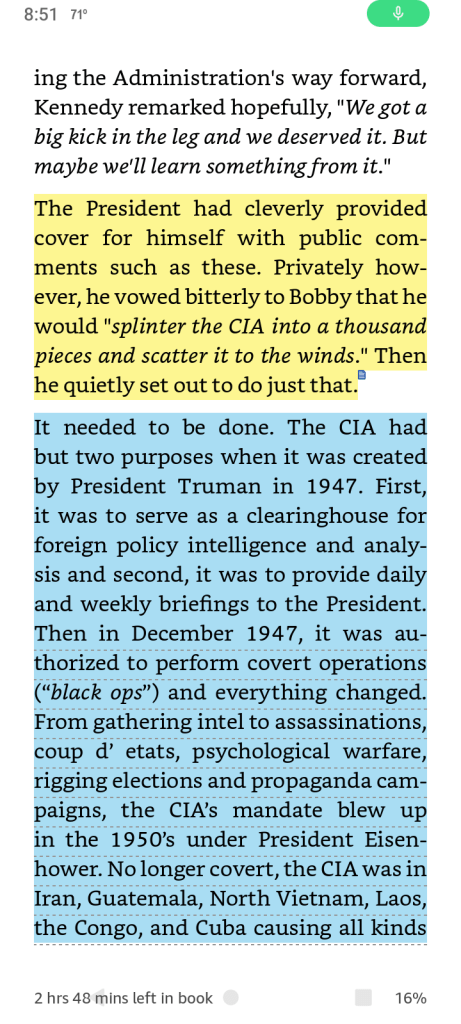
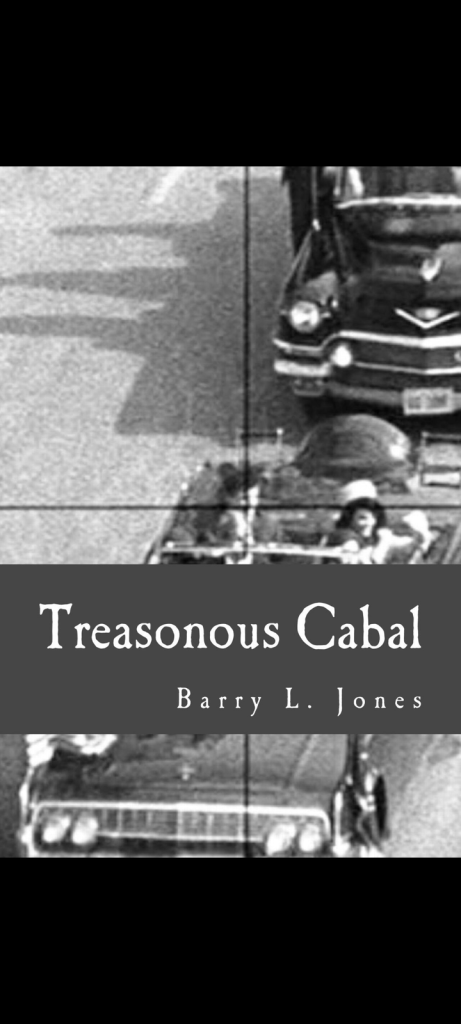
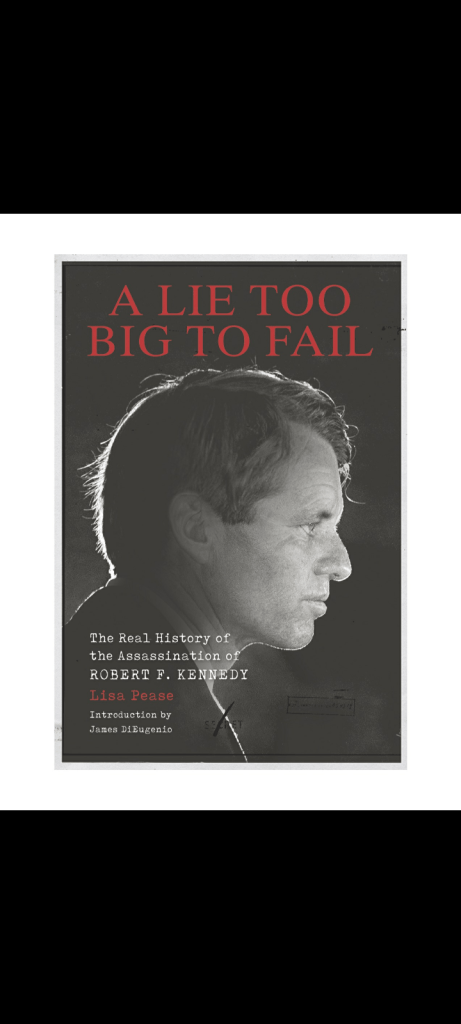
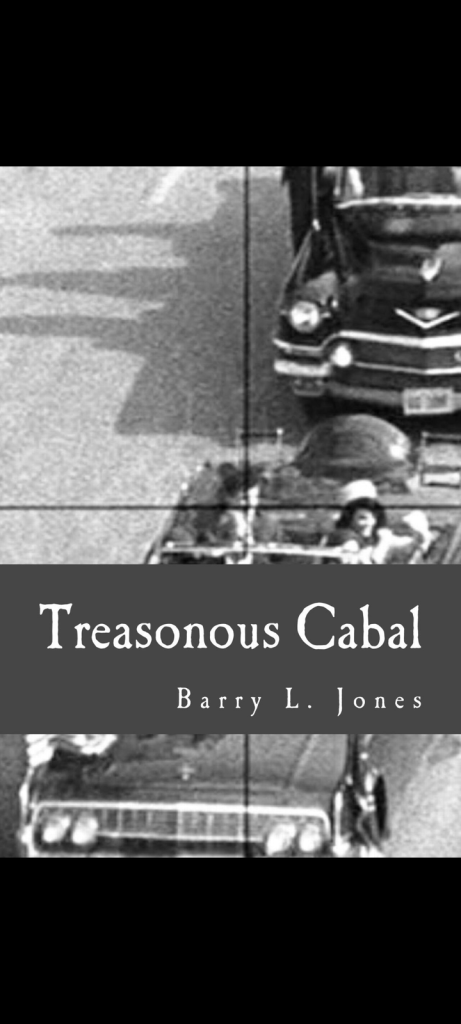
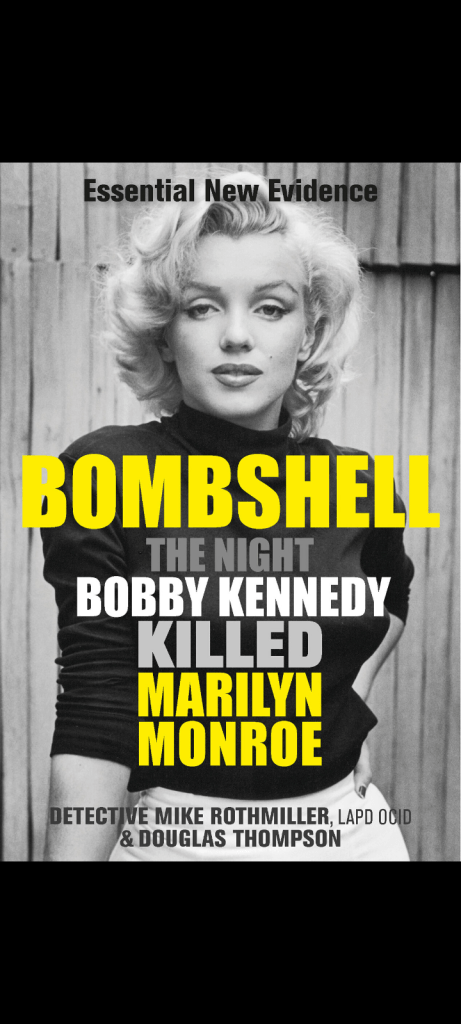


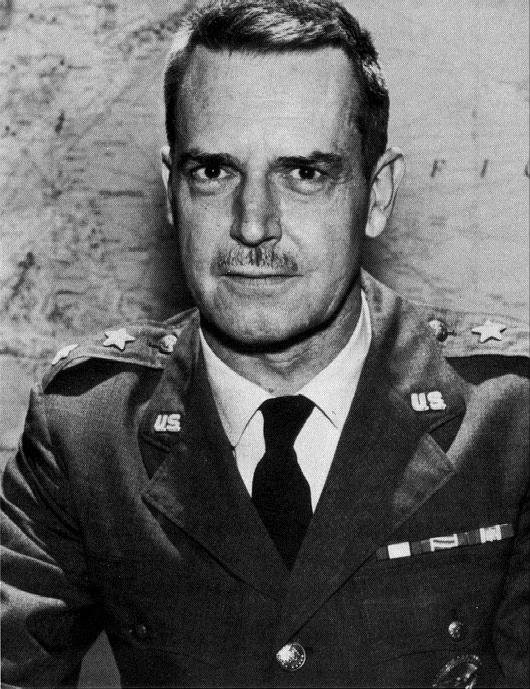
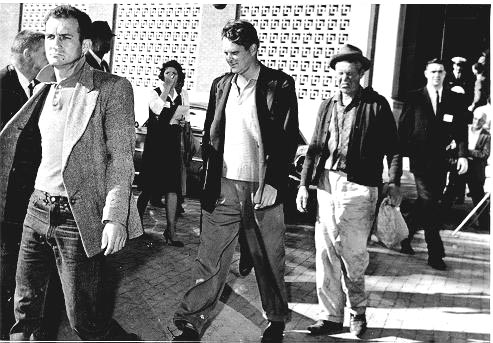
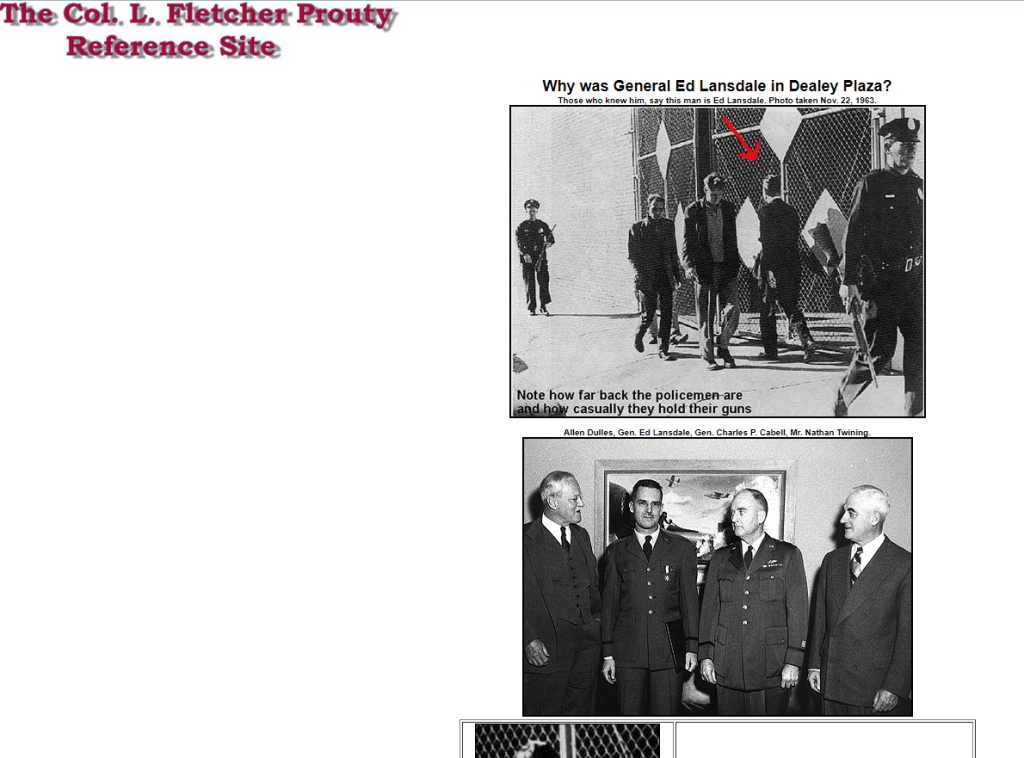
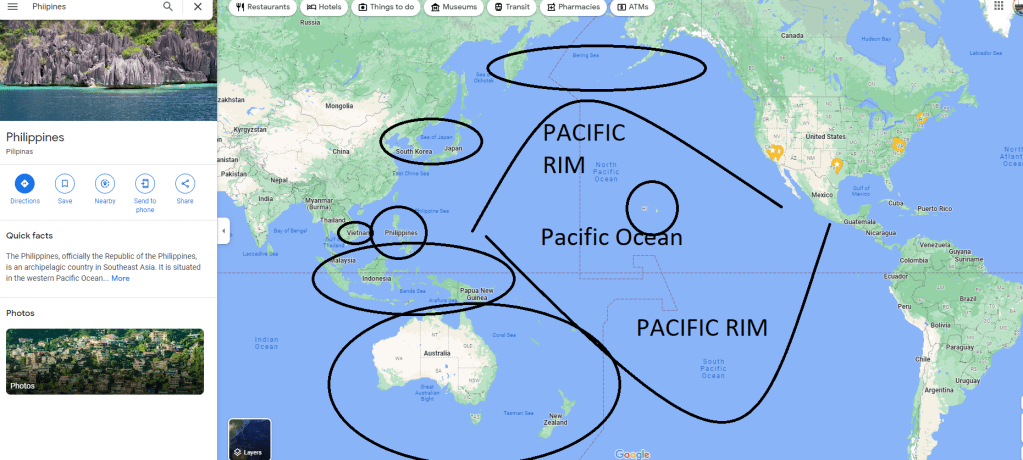
Investigative journalist, author and syndicated columnist. His columns have appeared in a wide number of newspapers and journals. Madsen is a regular contributor on Russia Today. He has written The Handbook of Personal Data Protection (London: Macmillan, 1992); Genocide and Covert Operations in Africa 1993-1999 (Edwin Mellen Press, 1999); Jaded Tasks: Big Oil, Black Ops & Brass Plates and Overthrow a Fascist Regime on $15 a Day