Minor Cooper Keith
Minor Cooper Keith (19 January 1848 – 14 June 1929) was an American businessman whose railroad, commercial agriculture, and cargo liner enterprises had a major impact on the national economies of the Central American countries, as well as on the Caribbean region of Colombia.[1] Keith’s work on the Costa Rican railroad to the Caribbean, a project begun by his uncle Henry Meiggs, led him to become involved with in the large-scale export of bananas to the United States. In 1899, Keith’s banana-trading concerns were absorbed into the powerful United Fruit Company, of which he became vice-president. Keith was also involved in a number of other business ventures, including gold mining in Costa Rica and real estate development in the US.
Banana trade[edit]
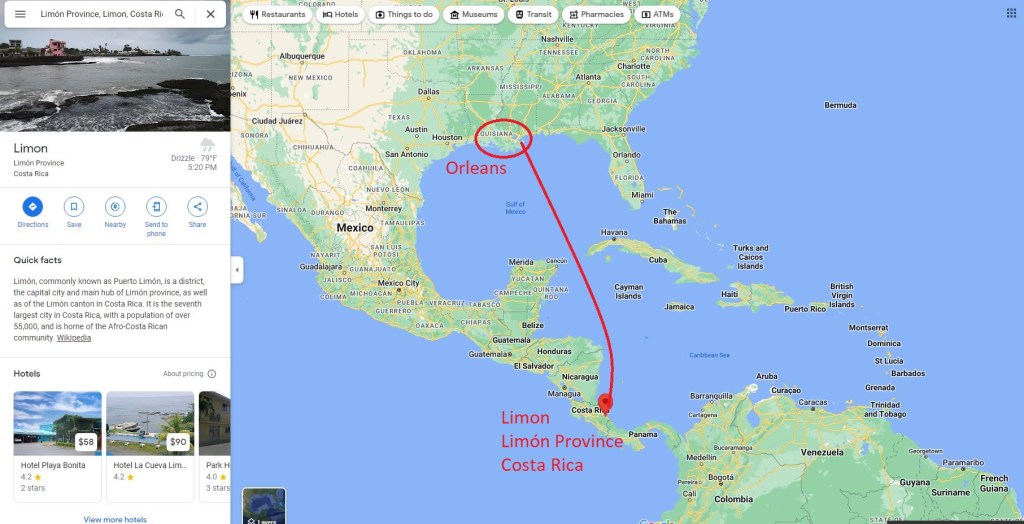
The railroad was completed in 1890, but the flow of passengers and cargo proved insufficient to finance Keith’s debt. As early as 1873, however, Keith had begun experimenting with the planting of bananas, grown from roots he had obtained from the French. To market the bananas, Keith began running a steamboat line from Limón to New Orleans, in the United States. The resulting banana trade proved lucrative and he soon established the Tropical Trading and Transport Company to organize his banana-export business.
Keith then partnered with M. T. Snyder to establish banana plantations in Panama and in Colombia‘s Magdalena Department. He eventually came to dominate the banana trade in Central America and Colombia. In 1899, he was forced by a financial setback to combine his venture with Andrew W. Preston‘s Boston Fruit Company, which dominated the banana trade in the West Indies. The result of the merger was the powerful United Fruit Company, of which Keith became vice-president.[6] In 1904, Keith signed a contract with the President of Guatemala, Manuel Estrada Cabrera, giving the company tax-exemptions, land grants, and control of all railroads on the Atlantic side of the country.[7]
Other activities[edit]
Board of Trustees of the Heye Foundation, 1920. From left to right: Minor C. Keith, James Bishop Ford, George Gustav Heye, Frederic Kimber Seward, Frederick Kingsbury Curtis, Samuel Riber, Jr., Archer Milton Huntington, and Harmon Washington Hendricks.
Keith also invested in gold mining in Abangares, in the Costa Rican province of Guanacaste.[8] In 1912 he returned to railroad building, organizing the International Railways of Central America and eventually completing an 800-mi (1,287-km) railway system, but died before realizing his dream of a line from Guatemala to the Panama Canal. His work profoundly altered the economic life of Central American countries.
Keith also founded a chain of general stores and owned one of the largest poultry farms in the United States. In 1917, Keith acquired huge amounts of the assets of St. Andrews Bay Development Company, which was founded by his brother-in-law, W. H. Lynn. He also acquired huge tracts of land around the area of Panama City, Florida, formerly owned by R. L. McKenzie and A. J. Gay. Keith and his millions are credited with “putting Bay County on the map” as he also purchased the railroad, the area’s mills, over two hundred thousand acres of land, built both the Lynn Haven Hotel and the Pines Hotel in Panama City and developed and constructed a new golf course on North Bay.
Keith was a trustee of the foundation that managed George Gustav Heye‘s collection of Native American artifacts and he bequeathed his own ancient Native American gold to the American Museum of Natural History in New York City.[9]
Death and legacy[edit]
Keith died on 14 June 1929 of bronchial pneumonia at his home in West Islip, Long Island, New York.[2][1] According to John Dos Passos in his USA Trilogy, Minor Cooper Keith was an example of the phrase “chip off the old block”.[10]


.jpg)